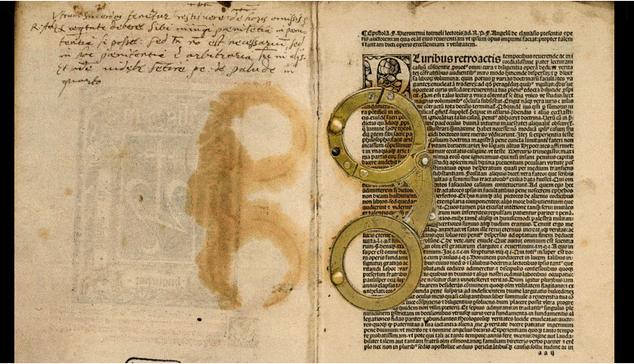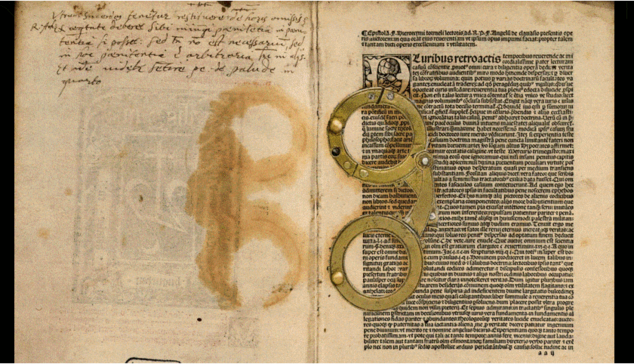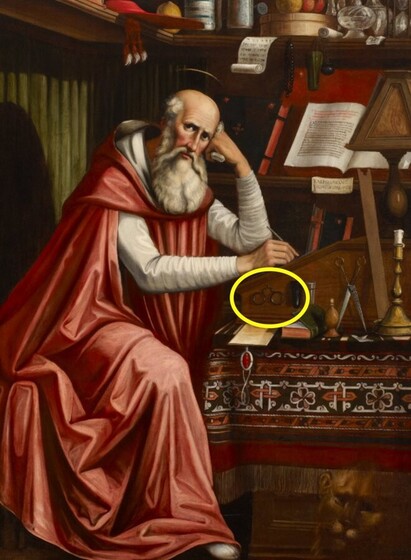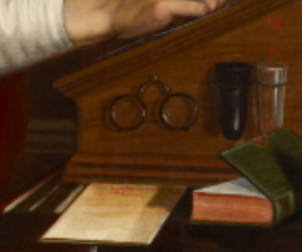
The history of reading had a chapter about forgetting eyeglasses in books, and about historians and librarians finding traces of these lost eyeglasses. Well, the image tells quite a story, doesn't it? #HowToDoWithGlassesInThePast
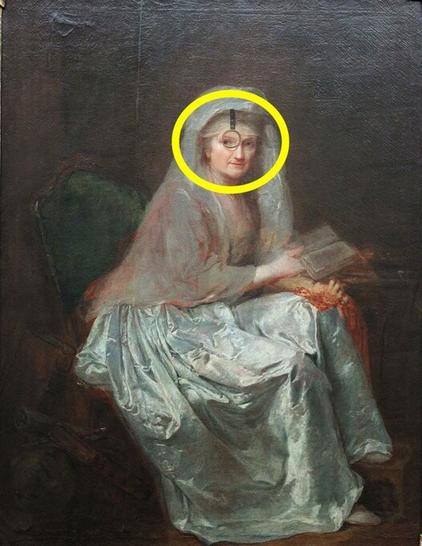
You could use your eyeglasses to, well, to look wild, stylish, in contemplation, at work, out of context ... Choose your fighter: #HowToDoWithGlassesInThePast
Let's focus upon storing eyeglasses in a premodern context. As a wealthy reader and owner of books you could always go for the luxury option: use your custom-made case carved out of the back board of a big book to store your reading tool. Impressive, am I right? #HowToDoWithGlassesInThePast
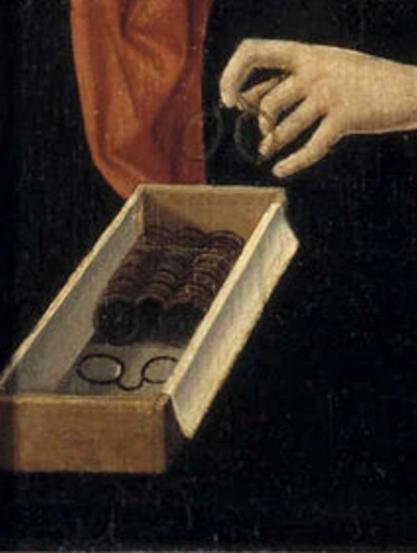
You might have been needing eyeglasses for reading purposes for a long time, but before you needed to find a seller offering the assisting tool. The young woman in this painting is selling eyeglasses by the dozens as a zooming in into the details of the painting shows. #HowToDoWithGlassesInThePast
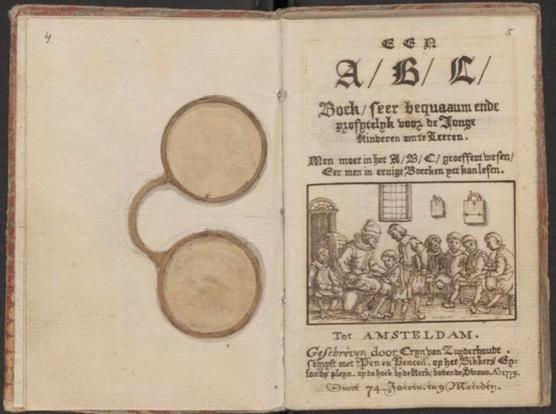
Traces and images of #earlymodern eyeglasses can be found in paintings, books, prints, and this reminds us of the presence of these artifacts in cultural life. And the present eyeglasses were sometimes forgotten in books, even if both were painted like in this image. #HowToDoWithGlassesInThePast
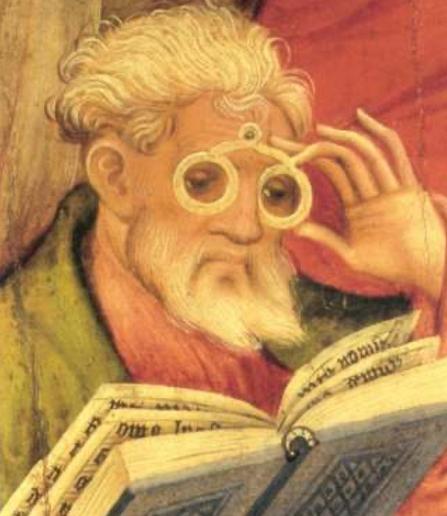
Wearing eyeglasses was a tricky thing, as something on your nose attracts attention. Eyeglasses were made for reading and seeing better but also had a distinctive function of making you, the one wearing eyeglasses, a bit more special. Francisco de Quevedo knew all this. #HowToDoWithGlassesInThePast
Nothing to see here? Well, this is a slow moving 🧡 for #skystorians and others about #eyeglasses of the past, about how to read in the past, where to buy eyeglasses, and how to do with them in general. The hashtag is #HowToDoWithGlassesInThePast Let's roll.
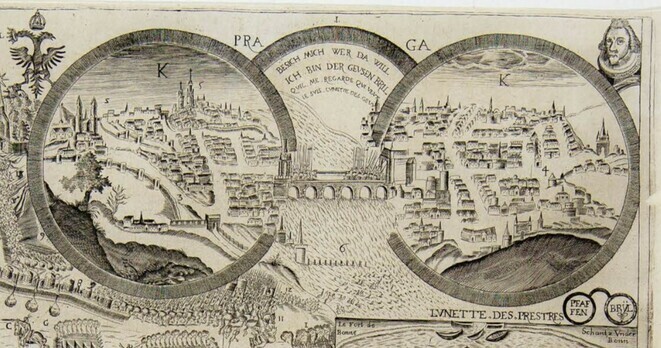
About using eyeglasses as symbols and metaphors in early modern Europe: One could use giant eyeglasses in broadsides to zoom into a topic, like here: https://mastodon.social/@dbellingradt/109624672307990094

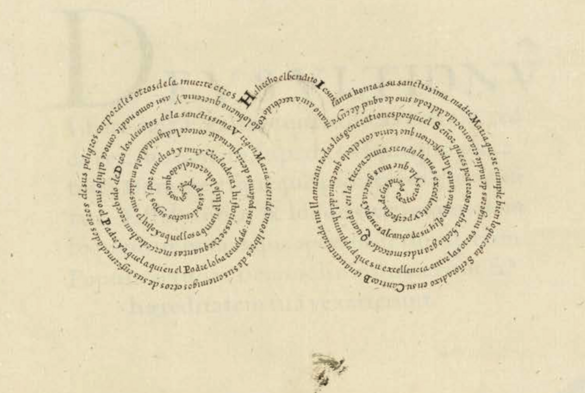
One could use calligram-glasses to attract readers to your message, like in this example: http://bdh-rd.bne.es/viewer.vm?id=0000139678&page=1

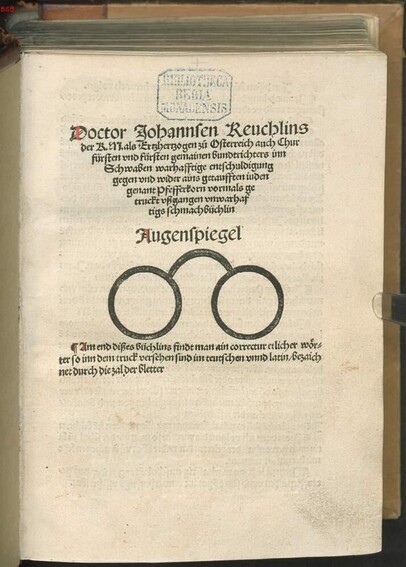
Or you could use eyeglasses as a metaphor to strengthen the argument in a printed pamphlet: look closer, see better, examine with more quality, you stupid fellow human.

10

#HowToDoWithGlassesInThePast

Liber varias diversasque characterum formas continens

Nesser, Hermann β€” Manuscrito β€” 1501-1700?

Biblioteca Digital HispΓ‘nica

About forgetting or losing your eyeglasses in early modern Europe: Poor thing, have you lost your glasses again? Have you checked the book you were reading? Most often, when you forgot where you put your eyeglasses to, someone found them between the pages...

The history of reading had a chapter about forgetting eyeglasses in books, and about historians and librarians finding traces of these lost eyeglasses.

9

#HowToDoWithGlassesInThePast

About using your eyeglasses: Mostly, eyeglasses were needed for reading and writing purposes. In this sense, eyeglasses were part of a cultural practice of writing and reading (and drawing to be honest), near books, with books, at a desk, in a library, at an artist's worktable etc.

It is not by chance that Saint Jerome, patron Saint of librarians, is often sitting at a writing desk surrounded by books and papers, with eyeglasses hanging at his desk.

8

#HowToDoWithGlassesInThePast