 mhoye
mhoyeI felt this in my teeth.
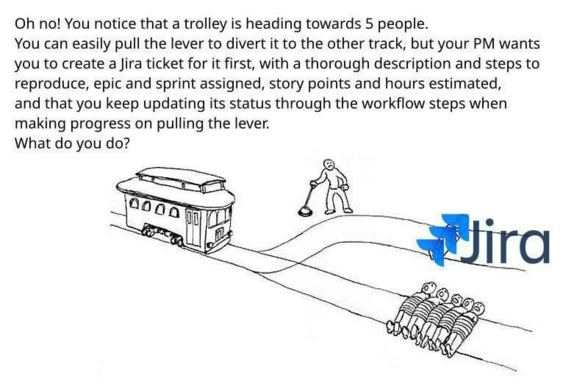
@bsmedberg Every project needs issue trackers, but describing Jira as an issue tracker is like describing McDonald's as a restaurant. It's a organizational culture and language least-common-denominator normalization tool whose endpoint happens to resemble an issue tracker.
A well-functioning issue tracker is a core part of making an org visible and legible to itself; adopting a tool that forces every part of an org to speak the same operational language is the lowest-trust path to that goal.
@titociuro @oliver It's very well documented. PostgreSQL has a thing called CommitFest https://wiki.postgresql.org/wiki/CommitFest_Checklist?ref=timescale-blog
A list of previous and coming CommitFests can be found here: https://wiki.postgresql.org/wiki/CommitFest_Checklist?ref=timescale-blog
This is for new features. Bug fixes are done on email lists.
 Benjamin Smedberg
 Stefanie Janine Stölting
 Oliver Maksimović
 Tito Ciuro