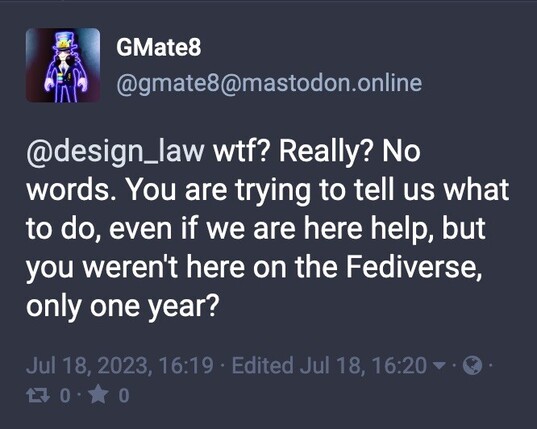
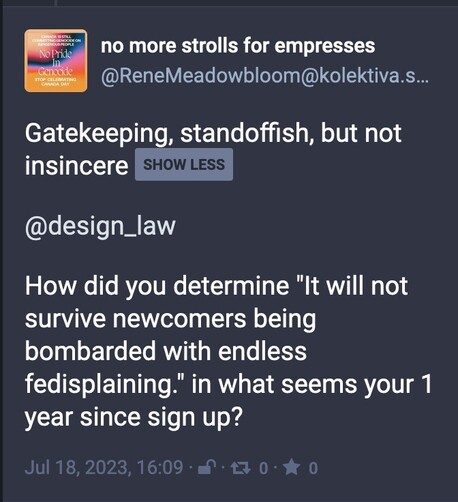
One suggestion: If you want the fedi to be a welcoming place, don't jump in to someone's mentions to explain the fedi UNLESS explicitly asked to do so.

"But...."

But nothing. This place will survive a little technical misunderstanding or misstatement.

It will not survive newcomers being bombarded with endless fedisplaining.

Okay, so how long do I have to be here before I'm "allowed" to have valid opinions? Blocked.
"Even if we are here to help." FFS.

@design_law ironically, @jeffjarvis literally just wrote a thread about content management systems in newsrooms, saying “computers surface territorial instincts”.

Indeed.

@paninid @design_law @jeffjarvis I think it would be interesting to advance the concept of "consensual advice*.

1. "Ask if the other person would like advice with a subject?"
2. "If the answer is NO, then don't give advice."

It is more considerate, but slows conversations...

Maybe a user profile could indicate preferences beforehand. Everybody is different. We could mark ourselves as "safe to BS with" or "okay with non-consensual advice". Maybe AI pre-screening of comments would work?

The platform could say "That looks like unsolicited advice and this person doesn't enjoy comments like that. Cover your post with a warning?"

@EarthlingNathan An interesting idea. I'm definitely never against confirming consent. And I don't think there's anything wrong with slowing conversations, tbh.

But I don't know that we always have to go that far, or bring AI into the mix. A little empathy goes a long way. If you're interacting with a stranger for the first time, just realize that any unsolicited advice will come across as hostile and critical (whether you, subjectively, intend that or not).

@design_law How will they "just realize that any unsolicited advice will come across as hostile and critical"? That is why I feel AI/tech training wheels could help.

Who teaches "consensual advice"? I only discovered it at 44 years old while putting serious thought into the question: "Why does normal conversation really tick some people off and get called mansplaining?"

The "just realize" is the hard part, I think. Plenty of folks "just" do and say what they are thinking without worrying about other parties becoming hostile. Plenty of them believe talking without reserve is helpful/safe/conversation starter.

Asking for communication consent requires time/work/effort/training. That extra work can be an unwelcome cost of communicating compared to environments where people are not "easily offended".

It is culture clash, depending on perspective, experience, and levels of understanding others.