 xXemokidforeverXx
What niche subject do you know a lot about?
Current Canadian politics.
 VitaMan
Depends on your definition of “a lot,” but I know a fair amount about Star Trek
Holography. I dream of one day getting a quiet place to live with a huge walk-in closet to set up a darkroom in for holography. And once I get that I’ll start dreaming of getting my hands on a pulse laser
 VediusPollio
I work in a museum space. Any recommendations for implementing various forms of holography to create interesting exhibits?
The least temperamental kind to create and display are 540 nm (red) reflection holograms. To create, you get a laser pointer, gut it, turn it on for 15 minutes to let it stop doing funky diode stuff, set up your diorama behind the photo plate, and then shine the laser through the plate onto the diorama for however long your plate takes to develop. And to display it, you just need a point source of light, like a bright red LED.
Compare this with a green or blue hologram, which at the low end needs a high quality laser, a vibration-cancelling optical table, and even with all this can still be ruined by someone coughing in the other room. Or a transmission hologram, which at minimum needs a beam-splitter to create and must be displayed with the same color laser or the scale will be magnified or shrunk a bit, unless you are willing to make a rainbow hologram which also requires either an optical-grade cylindrical mirror/lens or some experimenting with paper slits, followed by a second pass through projecting the master print on the rainbow print.
I’m skipping a lot of details on the setup, but you get the gist. This all being said, the coolest holograms are rainbow holos
Sounds pretty involved, but I might have to experiment with this. Thanks for the info! I’m going to start researching a bit more, and see if I can squeeze some R&D funds from work.
Good luck! Like I said earlier, this is all pretty aspirational for me since I don’t have a good space to do any of this and likely will not in the near future either. Even if I go with the shoebox method (use fibre-optic cables to compress the darkroom setup into a shoebox) I live right next to train tracks lol
These are the types of hobbies I can get behind! Update me/us in the future whenever you create anything cool. That’s the type of content Lemmy needs!
Also sumo wrestling for some reason. Idk why I love sumo so much.
Compost
 0x4E4F
Sexual kinks
Lord of the Rings. Not as much as the insanely awesome folks who memorized the Silmarillion, but I know a lot about The Hobbit and The Lord of the Rings.
 Blaze
BlazeUsername checks out
GIS (Short for Geographic Information Systems)
My brother had expressed interest in this, but I don’t entirely understand what it means. Would you give me a brief eli5 overview maybe?
Sure, I’d love to. It’s more ELI10 that ELI5 tho…
It’s very likely that you or your brother played an adventure game or an RPG on your computer. When you get lost in such games, or simply want to know where your character that your playing needs to go, you open up a digital map. On that map you usually get all the information you might need - what is your current location, where your active quests are, maybe even different parts of the world, if it’s divided into ‘zones’.
Such interactive maps are a great example of what GIS does. The town or city you live in, usually uses a similar interactive map. Instead of active quest, their system might show things like parks, points of interest like turist spots or parking spaces. It might also show how many people live in what part of the city, their average age and income.
Beside your local municipalty, other companies or organization also use GIS. Their systems might show other (spatial) data that interest them.
Fire department might have a system that shows historic data - where they’ve had most fires, what the current situation is and where their units are dispatched at the moment.
Your Internet provider might have a map of their network and any issues along it. Maybe even overlay of property lines, so that they know who to contact when they’d like to expand their network and put new optical cables in the ground.
The system that collects and shows similar data as mentioned above is usually referred to as a Geographic information system. In it’s most basic definition it is a system for collecting, storing and displaying spatial data.
Thanks, this was helpful! It seems then that it’s a bit of a broad field with a lot of different applications. Do you work in the field? What does a typical workday typically entail!
Yes, you are right. It’s a lot like working in IT, with special data types and some processing.
In typical setting we basically separate the system in three layers: (1) data - file servers and databases, (2) services - Servers that read this data and offer API endpoints that programs can call, that return visualised data in for of images or individual features (see: WMS, WMTS, WFS…) and (3) User/presentation layer - the (web) applications that endusers acces (think Google maps / Google Earth and similar type of apps)
On my typical work day I work on one or more of above “layer”. Be it data aquisition, server administration, debugging services, programming end user application, or simply helping our users understand how to use the data… being in IT though means that there also are a lot of nonse meetings involved :)
 AngryHippy
The history of food culture in Asturias in northern Spain.
 makingStuffForFun
I surfed the north coast of Spain many years ago, and the food was epic. I never forget that trip. Where can I learn more of the Asturian food history?
I write about it in English at eatingasturias.com, assuming self promotion isn’t a terrible sin here

 𞋴𝛂𝛋𝛆
𞋴𝛂𝛋𝛆Car painting and repairs, high end wholesale bicycle market from 2009-2017
 IchNichtenLichten
 MouseWithBeer
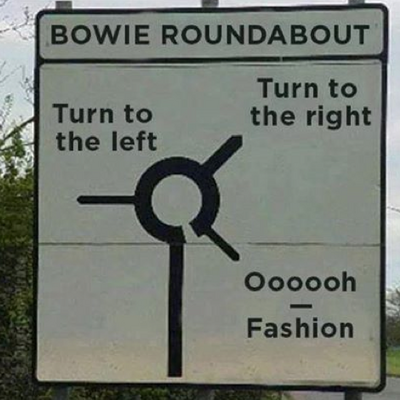
Bollards, roads signs and other road signalisation. It is honestly a problem.
what’s your favourite type of bollard and why?
I am a big fan of the Slovenian/Austrian combo snow pole+bollard. I think they are such a clever thing for places where it snows enough to make the actual bollard invisible and doesn’t require workers to drag around a bunch of snow poles every winter, they just gotta pull them out.
What’s the reason to not just have the pole permanently attached on top, instead of retracting?
Honestly I can’t give you a proper answer here. I never actually thought about it before so I just looked up the Slovenian law about it (I don’t speak German so I didn’t bother with the Austrian one) and I couldn’t find anything that specifically says that the snow poles must/can’t be there between XY dates (just a bunch of stuff about how they gotta be positioned). If I had to guess it is a mix of these things:
- Aesthetics
- Visibility
- Giving the road workers something to do
- It is how it has always been done. Before these combo bollards became a thing and in places they still haven’t replaced the old ones they still add/remove a full on wooden snow pole next to the bollards every year.
There might be some other reasoning for it too, but this is what comes to mind as possible options.
The TV show Big Brother.
Obscure game history
Medieval European building techniques, specifically heavy timber framing and lime plaster
The history of computing and video games.
I wouldn’t say I’m a world class expert or anything, but I know enough to talk your ear off at a dinner party.
Southern Appalachian medicinal herbs
The lottery, suits and the pope.
The appearance and behavior of quite a few types of cancers
Growing and managing strawberries in a commercial setting.
Fireworks and pyrotechnic chemistry.
Just: Brain jank related to plurality (the situation of multiple people living in the same brain).
Cat: For clarity, much of it was learned through direct practical experience.
Supreme court cases. There are some real doozies, not that anyone irl cares.