
In 1640, John Punch, a Black-American indentured servant, received a sentence of lifelong slavery for running away to Maryland with two white indentured servants. Unlike Punch, the two white servants were given only an additional four years of servitude as punishment. Punch’s case served as the starting point for the establishment of race-based slavery through legal means in British North America.

1/

@[email protected] @BlackMastodon #BlackMastodon #Histodons #History #StillWeRise #slavery
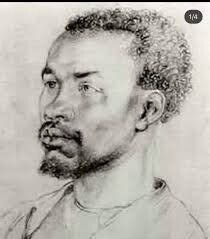
On August 20, 1619, around 20 Africans are believed to have arrived in the Jamestown settlement in Virginia, specifically at Old Point Comfort, now recognized as Fort Monroe. While the precise names of these individuals and the exact count of those who remained at Point Comfort have been lost to history, much is known about their harrowing journey.

2/

#BlackMastodon #Histodons #History #StillWeRise #slavery
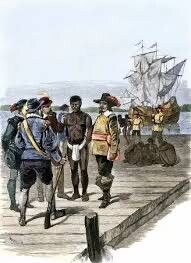
Originally captured by Portuguese colonial forces, these individuals were members of the native Kongo and Ndongo kingdoms. They were forcibly marched to the port of Luanda, situated in present-day Angola. Subsequently, they were loaded onto the ship San Juan Bautista, which embarked on a voyage bound for Veracruz in the New Spain colony.

3/

#BlackMastodon #Histodons #History #StillWeRise #slavery
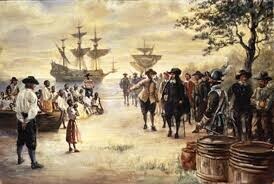
Unfortunately, like many similar voyages, approximately 150 of the 350 captives aboard the ship perished during the treacherous crossing. As the ship neared its destination, it encountered an attack by two privateer vessels, the White Lion and the Treasurer.

4/

#BlackMastodon #Histodons #History #StillWeRise #slavery
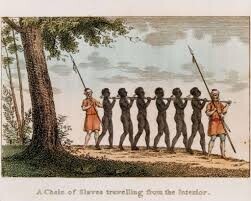
Crew members from these ships abducted around 60 of the Bautista's enslaved individuals. It was the White Lion that arrived at Point Comfort in the Virginia Colony, where on August 20, 1619, they traded some of the prisoners in exchange for provisions.

5/

#BlackMastodon #Histodons #History #StillWeRise #slavery
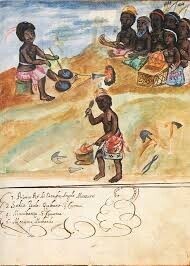
While the historical record does not provide definitive evidence, the consensus among historians is that the majority of the earliest Africans in VA were enslaved. This assertion is particularly evident in the case of the Spanish ship, San Juan Bautista, where the Africans were unquestionably held in enslavement. Upon their arrival in VA, these people were treated as commodities & subjected to the dynamics of the slave trade.

6/

#BlackMastodon #Histodons #History #StillWeRise #slavery
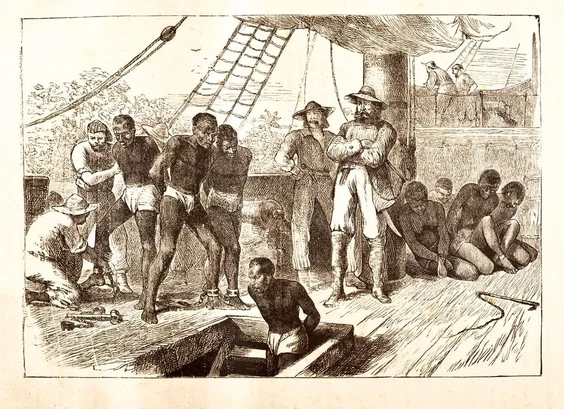
Unlike English servants who commonly received regular indenture contracts, there are no historical records indicating that the Africans were granted such arrangements. While it is possible that a small number of Africans may have been treated similarly to white indentured servants, the available records do not support the notion that this was the experience for the majority of Africans, who were enslaved right from the beginning.

7/

#BlackMastodon #Histodons #History #StillWeRise #slavery
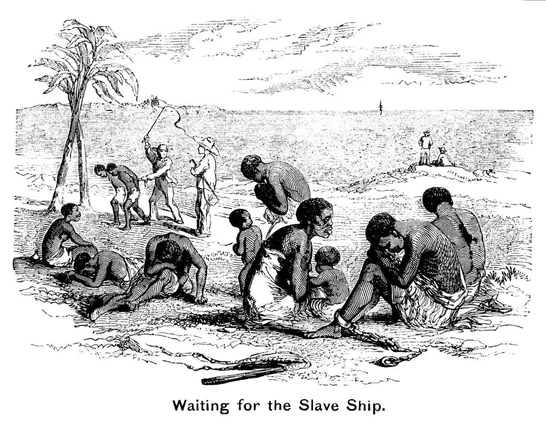
It is probable that africans were classified as "slaves" rather than indentured servants. The distinction meant indentured servants were obligated to work in tobacco fields for a designated duration, usually spanning four to seven years, after which they would attain their freedom. During that era, indentured servitude was a prevalent practice.

8/

#BlackMastodon #Histodons #History #StillWeRise #slavery
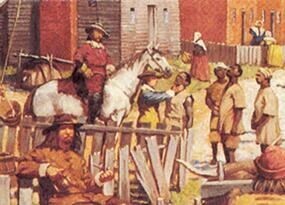
Indentured servitude served as the means through which numerous individuals of European descent journeyed from Europe to the colonies. This does not imply a perfect racial harmony, but rather that Black and White indentured servants frequently toiled alongside each other.

9/

#BlackMastodon #Histodons #History #StillWeRise #slavery
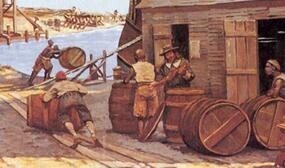
The shift from indentured servitude to racial slavery was not an immediate occurrence. During the early stages of Virginia's history, there were no laws pertaining to slavery. However, by 1640, the Virginia courts had already issued a sentence that resulted in at least one black servant being enslaved. This marked a significant development in the progression towards the establishment of racial slavery.

10/

#BlackMastodon #Histodons #History #StillWeRise #slavery
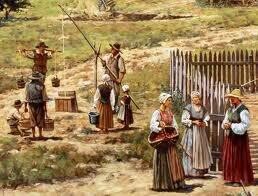
Historians know little about John Punch, except how it relates to the formation of slavery. Just about all of which they know is contained in the Virginia court records. He was as a servant to Hugh Gwyn, a prosperous Virginia planter. Gwyn was not only a wealthy landowner but also held positions as a justice and a member of the House of Burgesses, representing Charles River County (later renamed York County in 1642).

11/

#BlackMastodon #Histodons #History #StillWeRise #slavery
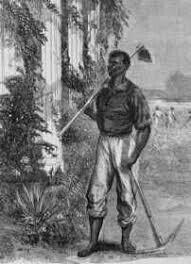
In 1640, three indentured servants employed by a farmer named Hugh Gwyn decided to escape to Maryland. Among them were two White men, one of Scottish and the other of Dutch descent, and one Black man of African descent,. However, their attempt was foiled as they were apprehended in Maryland and subsequently brought back to Jamestown.

12/

#BlackMastodon #Histodons #History #StillWeRise #slavery
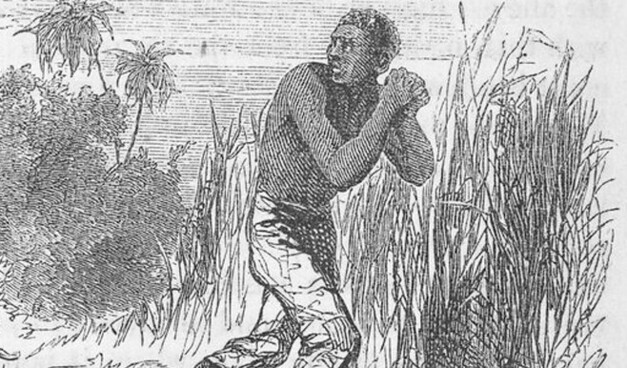
On July 9, 1640, a Virginia court deemed their actions unacceptable and sentenced all three to endure a punishment of thirty lashes, a severe disciplinary measure even within the context of 17th-century Virginia.

13/

#BlackMastodon #Histodons #History #StillWeRise #slavery
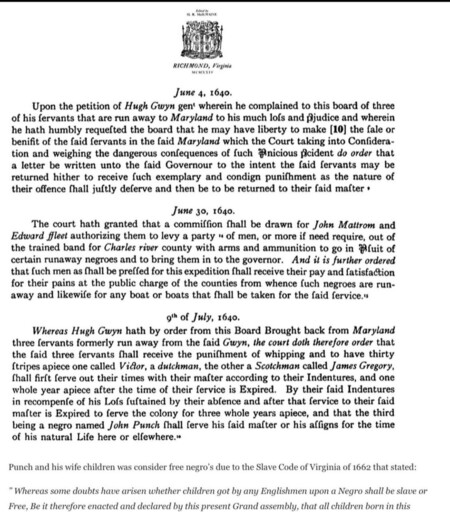
The court record reads:

“Whereas Hugh Gwyn hath by order from this Board Brought back from Marylandthree servants formerly run away from the said Gwyn, the court doth therefore order that the said three servants shall receive the punishment of whipping and to have thirty stripes apiece ….”

14/

#BlackMastodon #Histodons #History #StillWeRise #slavery
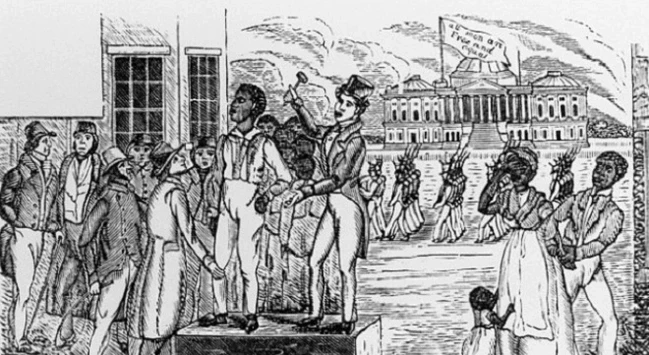
“…one called Victor, a Dutchman, the other a Scotchman called James Gregory, shall first serve out their times with their master according to their Indentures, and one whole year apiece after the time of their service is Expired.

15/

#BlackMastodon #Histodons #History #StillWeRise #slavery
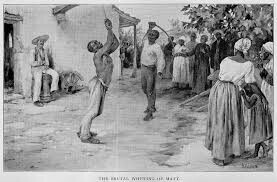
“By their said Indentures in recompense of his Loss sustained by their absence and after that service to their said master is Expired to serve the colony for three whole years apiece, and that the third being a negro named John Punch shall serve his said master or his assigns for the time of his natural Life here or elsewhere.”

16/

#BlackMastodon #Histodons #History #StillWeRise #slavery
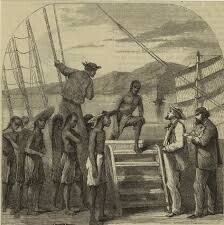
Following their capture and return, the two white men received an extended sentence of four additional years of servitude. Hugh Gwyn, their master, was granted an extra year, while the colony mandated three more years. However, the consequences for the black man, identified as John Punch, were far more severe.

17/

#BlackMastodon #Histodons #History #StillWeRise #slavery

In addition to enduring the physical punishment of whipping, Punch was condemned to serve his master or any assigned individual for the remainder of his life, extinguishing any hope of ever attaining freedom.

18/

#BlackMastodon #Histodons #History #StillWeRise #slavery
Therefore, despite committing the same offense as the Dutchman and the Scotsman, John Punch, who was of black African descent, faced the harshest punishment of lifetime slavery. In contrast, the white servants received a comparatively lighter penalty of an additional four years of service, which was considered adequate as a form of retribution.

19/

#BlackMastodon #Histodons #History #StillWeRise #slavery
No one knows what eventually happened to John Punch, But, the case of the unfortunate servant is a clear illustration of the VA court's deliberate bias & discriminatory treatment towards Black Americans. The decision in 1640 to subject Punch alone to a lifetime of servitude was not based on any existing legislative or colonial judicial precedent.

20/

#BlackMastodon #Histodons #History #StillWeRise #slavery
This highlights the court's intention to exercise partiality and unequal treatment specifically targeting Black people.

The differentiation in treatment observed in the case highlights the early adoption of social values that deemed blacks as inferior within the legal system. The court, willingly converting social biases into legal judgments, solidified the rigid social stratifications prescribed by these values.

21/

#BlackMastodon #Histodons #History #StillWeRise #slavery
Historians have extensively explored the reasoning behind such disparities in sentencing a black individual. Was it rooted in the belief that a runaway black servant posed a greater threat to society, warranting harsher punishment than their white counterpart? Or did it stem from a notion that a special warning was needed to deter black people?

22/

#BlackMastodon #Histodons #History #StillWeRise #slavery
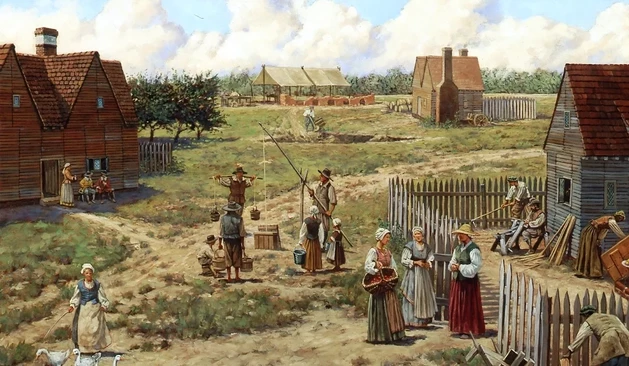
Furthermore, in addition to considerations of deterrence, scholar Theodore Allen proposed that the most compelling rationale was an economic one. It aimed to establish a precedent allowing masters to benefit by converting the limited term of a black transgressor into one of perpetual servitude.

23/

#BlackMastodon #Histodons #History #StillWeRise #slavery
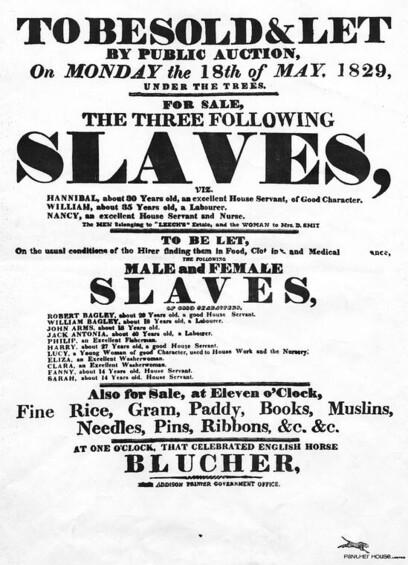
This decision carried significant weight as black Americans were in a highly degraded status, lacking influential advocates who could plead their case in higher echelons of power. Consequently, the court did not even feel obliged to provide a justification for the markedly different and harsh punishment inflicted upon Punch.

24/

#BlackMastodon #Histodons #History #StillWeRise #slavery

It wasn't until 1661 that a mention of slavery was introduced into Virginia law, targeting white servants who fled with a black servant. The following year, the colony went further by declaring that the status of children born would be determined by the mother's condition, either bonded or free.

25/

#BlackMastodon #Histodons #History #StillWeRise #slavery

Thus, the transformation had commenced. But, it would not be until the implementation of the Slave Codes of 1705 that the status of Black Americans would be firmly sealed for many centuries to come.

26/

#BlackMastodon #Histodons #History #StillWeRise #slavery

African Americans at Jamestown - Historic Jamestowne Part of Colonial National Historical Park (U.S. National Park Service)

Books

Higginbotham, A. Leon. In the Matter of Color: Race and the American Legal Process: The Colonial Period. Westwood, CT: Greenwood Press, 1978.

Toppin, Edgar A. A Biographical History of Blacks in America Since 1528. New York, NY: David McKay Company Inc., 1971.

Winthrop, Jordan. White Over Black: American Attitudes toward the Negro, 1550-1812. Chapel Hill, NC: University of North Carolina Press, 1968.

28/

#BlackMastodon #Histodons #History #StillWeRise #slavery
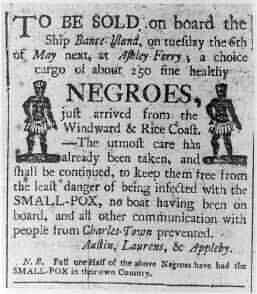
@Deglassco I do appreciate your attempt to provide context, it falls short and seems disingenuous. First, this man was not an African-American. He was African. He could be characterized as Anglo-African at best. You provided sufficient evidence to belie your allusion that white and black indenture were treated differently. The judge you quoted stated that all three were given 30 lashes. You have nothing to substantiate a claim of permanent indenture.
@Deglassco A complete mention of this disposition is important. I get that such research is tedious and expensive, but this case is so pivotal to the history of slavery that it deserves the greatest scrutiny.
@multiversalranger @Deglassco I see D. Glassco gives 5 sources & 3 books as reference. Also she is a Lecturer l Doctoral Candidate/ABD in History and Sociology of American Media Representation of Race, Class, and Public History, Rutgers University.
If you have additional /contrary information I'm sure readers would be interested to see it.
@MuddyMagee @Deglassco Interesting. So, are the resources to verify such a pivotal event not available? Perhaps, I misunderstood, then? I assumed that a complete record was available, is this not the case? Does she then have the court transcript? I would love be to read that. Sadly, my access to primary resources is limited because I am poor and must rely on open sources. What I am searching for is the record that declares perpetual servitude by whom and to whom. It is a lead. Thank you.
@multiversalranger @Deglassco "This can be interpreted as the first legal sanctioning of lifelong slavery in the Chesapeake." Historians consider this difference in penalties to mark the case as one of the 1st to make a racial distinction between black & white indentured servants. Tom Costa in his article, "Runaway Slaves & Servants in Colonial Virginia" says "Scholars have argued that this decision represents the 1st legal distinction between Europeans & Africans to be made by Virginia courts"
@multiversalranger @MuddyMagee @Deglassco Good evening, Dr. Glassco. Perhaps this may be of some use to you, or maybe you were already aware of it. https://www.pbs.org/wgbh/aia/part1/1narr3.html
Africans in America | Part 1 | Narrative | From Indentured Servitude to Racial Slavery

@Wolleysegap @MuddyMagee @multiversalranger Thanks. Excellent resource.
@Deglassco @MuddyMagee @multiversalranger May you find it useful. PBS produced material usually has better bibliography, more extensive, so even though it's a made for television production they tend to share the source material
@multiversalranger I never referred to him as African-American (a modern usage made popular in the late 20th century by Jesse Jackson Sr.) anywhere in the post. I purposely use the term that is more appropriate, Black American throughout my posts.