 Sophie 🎲🏳️⚧️
In checking I also discovered my other reason for avoiding it (an aversion to anything that can change how my mind works - something that helpfully kept me from drugs, but unhelpfully kept me from antidepressants) is also a common inclination among autistic people. It seems like the main reasons many autistic people ever drink are just masking or self-medicating.
Obviously there are exceptions but I’m so glad to know I’m not alone in this, there’s so much pressure to drink!
Not sure if I’m expressing it well, but it’s like if your tongue is telling you “this food is 20% spicy 10% umami 70% savoury”
versus telling you “part of this is 80% spicy 20% umami, another part is 90% savoury 10% flavourless, another part is 14%spicy and….etcetcetc”
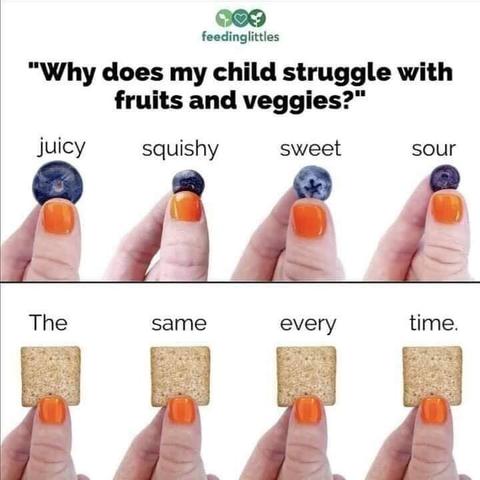
If you imagine that with all the added texture, heat, wet/dry sensations in the same amount of detail it seems pretty obvious why food can be overwhelming.
I think autistic people are like reverse monsters: the places you’d normally feel safe from monsters (bright, crowded) make us cranky, but put us in a dark quiet place and we’re super chill and friendly.
…or maybe all monsters are just autistic and misunderstood? Lives in the shadows and makes unnerving eye contact and repetitive twitchy movements? That’s not an SCP that’s just me!
Learned the term/identity “autigender” which is someone who feels their gender or sense of gender is inextricably linked to their autism.
And… how else is it supposed to work???? I’m so confused. The reason I finally understood my non-binaryness was because I thought about it with my autistic mind. How could my gender be anything but autigender? How could an allistic person’s gender be anything but an alligender? (Okay actually that’s a gender related to alligators…)
I guess the distinction is when your gender is something socially imposed/adopted? Like when I was living “as” a boy, then later “as” a woman, my gender expression and understanding was not wholly autigender?
But still it seems redundant, what autistic person thinks about gender even once and DOESN’T have their sense of gender tied to how they think from then on?
Okay I think a big source of my confusion about this right there in that last toot with the word “think”, there’s all kinds of ways to experience gender (or not experience it) and not all of them are thinking (probably most actually), I defaulted to a purely cognitive-based perspective but even then there are certainly ways to think about gender without your neurotype being a distinctive aspect.
Which sounds like word-salad which is part of why it’s so hard for me to see past.
For my part the way I understand my gender is absolutely influenced by my autism, but the way I experience it is perhaps not? Gender things feel right or they don’t feel right, those aspects that I claim and embrace seem inherently autigender (to me), but the senses that originate that stuff aren’t processed, they are experienced.
tbh even with helpful explanations I’m finding the concepts involved very nebulous and hard to grasp, but that’s okay.
Also now that I think about it, whenever I needed a new watch I would usually try to get the same model, and I got really upset when that wasn't an option. I was super passionate about watches and time back then, but I think it was only because it helped make sense of school's constant transitions.
These days, or even back then at home, I'd prefer to forget about time and just go at my own pace.
Thinking back to my earliest school memories, I constantly felt like I was being buffeted around and I was always asking about time to know when story time or nap time or lesson time or lunch time or play time or whenever was starting or ending.
School is constant mode-switching, I wonder if I'd have done better if each school day was just one thing?
I remember liking sports days even though I didn't particularly like sports. It makes sense now though: one mode for the whole day, more comfortable clothes, and sitting in the grass looking at the trees around school were so chilling.
I never liked the noise though, and always resented any event I had to participate in.
One of the chapters is sort of highlighting how the way we mask indicates who we are under the mask, and gives pointers to remembering the events that made us hide those parts of ourselves.
I had a moment where I was like…. “Omfg, for a moment in my life, I was super bright! I was so loud and energetic!”
And then a few minutes later, my most childlike and cheery headmate chimed in like “Yep, I did tell you!”
Changing the CW so I can talk about not-autism things in this thread like tics, such as:
I sometimes have tics that feel like I’m trying to express something but get frustrated that I’m not being understood. All I’m doing is just saying “banana” over and over, and getting frustrated I haven’t expressed it in a particular way. What way? I have no idea! This happens even when I’m alone.
Had a huge piece of tooth come loose today and getting it out was not fun (I almost fainted lol).
Anyway I realised the reason I haven't seen a dentist since I was a child is largely because of autism. To find an NHS dentist you need to be constantly calling practices and asking until they have a slot, impossible for me. But now I know I'm autistic, instead of being ashamed and just living with it, I can ask my mum for help!
In theory I could have just done that all along, but the feeling of "I'm supposed to be able to do this!" is so powerful, but accepting there are just some things you can't do and that's okay? Revolutionary.
There's a fair bit about this in Unmasking Autism actually, in a less individualistic society I'd never have even noticed this was such a struggle. I'd just have asked for help without years of stress and worry.
- Going easy on myself if I need several days off
- Allowing myself to stim and appear unfocused in public
- noise-cancelling headphones
- hat with a brim on bright days
- allowing myself to rock my body again
- not feeling I have to put down a fidget toy if I've been using it for "too long"
- asking for help, or sometimes just a moment to process or find my voice
- removing labels and/or wearing more clothes seams-out
- tying just my fringe/bangs up if they are bothering my face/eyes
- generally not shaming myself for stuff I "should" be able to do (yes there is a pile of dishes, but it's only an inconvenience and not a moral failing)
- turning off noisy things when I don't need them, eg the extractor fan in the bathroom doesn't need to be on until I have left
Just got a call about my psychological assessment, it took almost a year to get the appointment and then it was reviewed in a little over a week.
The result is, yep, I have tics and they are probably related to my autism somehow. The recommendation is mostly that I ought to reach out to autistic orgs and talk to them about it.
Which, I guess is good? It’s probably not something more serious that I need to worry about.
But also, I think I’m pretty upset about it? Mostly because part of me was hoping there would just be something causing the tics that could be outright fixed.
I have found since I figured out I’m autistic and embraced stim regulation I’ve ticced less in private… but… tbh I hate that I tic. Hate it. And now I just have to face that I’ll have to live with it.
And I’ll probably never know why my tics became so much more prominent over just a few months, I have theories but now I know that certainty is not an option.
I guess I should have seen this coming tbh, I’ve done a lot of research myself and didn’t find any concrete answers, but I’d still hoped someone else could give me that.
Another one I saw in a compilation that made me go !!!!!!!
Discovering sensory sensitivities later in life can absolutely feel like an infohazzard! I am leaning towards thinking it is better to know and I get to feel more real and be able to solve some of the problems I now recognise, but also it can be super overpowering still
https://vm.tiktok.com/ZGJxaP4xN/

Also ngl it makes me super wary of things I *need* to do.
Case in point: I've needed to shower for maybe a week now? I'd been avoiding it because it is just so overwhelming. This morning I finally thought "fuck it, I'm in a good mood and feeling capable! Let's do it!"
And then I proceeded to have an AWFUL 30 seconds where I felt every wet and hot drop of water slamming into me and running through my hair, I might have screeched, I don't know.
I just realised, if my tics and autism are connected,
that means I have autis tics!
Looking up the local autism group that the psychologist recommended, and see they associate with the police *a lot*…
Yeah I’m going to be honest I’d rather check out the other one with puzzle pieces all over their website that seems like it’s 99% for autism mums.
I can definitely imagine an argument (however iffy) in favour of a group working with police for the purposes of training and mitigating police mistreatment on the basis of them just not knowing about autism but…
You’re retweeting the police commissioner on shit that has nothing to do with autism, using the group account too. And somehow you are also getting funding from the police?
That doesn’t seem safe at all to me. Big pass.
The psychologist did also recommend a few not-autism-related things, but they are all either CBT (been there) and/or trauma recovery/support (which I think I’m mostly done with by now).
It’s weird that realising I’m autistic is a lot of learning that things were just not made for me, and then I find out that even the things that were made for me aren’t really for me.
Anyway I don’t think I really *need* anything besides information right now, and I’m not having any difficulty getting that. I think most of this psych process is just so they can feel they aren’t completely abandoning me once I’m discharged.
All I needed from them was to know if my tics could be helped or explained and I got the answer, next I can figure out how I deal with that answer on my own.
Me (learning about how some people with sensory issues can find lights/sounds or other stimulation to be very painful): Wow that’s rough, I’m glad that doesn’t happen to me.
Me (hearing a sharp sound in a bright room): Ah! Ow!
Ugh even the little tinkle sound ivory made when sending that toot, I felt it in my neck.
Anyway I’m having a particularly sensitive afternoon I guess, but I’m just trying to enjoy how funny it is that I continue to be completely oblivious about what my own experience is, even when I’m trying to focus on it. Of course I’ve dealt with painful light, sounds, textures, smells, etc… but only now do I realise OH, that pain is pain! It counts as pain!
 Lunar 🛸 ♾