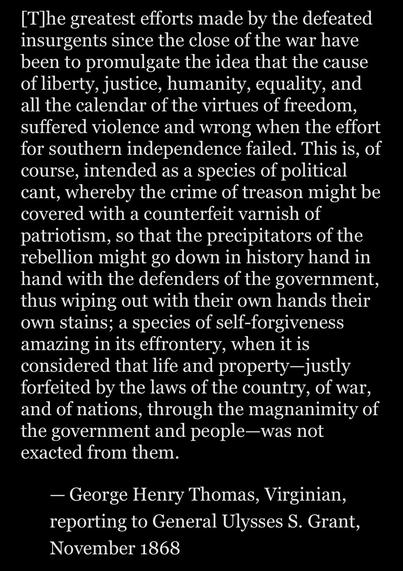
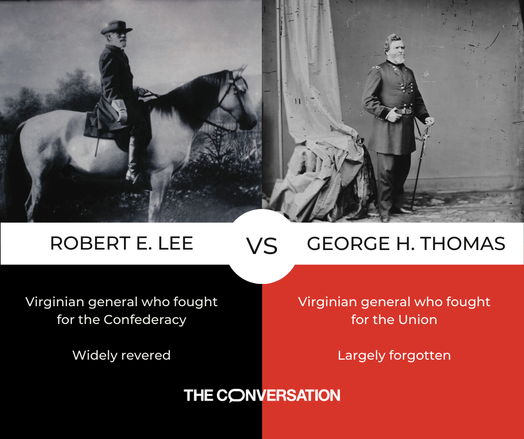
Two Southerners serving in the U.S. Army in 1861 made different choices when the Civil War began.

Robert E. Lee has been looked on as a source of pride by White Southerners.

But perhaps, according to historian Christopher Einolf, a better source of pride today would be Maj. Gen. George H. Thomas โ€“ another Virginian, who honored his oath to defend the Constitution.
https://theconversation.com/us-army-maj-gen-george-h-thomas-journey-from-enslaver-to-union-officer-to-civil-rights-defender-205950

#History #BlackHistory #Histodons @histodons

US Army Maj. Gen. George H. Thomas' journey from enslaver to Union officer to civil rights defender

A Southerner, Maj. Gen. George H. Thomas was a racist enslaver before the Civil War. But he fought for the Union because he prioritized his oath to defend the Constitution over state interests.

The Conversation
@TheConversationUS @histodons george thomas was a slave owner just like lee why not cancel him too
@ekknappenberger @histodons Because, as the article points out, he actually changed his ways
@TheConversationUS @histodons not clear if he did or not -- in fact he used slave labor during the civil war even, it would seem. from wikipedia:
@TheConversationUS @histodons oops here is the wiki
@TheConversationUS @histodons im not arguing to cancel george thomas. i am arguing against cancellation in general. as a historian, what is needed is more context and deeper understanding, less ideological reaction
@ekknappenberger @TheConversationUS @histodons This George Thomas? He would scare the hell out of Lost Causers, MAGA Republicans, and anyone near the Capitol on Jan 6th. And for that reason alone, I donโ€™t cancel him.
@paninid @TheConversationUS @histodons this is exactly why it is important to add more context ... i think there are also certain confederates who would have gladly come down hard on the seditious of 2021, but that's an ahistorical observation
@ekknappenberger @TheConversationUS @histodons The article you are responding contains numerous examples of Thomas' behavior during Reconstruction that indicates he protected black Americans from white terrorism in the South when they sought to vote and work.