 M Pietila
Pacific snakeroot (Sanicula crassicaulis) grows easily in disturbed areas, in partial sun. It's one of the earliest flowers to bloom here each spring, in March and April.
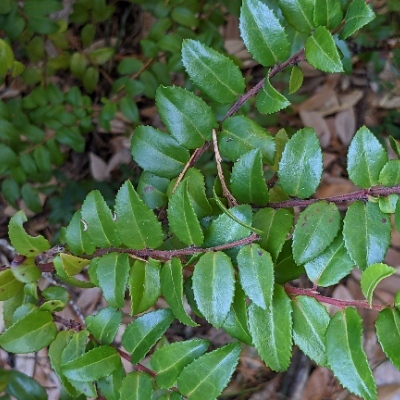
The leaves can be confusing. The basal leaves are generally dull, with purple veins (from the winter cold). The stem leaves are shiny with light green veins, palmate with spiky leaf tips. They often grow mixed with buttercups (Ranunculus occidentalis), which at this time of year have only their hairy, palmate basal leaves that can look as if they're part of the snakeroot plant.
S. tuberosa and S. graveolens are also found on serpentine, but they have different leaves (pinnate rather than palmate - the leaves look more like carrots). The greens can be eaten as famine food, but they have high amounts of saponins that give it a bitter taste and can upset the stomach without several changes of cooking water. S. tuberosa has an edible root but that doesn't seem to apply to other Sanicula species.
An example of early buttercup leaves growing with snakeroot (you can see the snakeroot on the far right).