
Since there is a lot of confusion about bees, and the saving thereof, a thread:

1. Honey Bees are a Eurasian/African species not native to the Americas but used here for agriculture. Their well-being is no more a conservation concern in the Americas than that of house cats or chickens.

2. Honey bees are having some problems, though, especially with high winter colony losses. Commercial beekeepers are slower to build colony numbers in the spring, which raises early-spring hive rental prices...
...which raises almond prices for consumers. This is the scale of the honey bee problems: one of agricultural economics.

3. Native bees are hugely diverse- with many thousands of species in the Americas- and their status varies from species to species. How are they doing? Some are great! Some are extinct! Some are disappearing! Most we simply have no idea, since there is very little money out there to hire the necessary people to watch 6,000 bee species across an entire continent.

4. But when we say "save the bees!" we are referring mostly to these many hundreds of native bees that are declining. Not honey bees, which are fine and still outnumber pretty much all the other bees now, in spite of elevated winter losses some years.

#bees #conservation

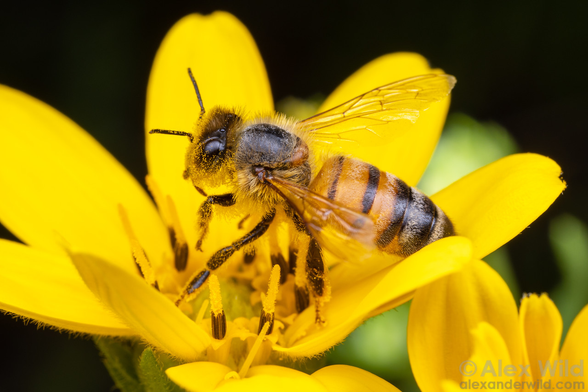
Anyway, here's a Honey Bee (Apis mellifera), it's the common waspy-looking bee with the big pollen-carrying baskets on the hind legs and the gray stripes towards the end of the abdomen:

Native bees look like everything else. Hairy, hairless, yellow, gray, blue, metallic green, black, white, stripes? or not. Huge. Or tiny, like dust.

https://www.alexanderwild.com/Insects/Hymenoptera/Bees/

Bees - Alex Wild

A gallery of bees.

@alexwild Hi Alex, What's the best pocket field guide for insects for novices to get? Audubon? Princeton? NWF?

@admin maybe Kaufman or NWF? Some states like Texas have good regional guides (like Abbott).

Insect field guides are all kind of a losing proposition though. Even the best can’t fit more than 3% of the species in, and nothing rivals BugGuide.