 Alex Wild
A queen ant, Formica vinculans, after her mating flight. Illinois.
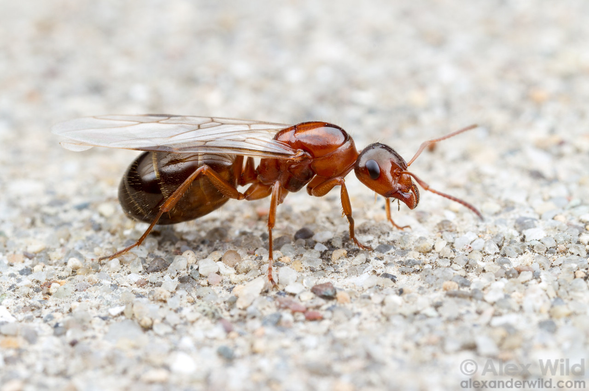
A queen ant, Formica vinculans, after her mating flight. Illinois.
@alexwild Hello, if I may ask: when you see an isolated winged ant and you don't know its species, is there a way to know, on the spot, if it's a queen or a male?
I do alright with the species I'm familiar with (I just observe them around, I'm not trained), but when I have nothing to compare them to, I can't be sure. Maybe there's an anatomical feature that could help? Anything that looks similar on males but not queens from a wide range of species?
And thanks for all your posts!
@futurebird @alexwild Curious, I usually get the feeling that an individual is a male or a queen but, after reading you, I realize that the features you mention are the exact ones I notice. I guess I developed an intuition over the years.
Still, this works as a good rule of thumb but it'd be nice to have a fool-proof way to be sure without having to become a Myrmecologist 😅
Thank you so much!
@enriquericos yeah, what @futurebird said.
Here’s a gallery of male ants:
https://www.alexanderwild.com/Ants/Natural-History/Male-Ants/
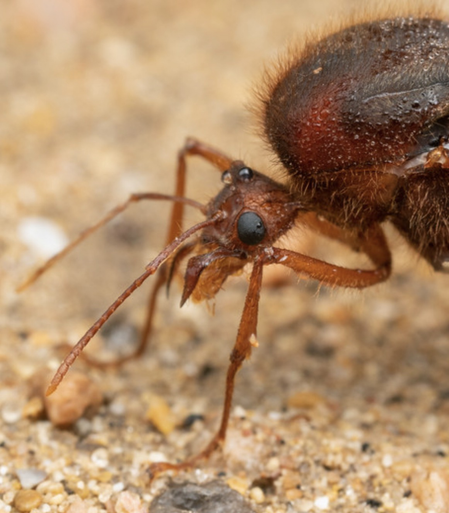
@alexwild @enriquericos This gallery always makes me feel bad for the queens imagine you only get to go on one date in your whole life and he shows up like this 🫤
(more seriously one other thing I notice with males are their bigger eyes— they are made for flying and looking)
@futurebird @alexwild @enriquericos
Now droneshaming is a thing.
 Ricós has moved
 myrmepropagandist
 Buster McNutt