 tired blip
A quote I saw today on another social that will now live rent-free in my head forever:
"No one wants to work" is just "no one wants to date nice guys", but for employers.
A quote I saw today on another social that will now live rent-free in my head forever:
"No one wants to work" is just "no one wants to date nice guys", but for employers.
"No one wants to work" really means an employer who doesn't want to pay a living wage, ignores how corporate greed influences inflation, and wants to offshore or automate jobs anyway.
Lots of people "dropped out" of the workforce during the pandemic.
At least 1.17 million Americans died of covid & the excess death rate remains high from long covid.
Walmart & McDonald's doesn't appear keen to hire 85 year old dementia patients or provide health care or affordable day care for women with school aged children who are exposed constantly to covid.
What they mean is there is a shortage of young, able, and fit workers willing to work these low wage jobs
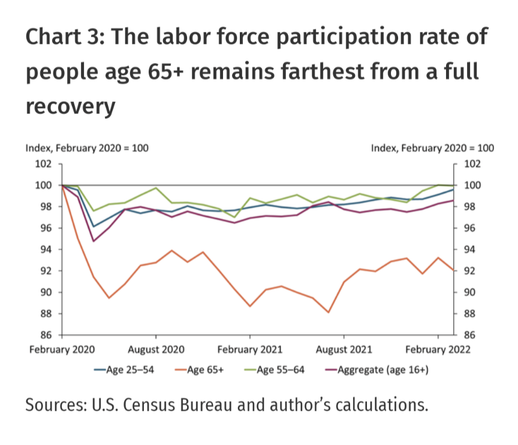

As of March 2022, the U.S. labor force participation rate remained one percentage point below its pre-pandemic level. After accounting for the effects of slower population growth and the aging of the population in the past two years, I estimate that around 2 million workers are missing from the labor force. Individuals age 65 and older, whose participation rates remain persistently below pre-pandemic levels, constitute most of the missing labor force.
 Nicole Parsons
 Dangandblast