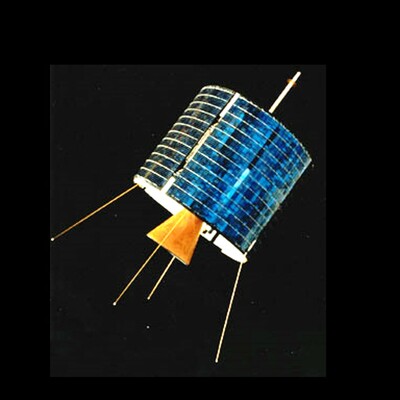


Today @NASA tweaked the power system on Voyager 2 so its instruments could stay online.

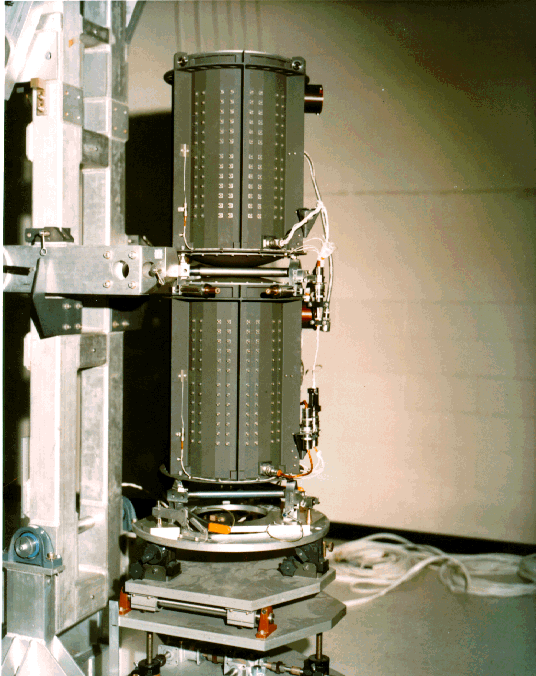
The spacecraft is powered by three MHW-RTG (Multi-Hundred-Watt Radioisotope-Thermoelectric-Generator) units.

They used Pu-238 to provide a total of 470 watts at launch, but Pu-238 has a half-life of 87.7 years, so 46 years later the craft is down to ~348 watts.

That they can keep a 50 year-old machine operating on a fraction of its power by making modifications from billions of miles away is AMAZING!

@PadreSJ @NASA science, Padre. Science!!! 🤩
@PadreSJ @NASA
Thank you for sharing this.
How super cool!!!
@PadreSJ Network Protocol 105 :)
@PadreSJ and the people doing this are using Fortran, a language older than the spacecraft https://ntrs.nasa.gov/api/citations/20180000413/downloads/20180000413.pdf
@PadreSJ @NASA Before I switched to better bulbs, my bathroom had a fixture with six 60W bulbs. The room was bright but then again, I was not looking from light-minutes away. I find this amazing too.
@PadreSJ @NASA @bryansmart
Voyager power level is close to 225 watts at this point, due to the additional effects of the gradual degradation of the thermocouples.
Take a look at this thread for some more details on this marvel of engineering - https://fosstodon.org/@AkaSci/110270549068436224
AkaSci 🛰️ (@[email protected])

Attached: 1 image Plutonium Pu-238 has a half-life of 87.7 years, i.e., in 87.7 years, 50% of its atoms decay to uranium-234 and then to lead-206. But the RTG has already lost half its power in ~45 years. Why? That is because the bi-metallic thermocouples, which are quite inefficient to begin with, also degrade over time. Every year, Pu-238 degrades by 0.7872%. The thermocouples must also degrade by a comparable amount to account for the net power loss rate. See graph below. #Voyager #Space #Science 3/n

Fosstodon
@PadreSJ @NASA Thanks for this toot - I've been trying to get in touch with them! Their factory warranty is almost up, and I have a great deal to offer them!