 Jan Wildeboer 😷
It's done. #Germany is no longer producing electricity with nuclear power plants.
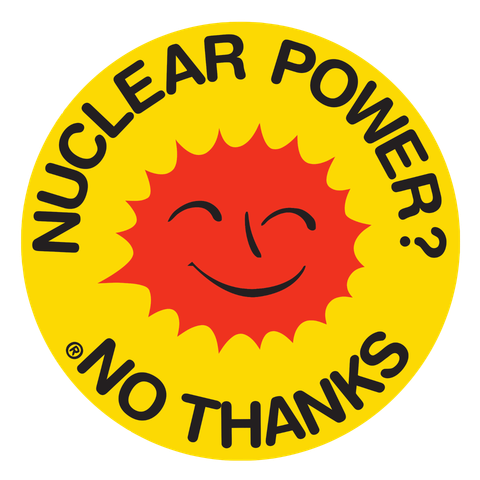
And FTR: compared to 2021 we continue to reduce conventional electricity production in 2022 in Germany.
Renewables now account for 46,3% of electricity production in 2022, compared to 42,3% in 2021.
It could and should go a lot faster, but the switch is happening.
Source: https://www.destatis.de/DE/Themen/Branchen-Unternehmen/Energie/Erzeugung/_inhalt.html
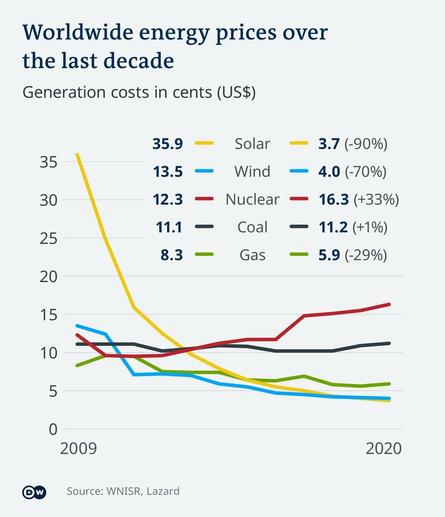

@jwildeboer Yes, it’s been that way for a while now. The key to renewable energy is that the fuel is free.
That makes it hard to compete with, particularly for nuclear where the costs increase after each major accident. Chernobyl made nuclear a lot more expensive, as did Fukushima.
For me, the biggest issue with Nuclear is not the risk, or even waste, but its increasingly poor economics. It’s why even France, the world leader in nuclear, is building wind farms like crazy.
@jwildeboer which storage technologies are used?
The problem with renewable energy is a storage. Or that what is most often heard.
Nuclear, coal, gas power plants provide electricity as long as fuel is provided. Wind, solar as long as there is wind or sun.
This is not the whole picture. The different sources are not interchangeable. Some sources are intermittent, others are controllable. You can't take a nuclear power plant offline and replace it with wind, because you can't control the wind output the same way. Nuclear is more than competitive for the purpose of having power generation capacity whose output you can directly control.
@newsorpigal @jwildeboer Nuclear is precisely not good for that, as Jan already explained. Coal is meh, but gas can be used really well for these occasions. However, note that even now these occasions are quite seldomly occuring in Germany, one reason being that wind and solar are in reverse correlation.
So the plan for Germany is to build solar+wind, a *few* "green gas" factories to store some overproduction. The remaining overproduction will go into other long-term storages. The few 1.5% of nuclear in Germany Don matter, they're too small to be in any way relevant.
And at the same time: We're building renewables with the output of 3 nuclear plants the next year, til 2030 of 30. It's not realistic to do the same with nuclear, neither time nor money wise. We'd be too late and broke. And dependant on Russia... . Going into nuclear doesn't make sense – remaining in nuclear may make sense if you aren't Germany were nuclear is just irrelevant.
Problem is the added cost of diverting the entrenched interests of capital investors in fossil fuels & nuclear to renewables. The former are still seen as 'safely profitable', especially since prices jumped on the back of Ukraine war.
Yeah coal is sooooo much better

 Leonardo Di Ottio
 Marcin Juszkiewicz 🙃
 newsorpigal
 lj·rk
lj·rk enigmajx #FBPE #FBPPR
 Benedikt Ritter (he/him)
 Mr Jau
 Evan Light
 Thomas Frans 🇺🇦
 Louis Couture