I'm in the Netherlands this week and happened to visit #Nijmegen which, just to its North, boasts a huge river more than a hundred meters wide and carrying nearly 3 million litres of water per second all the way from the Alps to the North Sea. That makes it one Western Europes largest rivers, and by the boat traffic, one of its most vital arteries. But this is not the #Rhine. No, this is the #Waal.
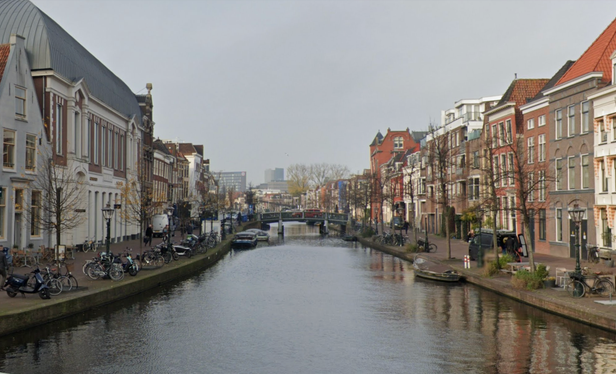
I also visited #Leiden, and I found another river. Here, this is effectively a canal with barely a trickle of water... But this IS the famous #Rhine river. So what the hell happened in the 100km between the Rhine entering at full strength on the German border and here? Well, 2000 years of #history & #geography happened. Here is a very brief thread...
Deltas are dynamic beasts - unlike the rest of a river's course, they host many divergent channels. The largest flow shifts positions as sedimentation blocks former channels while erosion opens new ones. This happens over decades to centuries.
But the origins of what is called the #Rhine comes from a latinisation of its #Gaulish name: Rēnos. That means it was coined more than 2000 years ago, when the course of the Rhine took a different, more direct path to the North Sea.
Since Roman times, the major flow coming from the South slowly & naturally took a shift to the left away from the channel via Leiden and towards Rotterdam. Over time more & more water coming from the German Rhine took this new route to the sea. It's no wonder that locals insisted their local, mostly unchanged river keep the same name. And so it came to be that that water from the Alps travels 1000km in a river called the #Rhine, but spends the last 100km in the #Waal and #Scheur & #Haringvliet.