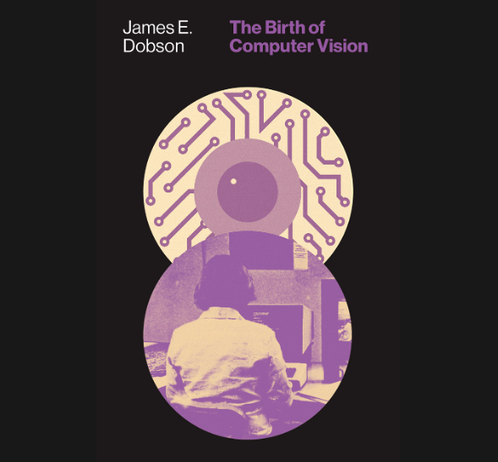
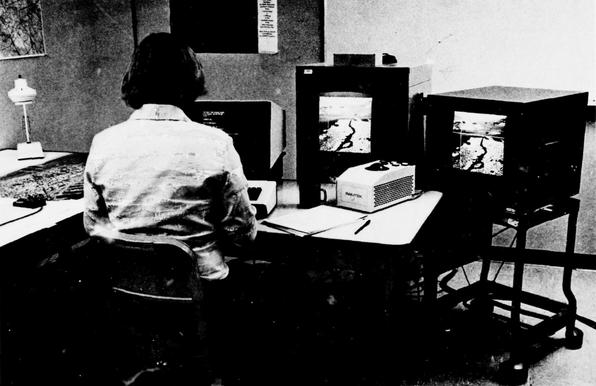
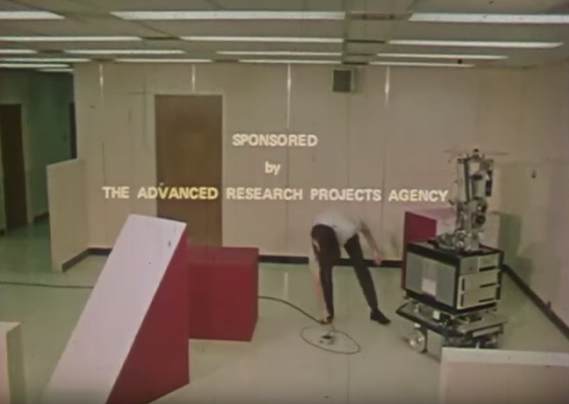
The cover of the book features the HAWKEYE workstation--an important project in the history of computer vision. It is one of the last moments that I write about. This is the “SRI road expert system” that marked the (temporary) turn to rule-based expert systems.
The history of computer vision and machine learning are impossible to separate as these technologies were understood to require each other, from the late 1950s to now.
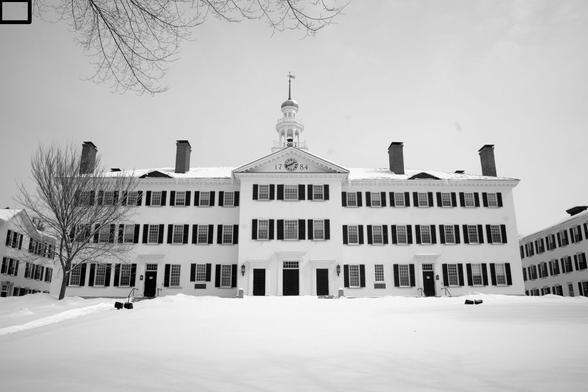
I use several images of my own institution, beginning with a picture of Dartmouth Hall. This was the building that housed the famous “Dartmouth Summer Research Project on Artificial Intelligence” in 1956.
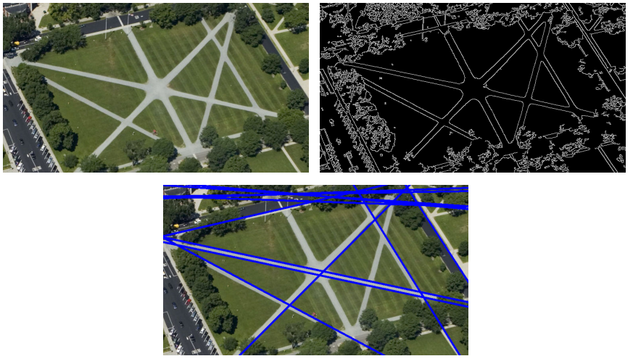
An aerial photograph of the Dartmouth Green was also useful to demonstrate Hough line detection, an important algorithm originating in the Shakey Project.
Shakey was a project funded by ARPA to build “automatons capable of gathering, processing, and transmitting information in a hostile environment”—an obvious oversell for anyone watching the promo video.
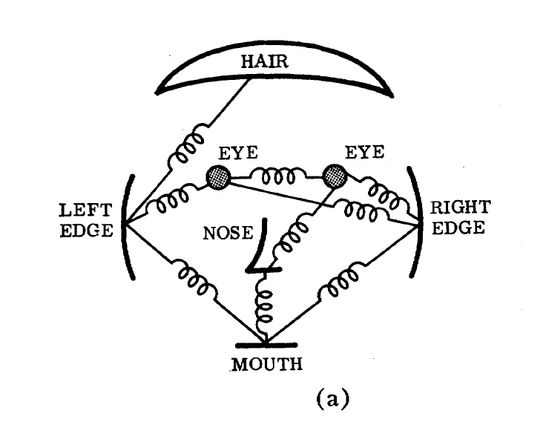
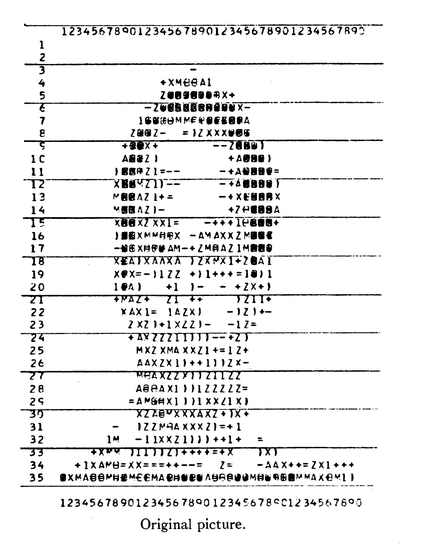
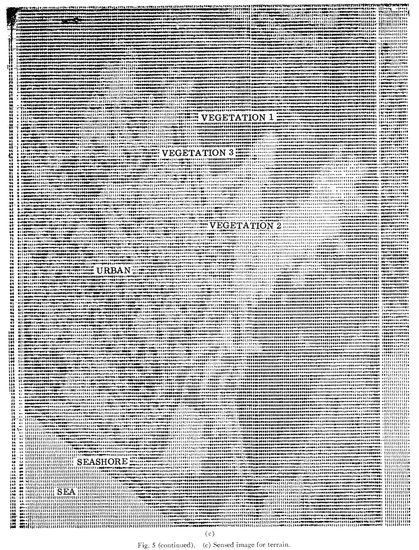
I also especially interested in the development of face detection algorithms. Present-day systems are directly descended from “pictorial structures” of the early 1970s. These topographical structures treated both faces and aerial photography.
1960s ideology saturated early ML and computer vision. Gender difference appeared in strange places. Charles A. Rosen, key member of the Shakey Project, used this to chart to explain feature selection and classification.
The Perceptron plays a major role in the book. In a forthcoming book, I write more about Frank Rosenblatt. Here’s an image of him on his sloop Shearwater (Bill Mutch). He died falling overboard this boat on his forty-third birth in 1971.
Rosenblatt’s colleagues at Cornell Aeronautical Laboratory were explicitly motivated to use the first mechanical Perceptron for military tasks. They wanted it to be an automatic photo-classification machine. Albert Murray used it to identify ships.
A final image: A strange proposal in the history of computer vision was a patent and proposal to recognize individuals by their hair patterns. I briefly mention this wacky proposal (US 7,792,33 B2) from 2010 in the book but didn’t include an image. Here’s one.
 James E. Dobson