Me porting Runestone from UIKit to AppKit.

Yay! Runestone now works with... *Checks notes*... UIKit?? 🤨

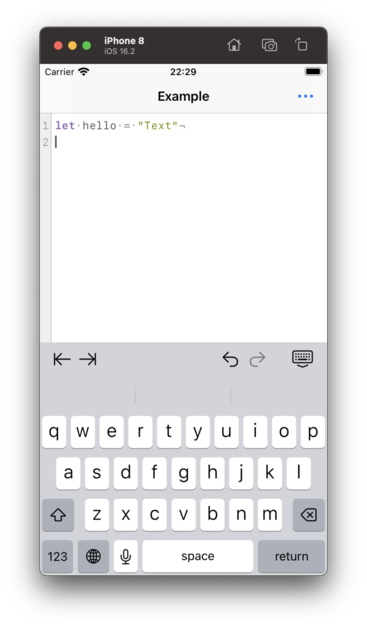
In order to prepare for AppKit support, I had to rip the internals of Runestone apart and put it together again. For the first time in 36 hours, Runestone now works with UIKit again.
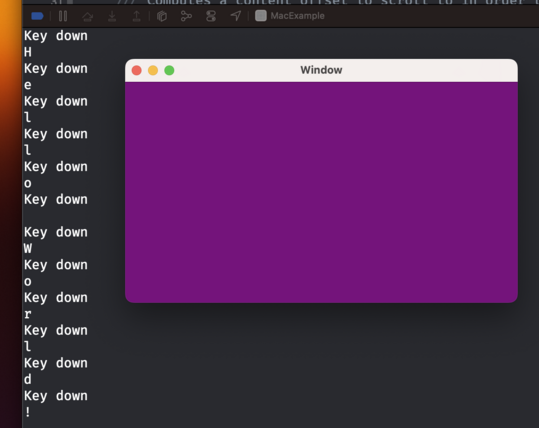
So I now have an NSWindow with an NSView that receives keystrokes. That's like step 0 in building a text editor, right?

There's such a long way to go still before Runestone is rewritten in AppKit. I hope I'll eventually turn a corner where all my work from UIKit can be reused and I ✨magically✨ have an AppKit implementation.

Runestone just rendered its first text using AppKit. Baby steps, y'all.

The AppKit version of Runestone now supports scrolling the content.

This involves a bit more than just wrapping everything in an NSScrollView because Runestone only renders the lines within the viewport.

Baby steps, y'all.

Time to add a caret that shows where characters will be inserted. I'm a little bummed that I have to implement this myself. We get that for free in UIKit.
Runestone for AppKit now has a caret. Baby steps, y'all.

I need to implement all moving within lines myself 😑

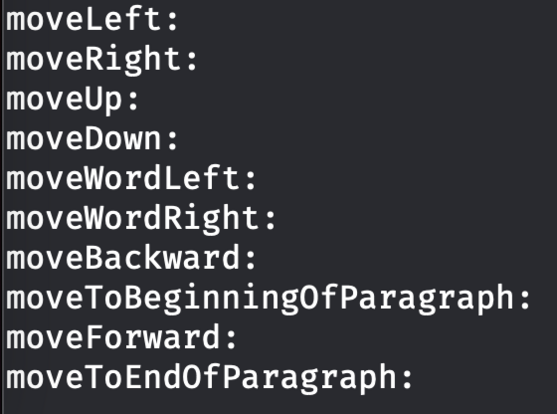
In the screenshot I'm logging the selectors that I don't handle but that AppKit expects me to handle. This is something we get (almost) for free in UIKit. Honestly, I really don't want to write this logic.

Got navigation with the arrow keys working in Runestone for AppKit.

I figured out how to reuse some of the code from the UIKit implementation so this turned out to be much easier than anticipated.

Next up is adding support for jumping between words with Option+Left/Right arrow keys.

Baby steps, y'all.

In order to move from word to word, UIKit relies on an implementation of UITextInputStringTokenizer. I managed to replicate UIKit's calls to my string tokenizer and reuse a lot of logic for moving between words. Baby steps, y'all.
@simonbs looks like that baby is taking some big steps… 👏