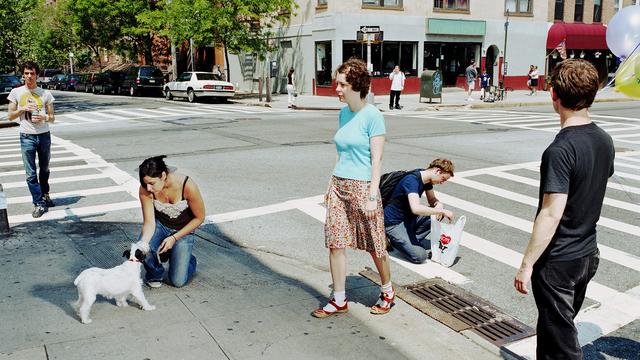
โ€œSomeone with a 1-hr car commute needs to earn 40% more to be as happy as someone with a short walk to work. On the other hand, if someone shifts from a long commute to a walk, their happiness increases as much as if theyโ€™d fallen in love.โ€ #CityMakingMath

Just one of 50 reasons why everyone should want more walkable streets. In Fast Company Magazine.

https://www.fastcompany.com/3062989/50-reasons-why-everyone-should-want-more-walkable-streets
#cities #urbanism #walking #streets #cars

50 Reasons Why Everyone Should Want More Walkable Streets

From making you live longer to making cities more resilient: If you want a reason to make your city more walkable, it's in here.

Fast Company

@BrentToderian This โ€œpercentage of happinessโ€ does not sound very scientific.

Also, I tried for a few months in Winter to walk (1h) to work instead of driving for 15 min, and I was not happier, because I had to wake up earlier and was coming back home later.
Is it the time spent in traffic jams that would cause unhappiness?

Now I use my bicycle whenever I need to go somewhere alone, including in Winter on the snow, but I work from home as much as possible, which makes me happy too. </my-life>

@matthieu The comparison was between a short walk and a long drive, not the same distance undertaken by car or foot.
@clacke What does then โ€œsomeone shifts from a long commute to a walkโ€ mean, if not commuting by walking? I thought I had understood that part of the sentence ๐Ÿ˜ž
@matthieu They stop working somewhere so far they need to drive and start working around the corner.
@clacke Right. But is the walking commute as long (in time) as the driven one, or is it shorter? If it's the latter, are the people happier because of the walking or because of spending less time commuting? Would a shorter, driven commute have the same effect on happiness?
@matthieu You are correct that the comparison changes too many variables at once, but comparing a "1-hour commute" to a "short walk" is unambiguous.