 Trombonelix
 ashley
PSA
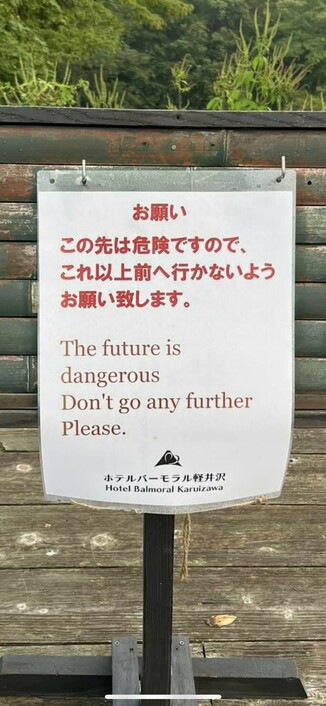
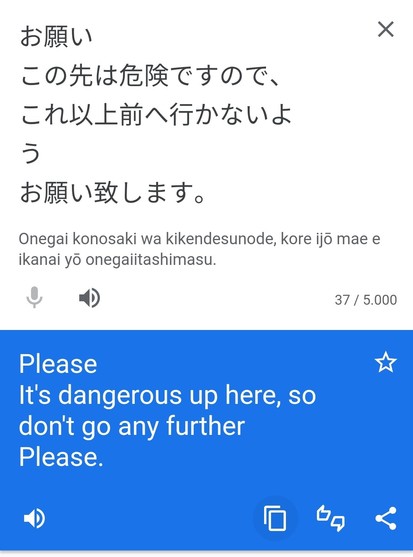
@Odanaos
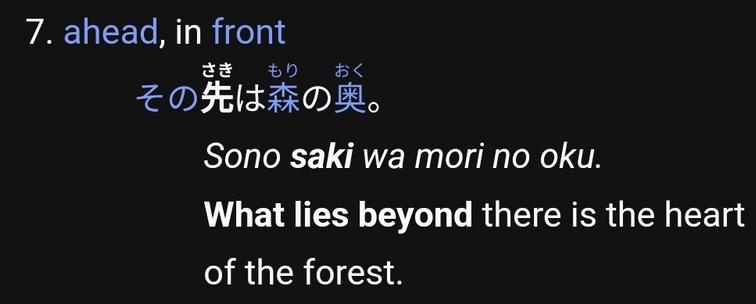
先 has several uses and meanings, thanks to the gradual adoption of kanji over centuries which is what makes Japanese so difficult to master, including relative time and location. The usage on this sign is in the attached image. Google did an okay job but made the tone way too casual. I guess a more accurate translation would be
Because danger is ahead, [we] humbly request that you do not go any further.
以上 indicates an ending. For example, restaurant servers will ask 以上?to confirm your order is finished and presenters will say 以上です at the end of the presentation.
前 means front or before (午前 before noon, 目の前 in front of/before your eyes).
The example from wiktionary even has some poetic license. その先は森の奥 is missing a verb, so what it directly says is "as for as ahead of that, [a/the] heart of [a/the] forest." That sounds bad and awkward and a native speaker would more or less interpret the phrase as wiktionary has it. It gives an idea of how challenging the translation can be and, given how many meanings 先 has, an understanding of why the sign makes little sense in its English context.
Still really funny, in any event. Bins in China will say recyclable and unrecyclable in Chinese, but change it to un/recycling in English and cause you to stop and think for a minute as to what the unrecycling process could be.
@rabcyr

 STⒶRFLEET
 Timmy O'Danaos
 Dorkomatic
 Elosha
 Jörg Model
 Kris Samsel
 ekes
ekes