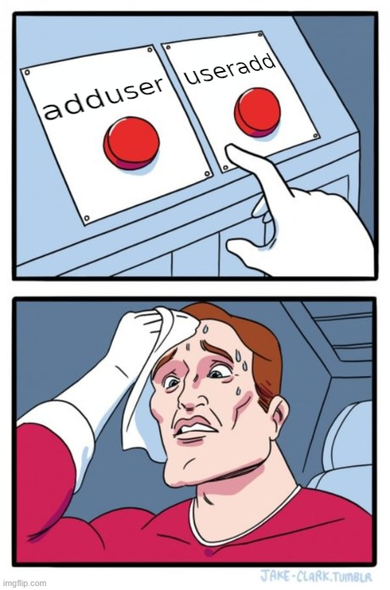
@d3rrick@nixCraft I'm always tempted to just edit the files instead of choosing between adduser or useradd, but I fear forgetting editing some file and breaking something
@arcepi@nixCraft Of course you need to be careful. Don't for example start hacking in /etc after a liquid lunch on a Friday. Otherwise, if you always make a backup copy of each file before you edit it, all should go well. Oh and don't forget the shadow passwords.
 nixCraft 🐧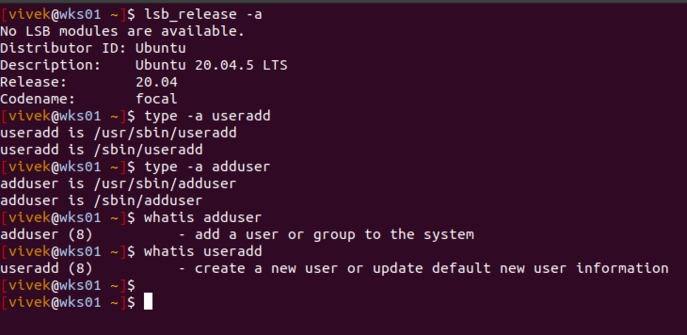
 Michael Gurski
 ObsPy Dev Team
 Derrick Everett
 arcepi
 Orca 🌻 | 🎀 | 🪁 | 🏴🏳️⚧️
 Duncan
 Florian Diesch
 Henri
Henri bKnoW
bKnoW 

 PY Chang
 Kevin Becker
 R. L. Dane

 Stéphane Charette