Albert Michelson, pioneer of optical interferometry, was born #OTD in 1852.

Michelson refined measurements of the speed of light, failed to find evidence of the aether, and developed a method that now underlies gravitational wave detection.

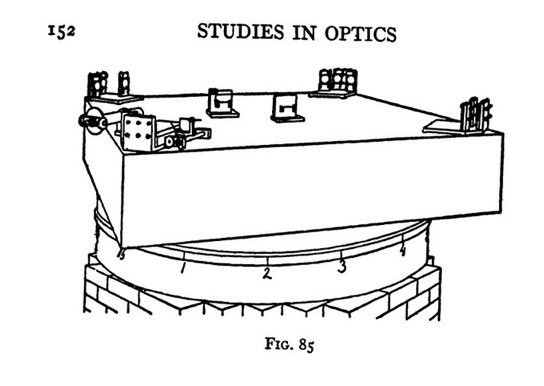
Photo: “Practical Physics,” Millikan & Gale
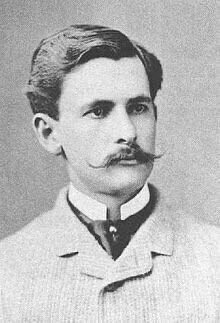
Michelson was born in Prussia but moved to the US at a young age. He grew up in little mining towns across California and Nevada.

In Nevada they lived in Virginia City, which was the setting for the TV show “Bonanza.” This was too good for the writers to pass up!

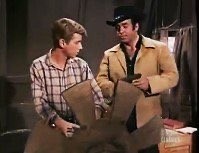
In the episode “Look to the Stars,” a young Michelson performs various experiments and measures the speed of light. The plot involves the Cartwrights helping him gain admission to the US Naval Academy.

Michelson did attend the Naval Academy. While in the Navy, he repeated Foucault's experiment to determine the speed of light. His result was more accurate than the value I use in my intro physics class. By 1883 he had measured 299,853 ± 60 km/s. The lower end of that error bar grazes the actual value of 299,792 km/s.

Michelson is best known for the experiment conducted with Edward Morley, attempting to detect Earth’s motion through a luminiferous aether. This experiment is the basis for modern optical interferometry and the method is used by @LIGO to detect gravitational waves.

In 1865, James Clerk Maxwell published "A Dynamical Theory of the Electromagnetic Field." He showed that electromagnetic waves propagate with a velocity close to the known speed of light, and concluded that light must be an EM wave.

Maxwell and everyone else assumed that electromagnetic waves, like all other waves known at the time, required a medium. They called it the "luminiferous aether." Maxwell's equations would only be valid in the rest frame of this aether.

Of course, no one could come up with an experiment that directly sampled the aether. You couldn't bottle it, isolate it in a lab, or explain why planets didn't slow down from drag as they sloshed through it.

But it must be there! Waves require a medium. Right?

In 1881, Michelson began work on an indirect test.

The idea was that light should propagate at different speeds in the directions parallel and perpendicular to any motion through the aether.

So Michelson designed an interferometer that would send light down and back two perpendicular legs of identical length. If light traveled at different speeds along the two legs, an interference pattern would appear when they recombined.

The first experiment wasn't sensitive enough to show anything conclusive.

In 1885 Michelson began his collaboration with Morley, building a larger and more sensitive version of the interferometer. They performed their experiment over a few months in 1887.

Here is Michelson's diagram of the apparatus (on a stone block floated on a pool of mercury) and beam paths. Multiple reflections increased the effective length of the arms of the interferometer, enhancing the effect they were looking for.

@mcnees 'A pool of mercury'... those were the days 😬