Finally taking the time to deep dive in #rust, and honestly, the language seems definitely heavy on the syntax, but the language also seems fun and seems to use its type system in very interesting ways.

Looking forward to using this language for something more serious soon.

Also, what's the more common hashtag for rust? #rust or #rustlang ?

@ainmosni not sure about fediverse practices yet but in general the latter one is usually used, mostly to avoid confusion with facepunch's game.
@ozkriff Thanks, followed the hashtag.
@ainmosni @ozkriff In case you didn't know, you can follow multiple tags in one pane using its settings button, and putting them in the "Any of these" field. That's what I use for following both tags.
@ozkriff @ainmosni Apparently using #RustLang (with uppercase letters) allows screen readers to properly pronounce it, improving accessibility. Watching is of course case-insensitive.
@silwol @ozkriff @ainmosni Fortunately pronunciation of "rustlang" and "rust lang" is the same.
@kornel @ozkriff @ainmosni You're right for this specific case of course. 😉
@kornel @silwol @ozkriff Is any pronunciation in English ever the same. :P
@silwol @ozkriff Hah, yeah, for #RustLang that makes more sense, with #golang I've started to see it as a single word (thanks google for making the actual name of the language hard to... well... google...).
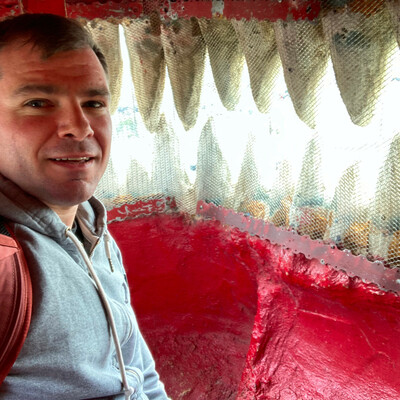
@ainmosni #rustlang avoids the nice pictures of old metal...
@jeancf @ainmosni also a popular game is named rust haha
@jeancf @ainmosni I always just use #rust but now I’m 100% trolling with rust photos
@ainmosni ive had success using rustlang in searches
@ainmosni There was also a poll a few weeks ago where rustLang got a majority (probably for the reasons other respondents have already mentioned)
@ainmosni what I love most about it is how little "magic" there is. All the things in the standard library are just ordinary rust code that you could write yourself, the only "special sauce" are the #[lang] attributes that tell the compiler e.g. which trait it should use for function pointers/closures: https://doc.rust-lang.org/src/core/ops/function.rs.html#54
function.rs - source

Source of the Rust file `library/core/src/ops/function.rs`.

@lambda As I'm coming from Go, I find that Rust has quite a bit more magic, although that might just feel like it because Rust is very feature-heavy compared to Go's minimalism.
@ainmosni I haven't done Go in a long while, but if I recall correctly, the differences that I'm getting at would be that the standard library collections are simply ordinary types with ordinary implementations, and so are channels, etc. - the base language does not really have much actual logic in it, that's all done using ordinary library code.
@ainmosni both tags are common, I believe #rust appears more often compared to #rustlang however it has the problem of being a little bit ambiguous regarding the non-development meaning of rust.
@mohs @ainmosni Like the game Rust. And the thing we call it when iron oxidizes.
@ilyvion @ainmosni seriously, who would name a physical attribute of something like iron after one of the best programming languages available?

@ainmosni Glad you are taking your first steps. Hopefully it is something you continue to not only find interesting, but useful. As you can tell by the numerous replies to your single toot, it is really one of the best language communities. Super friendly.

I use both tags.. but I did learn from this thread that it matters for accessibility when using camel case #RustLang

@ainmosni On the birdsite #rustlang was used more heavily so as not to conflict with the game of the same title.

Welcome to the party though, the learning curve is worth it!

@ainmosni Yeah I think #rustlang is the more general one. There's definitely a lot of 's &yntax::but you get<used> to it after a little while.