I didn’t realize that the Dutch fought for their bike lanes. There’s a lot of history within this that I’m currently naive about but excited to learn!

Here’s the article I’m starting with — How the Dutch got Their Cycle Paths: https://www.pps.org/article/how-the-dutch-got-their-cycle-paths

#bikes #urbanism

'How the Dutch Got Their Cycle Paths'

The extensive cycling infrastructure of the Netherlands didn't happen by magic. It was the result of a lot of hard work, including massive street protests and very deliberate political decision-making.

@dariohudon
I've thought a lot about the differences between the US and the Netherlands, and it seems like the presence of the American auto industry is a huge factor. The large US auto industry successfully lobbied hard against safe streets both locally and nationally, and crushed grassroots movements. The Netherlands lacked such a powerful auto industry, and grassroot safety movements didn't have to face such fierce and well-funded opposition.
@forpeterssake @dariohudon The opposition was fierce enough though! It was a decades-long struggle, against entrenched political resistance

@almodozo @forpeterssake Do you remember what the arguments against it were?

I wonder where those who opposed it are today? And especially, what they think of it now?

@dariohudon @forpeterssake

Where they are now:

— aged out (it's been a while!)

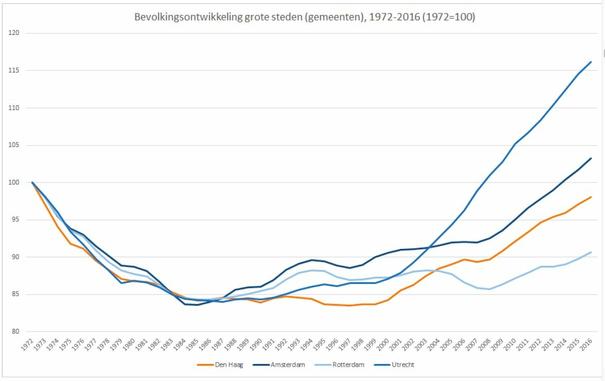
— and/or moved out to the suburbs/commuter towns (there was a big exodus from cities like Amsterdam in the '70s/80s! See attached chart and https://twitter.com/almodozo/status/1017078006945320960)

— and to some extent of course the resistance is still there, just the Overton Window has moved what the debates revolve around.

Joost on Twitter

“This chart about the population of the 4 large #Netherlands cities (via https://t.co/YQNGnFxlpb) helps me more consciously realize why; I was in my teens right when the numbers hit rock bottom. It wasn't quite like Budapest, but there's an echo.”

Twitter

@dariohudon @forpeterssake

As for what the arguments against it were — same as anywhere I guess. Shopkeepers complaining that reducing or eliminating car traffic would destroy their business. Car owners complaining that it would make the everyday life of "regular working people" harder.

@dariohudon @forpeterssake

Some of that was in bad faith of course (a lot of working class people relied on public transport). Some of it was disproven (pedestrian zones turned out to boost commerce — though it's true that there were probably segmentated differences, in that the shops that flourished weren't necessarily the same ones as were there before). But the arguments are evergreen.

@dariohudon @forpeterssake

But @forpeterssake makes a good point, though. It's hard to imagine now how deeply entrenched the belief in urban government was that cars, and direct traffic in general, were the future, and responsible governance meant literally paving the way for that future.

In Amsterdam, whole historical neighbourhoods that are now cherished tourist destinations were destined for the chop to make way for highways right into the city.

@dariohudon @forpeterssake

And we're talking about Labour and Communist politicians, who saw it as part of a greater vision of working class prosperity, replacing inner city slums with life in modern suburbs.

It took literal riots to stop some of this destruction (tho tbf it revolved primarily around a new subway line in that case). And a cultural and generational seachange to change the mindset, as some rebels of the 1970s became policy makers and urban planners in the 1980s.

/Sorry, long.

@almodozo @forpeterssake Thank you so much for sharing this Joost!

I’m going to process and then reply :)