Co-educational schools in 19th century were overwhelmingly located in the American West.

This saved costs & also reflected a Frontier mindset, where women were not presumed incapable of competing with men.

Founders emphasised women’s intellectual equality.
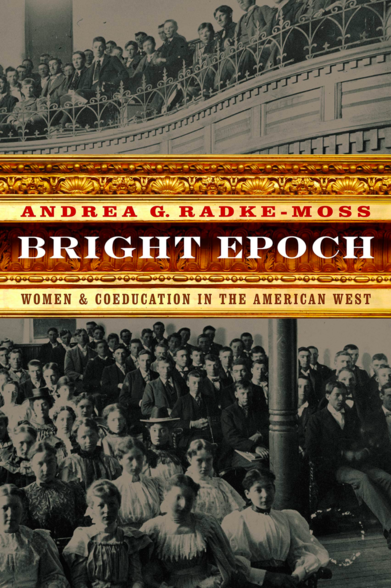
@histodons

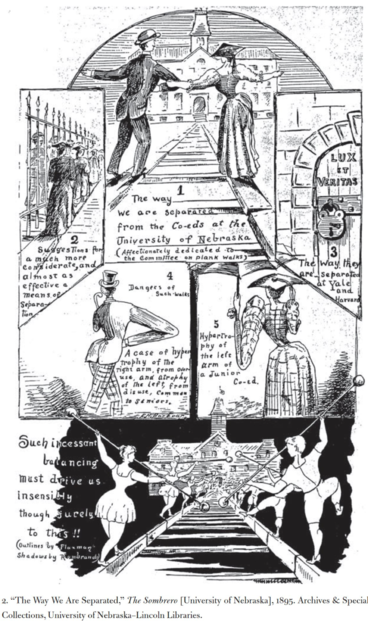
To prevent mischief between unmarried men and women, co-educational universities (like Nebraska) still imposed physical separation.

But this sharply contrasted with elitist East-coast universities like Yale where women were locked out (until 1969)

@histodons

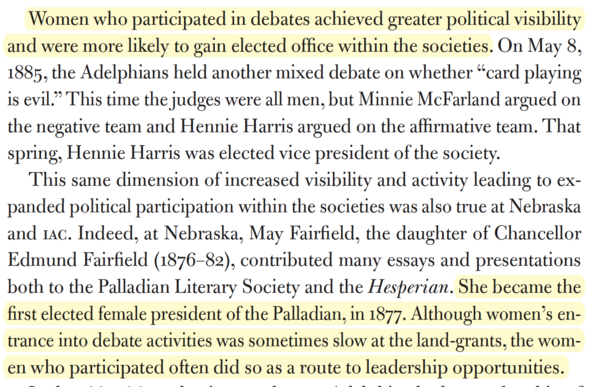
Co-educational literary societies in the 1870s-80s enabled men and women to discuss and share ideas.

Male societies usually wanted to refuse women’s entrance, but those that opened their doors watched women publicly demonstrate their intelligence

Female debaters became leaders

@histodons

I think this is a very interesting example of how culture can shape institutions, leading to further cultural evolution.

So the tough Frontier life convinced people that women were not so delicate and eroded separate spheres, which then shaped educational institutions.

@histodons

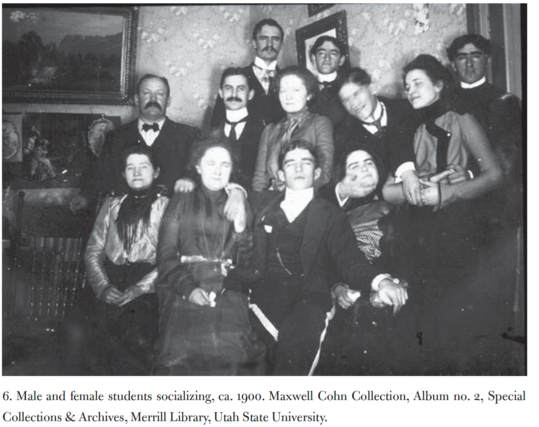
Co-educational schooling may have fostered a more liberal public sphere, where men and women could freely mix and mingle, without so many rules or restrictions.

Of course, as long as labour demand was low, the vast majority of women still idealised marriage and motherhood.

@histodons

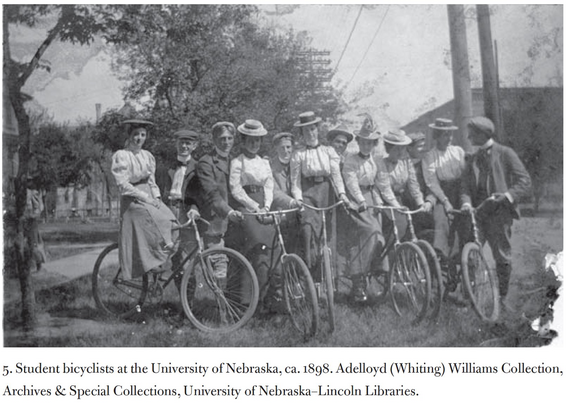
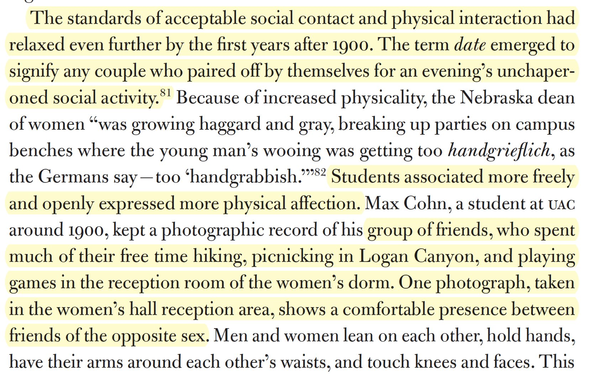
In 1895, a group of male and female students at IAC formed the “Mashemology Club”, for the purpose of coupling up

“Mashing” = openly flirting

A “mash” was a man or woman who makes advances in public spaces

It became socially acceptable for women to “MASH”!

@histodons

@draliceevans @histodons

I assume that's how the word "masher" came to be in the 1940s Bugs Bunny cartoons I watched while growing up in the late '70s and early '80s.

@draliceevans When two monsters love each other very much...
Yet, at some point, the term "masher" became synonymous with sexual assault.
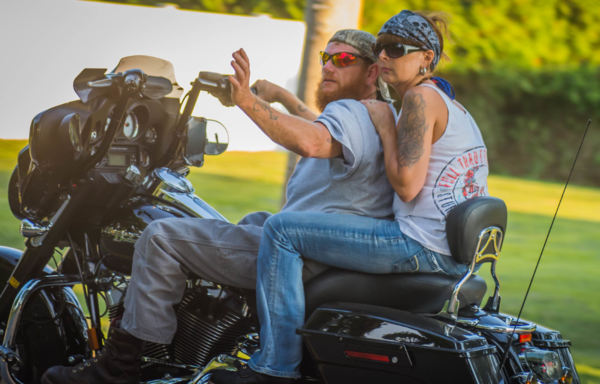
@draliceevans @histodons Interesting - now women almost always ride on the back of bikes. Never thought about that. https://flickr.com/photos/philipcohen/48240988507/in/album-72157634133940592/
new hampshire bikers

Flickr
@philipncohen @histodons oh yes, a man is always the one in charge!
@draliceevans @histodons Really interesting! I teach at a school in the West that was originally a "normal school" for women when it opened in the late 19th century and then later became co-ed. Very curious to understand how these differences in early history/origins affect school cultures today.

@draliceevans @histodons What were the causes that led to the development of that Frontier mindset? Did the harsher conditions of the frontier, where everyone had to pitch in to build their communities from the ground up, have something to do with it?

#history #USPol #USHistory #feminism

@hattamisra @draliceevans @histodons Part of it, I think, is that these territories needed to market themselves to women. The populations of these areas was heavily male, so territorial governments trying to achieve statehood wanted more women to settle there and start families so that the population would stabilize and grow. I'm not a trained historian though, so an academic can please add more context to my thinking.
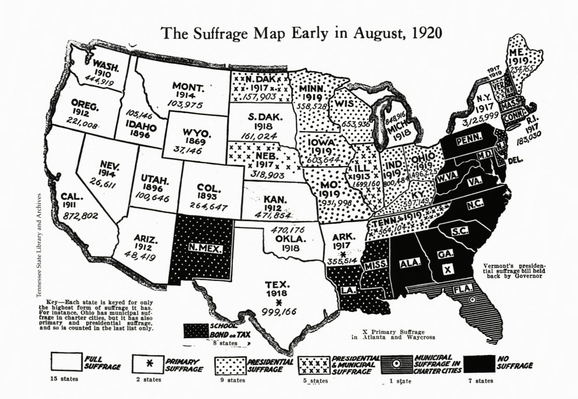
@s_bosbach @hattamisra @draliceevans @histodons This is one of the maps I always show my classes when we talk about the roots of the #19thAmendment. It indicates what you’re thinking—that whatever the reason may be, western states we more likely to have voting rights for women. Wyoming did so before it even became a state.
@DavidASmith For sure! The populist west led the way for women's rights. Look how late the east held out! Wild.
@s_bosbach As you probably know for sure, some New England states had property qualifications for voting until the 1820! For me, it all really hints at the injustices possible when states have the sole power of setting voting rights. There’s no peep on this from the national government until 1865.
@DavidASmith Wildly, only the fair interpretation of the Equal Protection Clause prevents a state from implementing property requirements to vote TODAY. Theres no affirmative right to vote anywhere in federal law, only unlawful forms of restriction (race, sex, age>18, tax payment).