 Dr. Angus Andrea Grieve-Smith
Hey, I should introduce myself! I'm Angus (he) or Andrea (she), depending on the situation. I study language (like changes in French syntax) and make things with computers (like language corpora and web applications). I spend time advocating respect for diverse gender expression and safer, more sustainable transportation. I have a great family, including some cats. I like singing and hiking!
I've seen people summarize their projects in their introductions. I suffer from mild to moderate projectitis, so I wouldn't be able to fit them all in! I will try threading them here. If there's a particular project you're interested in working with me on, please let me know!
My dissertation remains my most theoretical work, focused on the evolution of sentence negation in French, particularly the rise of ne...pas from the sixteenth through ninteenth centuries. I used a subset of the FRANTEXT corpus to support theories that change is driven by forgetting less frequent forms and replacing them with extensions of the most versatile constructions.
The Spread of Change in French Negation
Many varieties of French have changed over the years from expressing predicate negation (Geurts 1998) with ne alone, to the embracing construction ne ... pas, and then to postverbal pas alone (Jespersen 1917). When the increase in the frequency of ne ... pas over time is plotted on a graph, it takes the S shape of the logistic function (Kroch 1989). Bybee and Thompson (1997) note that "the type frequency of a pattern determines its degree of productivity," but "high frequency forms with alternations resist analogical leveling.' These two observations provide an explanation for the logistic progression observed by Kroch (1989). Following Lotka (1925) and Volterra (1926), we can extend this model to take into account the competition between constructions to express the same function. To test these models, I have compiled a corpus of French theatrical texts from the twelfth to the twentieth century. The logistic function accurately models the use of ne ... pas in these texts (R2 = 0.899), but the Lotka-Volterra model predicts the post-1600 changes in preverbal ne alone and embracing ne ... pas and ne ... point with even greater accuracy (r = 0.948 and 0.978).
One of my most cited #linguistics projects is a #SignLanguage synthesis web app in Web3D and Perl, with support from Jill Morford, Sean Burke and the NIDCD.
I put it on the back burner in large part because it got very little interest from Deaf people. The sense I've gotten is that they want human interpreters and see no real value from synthetic signing.
Even so, I'm proud of what I made, and this year, so that you can see how it works, I ported SignSynth to three.js!
While I was developing the SignSynth prototype, I was taking a psycholinguistics class with Jill Morford. She taught us about the early categorical perception studies using synthetic speech in the 1950s.
As soon as I had something to show, I showed it to Jill. She said, "We could use this to study categorical perception." And she got a grant from the National Institute on Deafness and other Communication Disorder for it!
Morford et al. 2008:
https://psycnet.apa.org/record/2008-15661-003
https://www.youtube.com/watch?v=9GtIzhSQiO8
Here's a project I was pleased to release to beta in 2021!
LangugeLab is a free, open source language learning web app, built in ReactJS and the Django Rest Framework. A well-trained Python developer or Linux system administrator can set it up in an hour. Then you can use any audio files for practice - from any language or dialect. Let me know if you want help setting it up!
Here's a #HistoricalLinguistics result I got in 2019, and haven't had a chance to present at a conference yet! You may think of left dislocation ("L'état, c'est moi!") and right dislocation ("Ils sont fous, ces Romains!") as features of contemporary #French but I found evidence of widespread use in early nineteenth-century theater - and much more!
It's in Chapter 6 of my 2019 book; let me know if you have difficulty getting ahold of it!
https://link.springer.com/chapter/10.1007/978-3-030-32402-5_6


I work as a Web Developer at the New School, a 102-year-old university, where I get an eclectic series of projects. Here's one we delivered in May that I'm particularly proud of:
Our old portal needed to be upgraded to a new environment with no guarantee that the old customizations would work. The Dashboard synthesizes data from multiple DB and API calls.
I rewrote old Java/Clojure/Javascript code into clean Java 8 with unit tests, to fit a design by Sharon Kim, a Parsons student.
Theoretical #linguistics projects are great, but they tell us nothing if they're not based on representative data. That's why I'm proud to have created the Digital Parisian Stage, to my knowledge the first representative historical corpus of French.
It's baseed on a 1% sample from the catalog by Wicks (1950). The first batch, 1800-1815, is available on GitHub and in SketchEngine!

GitHub - grvsmth/theatredeparis: This is a repository for public-domain theatrical texts from Paris. The first batch is a random one percent sample from the first volume of Charles Beaumont Wicks's The Parisian Stage.
This is a repository for public-domain theatrical texts from Paris. The first batch is a random one percent sample from the first volume of Charles Beaumont Wicks's The Parisian Stage. - GitHub...
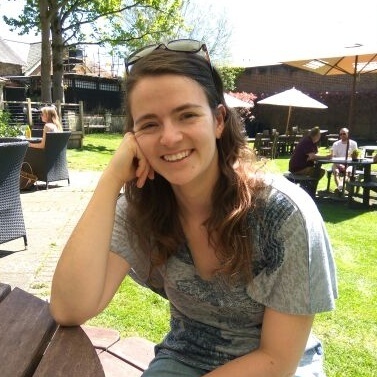 Andrea Vaughan
My gender expression is fluid. Several years ago I felt frustrated by changes to the terminology around transgender feelings, beliefs and actions. I decided to study the lexical semantics of various terms in this frame, in the hopes of clarifying our thinking and advocating for better treatment!
https://transblog.grieve-smith.com/2013/04/17/three-definitions-of-transgender/

Three definitions of transgender
You may think you know what "transgender" means. But if you've been around the trans community for any length of time, you know that the word has been fought over before. There are at least three different ways that the word is used, and all apply to a somewhat different group of people. First