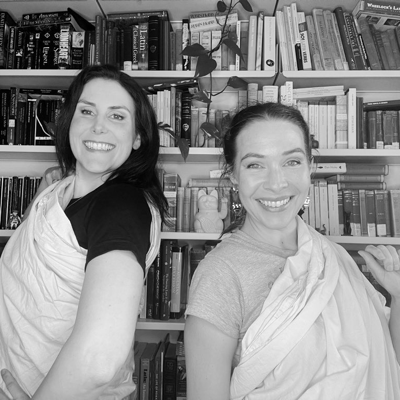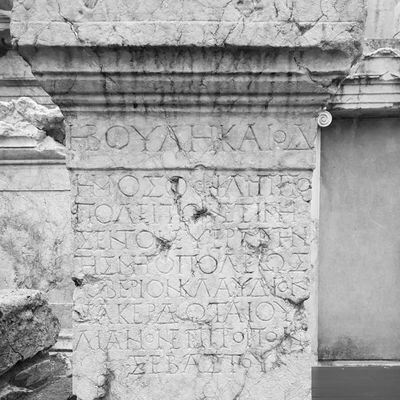
Hello beautiful folk of Mastodon! The Partial Historians is a podcast focused on ancient Roman history. We also dip into areas across the wider Mediterranean as well. Dr Rad is a specialist in Spartacus and Dr G is an expert on the Vestal Virgins.

Our primary series is tracing the history of Rome from the founding of the city - we’re up to the 430s BCE (only taken us 10 years to get here!).

We also interview amazing scholars about their work. The latest is the fabalous @vickyausten @mstdn.ca on depictions of flora in the Augustan age.

Our aim is to bring you history with rigour and depth while also ensuring it is accessible. Watch this space!

#Historians #Ancient @histodons @archaeodons
@phistorians So wonderful to see you here, Dr Greenfield and Dr Radford 🥰
@phistorians Salve! You want to check out/use the #antiquidons hashtag and @antiquidons group, too. Lot's of interesting people to meet. :)
@phistorians It's great to see you guys over here! It's starting to feel a little more familiar. Thanks for the boost!
@RobEdmunds11 No worries! Glad to be here and seeing familiar faces as we go along is definitely lovely ☺️
The remains of the Crusader sea castle at Sidon in Lebanon. It was built in 1228 AD as part of a series of Crusader fortifications.
The island on which it was built had previously been the location of a temple dedicated to Melqart, the Phoenician god conflated with Hercules.
#Crusades #Lebanon #histodons #Hercules #Phoenicians #Melqart

@phistorians Visiting Mallorca right now, this post seems quite apropos given the Romans' conquest of the island and their hand in establishing the olive and wine industries here. Some of the trees on the old terraces are absolutely ancient!

After reading Mallorca's entry in Wikipedia, I'm starting to think the poor island is like that one country that gets swapped like a hundred times during a two-day game of Risk

@loradurance Mallorca! Lucky you ☺️ It’s always food for thought when seeing evidence of Rome’s legacy in some many areas and raises questions about local identities and how people in the past saw their relationship with the Roman military and culture.