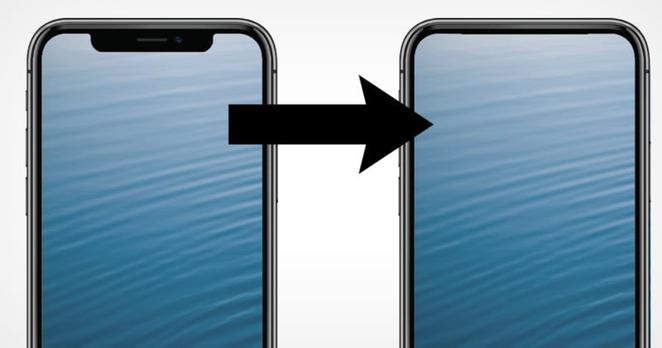
iPhone 18 sẽ có Face ID “chìm” dưới màn hình, đưa trải nghiệm tràn viền lên tầm cao mới! 📱✨ #iPhone18 #FaceID #Apple #CôngNghệ #UnderDisplay #MànHình #TechNews #CôngNghệMới

https://cafef.vn/iphone-18-bat-ngo-lo-tin-se-co-face-id-chim-duoi-man-hinh-188251211101742675.chn

iPhone 18 bất ngờ lộ tin sẽ có Face ID "chìm" dưới màn hình

Ước mơ màn hình tràn mọi viền, không khiếm khuyết của người dùng iPhone sắp trở thành hiện thực?

https://cafef.vn

A Display ‘Window’ is Apple’s Unusual Solution to Hide its Selfie Camera

Apple has recently patented an unusual method for dealing with the much-maligned "notch" that contains its front-facing camera. Rather than use a system that places the camera under the display, Apple instead has designed a moving "window" that can open to reveal a camera behind it.

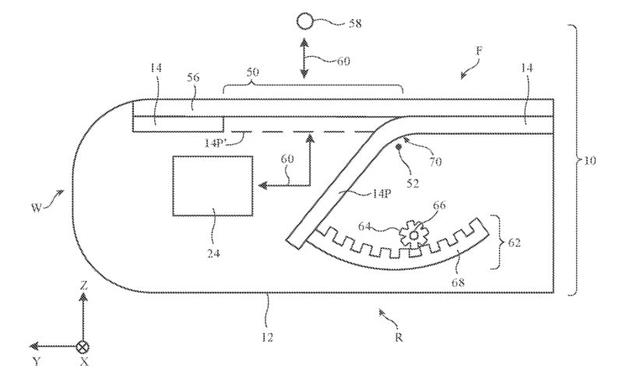
As noted by Patently Apple, the expandable display that scrolls open thanks to a motor hidden under the display is shown as hiding the camera area and notch when it is not in use. Apple describes it as a window region that overlaps on a movable portion of the display. When closed, the moving portion overlaps the window and the pixels in the moving display can act as if they were part of the complete display panel. When open, the moving portion is lifted away from the display so that the optical component can pass through without obstruction.

One image included with the patent shows a small cog located under the display that turns an arched, geared piece that is connected to a folding section of the display. When opened, the camera can peek through the opening and allow it to gain an unobstructed view.

The patent also describes a "rolling" display window that uses the same concept, but instead of relying on a hinge, the display is "rolled" back to reveal the camera.

Whether it is a hinged flap or a flexible roll, Apple seems to want to avoid having its cameras look directly through a display screen so that image quality can be its best.

As PetaPixel has covered in the past, multiple companies in the mobile space are working on a solution to the problem of the notch or hole-punch for a front-facing camera that will interrupt an otherwise edge-to-edge display. Under-display cameras appear to be the most popular choice, as both ZTE and Samsung have released consumer products that feature the tech.

Unfortunately, under-display cameras have their downsides. Because the camera is under a panel, the camera is physically encumbered by the pixels which can be visible in the image, especially in backlit conditions. Images also tend to be quite soft. Samsung's recently announced Galaxy Z Fold 3 does exhibit this issue, but it is strongly mitigated by heavy post-processing that seems to help fix the problem in several possible use cases, though it's still noticeable.

Both Xiaomi and Oppo have introduced solutions to this problem as well, and each claims to have solved the main issues with under-display technology. Xiaomi recently announced the Mix 4 which will feature the tech, and Oppo showed off its prototype solution as well. Both promise to be hugely improved over what Samsung and ZTE both have attempted.

Samsung Galaxy Z Fold 3 | Screen Capture via MKBHD

Another issue with under-display cameras is that the pixels over the camera itself appear imperfect. Google has attempted its own design that will use a second OLED screen under the main screen along with a prism that it believes will help alleviate this issue.

Even though all these other companies have different methods for addressing the same situation, they all have one thing in common: few to no moving parts. Apple appears to be willing to risk the implementation of physical moving gear that directly bends the display, which is notable. Not only do moving parts mean more places that could break, but it also means that the device will take at least a bit of time to prepare itself to take a photo or video.

If Apple does ever use this patent, it likely won't be for some time. The Silicon Valley giant is known for playing the long game and being the last to add new technology into its devices. Under-display tech is still so new that Apple is unlikely to take a risk on anything unless it is far more proven, unlike Samsung, Xiaomi, or Oppo who enjoy positions as testers of bleeding-edge technology.

Apple's full patent can be viewed on the U.S. Patent Office's website.

Image credits: Aspects of header photo licensed via Depositphotos.

#mobile #news #technology #apple #appledesign #appleiphone #applepatent #cameratech #cameraunderdisplay #frontfacingcamera #iphone #patent #selfie #selfiecamera #underdisplay #unusual

A Display 'Window' is Apple's Unusual Solution to Hide its Selfie Camera

Two options were presented: a folding or a rolled solution.

Xiaomi Launches the Mix 4 with its First Under-Display Selfie Camera

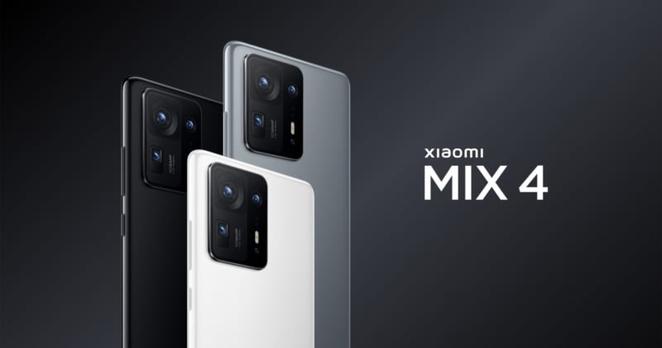
Xiaomi has announced the Mix 4, the latest in its Mix series that generally has highlighted cutting-edge technology and sleek design. The latest has an impressive array of main cameras but also features the company's first commercial launch of an under-display front-facing camera.

Xiaomi's Camera Under Panel (CUP) is similar to the one that was launched by ZTE and also the prototype that was recently announced by Oppo and uses a small area of the display panel to let light pass through in a way that Xiaomi describes as "basically invisible." Xiaomi's Mix 4 iteration is a 20-megapixel camera that lives below the 120Hz 1080p curved OLED panel.

As noted by The Verge, last year Xiaomi announced that it intended to start shipping smartphones that would be equipped with its third-generation under-display camera technology. The first and second generations never found their way into a consumer device, and the Mix 4 is Xiaomi's first to feature any under-display camera technology.

Xiaomi describes its CUP technology as one that offers a 400 ppi seamless viewing experience in the camera's zone and matches the pixel density, brightness, and color detail of the surrounding screen.

"While the camera is virtually invisible to the eye, Xiaomi MIX 4 combines its hardware and software capabilities to ensure the resulting photographs and videos captured using the front camera retain true colors and details," the company says. "This is done through Xiaomi’s CUP technology, which minimizes light diffraction through a special circuit design, as well as a new transparent curved wiring Indium Tin Oxide (ITO) material coupled with imaging algorithms."

The main cameras on the Mix 4 are no slouch either. The triple camera array features a 108-megapixel main camera that uses an HMX 1/1.33-inch sensor with an f/1.95 lens and optical stabilization as well as an 8-megapixel 50x periscope zoom lens (120mm equivalent focal length) with optical image stabilization, and a 13-megapixel "Free-Form" ultra-wide-angle camera with a 120-degree field of view and an f/2.2 aperture.

The Mix 4 will launch in China in four storage variants (8GB+128GB, 8GB+256GB, 12GB+256GB and 12GB+512GB) and will retail for 4,999 yuan (about $800) at the low end and 6,299 yuan (about $970) at the high end. No indication of international availability was noted at the time of announcement.

Xiaomi has been growing in popularity over the last year and in July the company overtook Apple in global smartphone market share: Xiaomi had a 17% share of global smartphone shipments, ahead of Apple’s 14% and behind Samsung’s 19%.

#mobile #news #android #cameraunderpanel #cup #mix4 #newtech #smartphone #smartphonecamera #underdisplay #underdisplaycamera #xiaomi #xiaomimix4

Xiaomi Launches the Mix 4 with its First Under-Display Selfie Camera

Xiaomi is the second most popular smartphone brand in the world.

Oppo’s Next-Gen Under-Display Selfie Camera Appears Near Perfect

Several companies have been grappling with the physical issues that come with hiding a selfie camera behind a display, but Oppo seems to have cracked the code. Its next-generation under-display camera appears to have no distinguishable downsides when compared to one in a notch or hole-punch.

Oppo says that its new under-screen camera solution solves many of the technical and manufacturing-related challenges that have plagued manufacturers attempting for years. The company says that breakthroughs it has made have resolved issues like inconsistent display quality in the area above the under-display camera as well as the poor image quality that is caused by forcing a camera to shoot through a layer of display pixels.

Innovative pixel geometry of OPPO’s next-generation under-screen camera

The new technology uses several new innovations in structure design and artificial intelligence (AI) algorithms. Firstly, it uses what Oppo calls "innovative pixel geometry" to shrink the size of each pixel without decreasing the number of pixels to ensure a 400 pixel per inch (PPI) high-quality display even in the area right above the front-facing camera. It also uses transparent wiring in lieu of the traditional screen wiring with what Oppo calls an "innovative" new material. The company has also reduced the width of the wiring by 50%.

Oppo also claims it has improved the control of the screen's color and brightness:

"In contrast to the current industry standard of using 1-pixel circuit to drive 2 pixels (“1-to-2”) in the screen area above the camera, OPPO has introduced a new solution using proprietary screen technology, with each pixel circuit driving only 1 pixel (“1-to-1”)," the company says. "When combined with OPPO’s precise algorithmic compensation technology, this allows the chromaticity and brightness of the entire screen to be precisely controlled with a deviation of about 2%."

Oppo says that this improved control also improves the reliability and lifespan of the display, improving its expected life by up to 50%.

The camera itself was developed in tandem with a series of imaging AI algorithms including diffraction reduction, HDR and auto white balance to reduce the negative effects that are usually found with under-display cameras. The AI has also been trained to reduce diffraction and the result looks as though there is no screen in front of the camera at all.

A Selfie Photo taken with OPPO USC prototype | OPPO

For now, the technology is only part of prototype designs. While other companies have already implemented under-display cameras with lackluster results, Oppo appears to be the first to claim it has developed a camera that exists under a display that has no discernable, visual downsides from those that are housed in a notch or a "hole punch" that are ubiquitous in smartphone displays today.

#mobile #news #technology #frontfacingcamera #oppo #selfiecamera #smartphone #smartphonecamera #underdisplay #underdisplaycamera

Oppo's Next-Gen Under-Display Selfie Camera Looks to be Near Perfect

Say goodbye to the notch?

Xiaomi Avoids Under-Display Camera Issues, Hides One in Bezel Instead

Multiple manufacturers are currently attempting to solve problems with a smartphone's front-facing camera. Current devices generally use a notch or hole-punch, but to keep a display seamless some are trying to hide them under the display itself. Xiaomi thinks there might be a better way.

Hiding a camera under the display has been a recently popular way to try and make a seamless smartphone display. Oppo has been working on an under-display camera solution as far back as 2019, and Google has already patented a unique solution to the same problem. Even Xiaomi has tinkered with an under-display solution.

The only manufacturer that has actually delivered an under-display camera is ZTE with its Axon 20 5G. Unfortunately, there are pitfalls to this design, and ZTE's version does not provide particularly good image quality. That said, there are rumors that suggest the company is already close to a second iteration of the design.

Instead of trying to deal with these problems, Xiaomi has instead decided to address the issue a different way: by hiding the camera in the display bezel.

As found and illustrated by LetsGoDigital, Xiaomi has patented a design that would hide a tiny camera in the thin space between the display and the top of the camera, an area that usually goes unused except for an earpiece. While technically the camera would still exist behind the display, this method would allow it to gather light in the space between the display and the edge of the smartphone and avoid the obstructions of the actual LCD display that plagues other under-display designs.

This method would allow Xiaomi to avoid the research and development necessary to get full under-display cameras to work well, which means that integrating the camera into the bezel would be a lot less expensive. LetsGoDigital also asserts that not only would this be more affordable than under-display tech, it would also be cheaper than current hole-punch or notch methods. That, and it would still have the advantage of being a lot less noticeable -- the real end goal.

Xiaomi's particular patent describes a transparent area over the camera in the screen edge so that light can pass through the display panel, through the translucent element, and onto the camera lens. Optical fibers are used for the light-transmitting element, though a prism could also be used.

Sister-companies Oppo and OnePlus have both also shown interest in pursuing in-bezel cameras, but none of the companies have released a finished product integrating the concept yet. It is unclear if there are other drawbacks to the design that have thus far prevented its implementation.

Image credits: Design renders by LetsGoDigital and published per usage guidelines.

#mobile #news #bezel #design #letsgodigital #patent #smartphone #smartphonecamera #underdisplay #underdisplaycamera #xiaomi

Xiaomi Avoids Under-Display Camera Issues, Hides One in Bezel Instead

A tiny camera hidden in the bezel.

Samsung Patents Describe Methods That Solve Two Camera Limitations

Samsung has filed a patent for a folding smartphone with a rotating camera as well as another for an under-display camera as well as other sensors such as an in-display fingerprint sensor.

Although Samsung has already released a smartphone with rotating camera technology -- the Samsung A80 was the company's first smartphone to have a popup selfie camera that uses a rotating module -- it appears to still be interested in pursuing this design in future devices. Additionally, a recent patent shows under-display sensors, including an imaging sensor, implemented into the foldable smartphone.

As two reports show -- one from _LetsGoDigital _and the other via SlashGear -- Samsung Electronics applied for a pair of patents that may or may not involve the same finished device, but both refer to a Samsung foldable.

Following an increase in demands for large smartphone screens, one patent shows a rotating camera that would affix to the side of the device and live in a cutout notch next to the edge of the display. The main purpose of this design is to solve the perceived problem of a single camera that has a fixed position and therefore cannot be used to capture multiple angles.

A rotating camera is just one of the ways a company could choose to address this, while Oppo has patented a design that uses a set of mirrors.

The other patent describes a pair of under-display front-facing cameras. That second patent also describes other under-panel sensors such as a fingerprint sensor, a receiver, and a proximity sensor.

Under-display cameras have proven to be a popular development recently among smartphone manufacturers. The ZTE Axon 20 5G was the first smartphone in the race for an under-display camera, and the OPPO N1 features the world's first rotating under-display camera, and others like Xiaomi have followed with similar technology patents.

In Samsung's patent, the camera and its related sensors are placed in the top center of the right-side display, while the fingerprint sensor is placed at the bottom part of the screen. Optionally, several cameras can be placed under the screen, with the company mentioning in the documentation three or more cameras.

Mock-up by Let'sGoDigital

It is expected that the image quality provided by the under-display technology will not be particularly high and the camera modules themselves will still be somewhat visible even though it is placed under the display. This is a problem that the ZTE Axon experienced and can be seen in a review from Marques Brownlee.

_Let 'sGoDigital _speculates that this technology might be implemented in the highly anticipated Samsung Z Fold 3 -- probably with a 16 megapixel (1 µm) image sensor made by Sony -- which is expected to be introduced in August 2021 at the Galaxy Unpacked event, alongside the Samsung Z Flip 3 smartphone.

#mobile #news #technology #cameraphone #rumors #samsung #smartphone #smartphonecamera #underdisplay #underdisplaycamera

Samsung Patents Describe Methods That Solve Two Camera Limitations

Samsung has patented a couple of camera ideas that it may release in its Galaxy Fold series.

Microsoft Patents Four-Color Quad Camera to Match its Windows Logo

Microsoft has patented a new "logo camera" system for use on its devices. It uses a quad-camera array in the shape of its iconic Windows logo where each individual camera is optimized for a specific color.

Discovered and visualized by LetsGoDigital, the patent was originally filed in October of 2020 and the 40-page documentation was published publicly on May 14, 2021.

According to the documentation, the four cameras are arranged in a square array which would be placed beneath the screen where each camera would pack a color filter corresponding to the Microsoft Logo. The red, green, blue, and yellow cameras would supposedly display the company's logo or act as notification lights when not being used to capture images.

By default, the Microsoft logo would be displayed, but as soon as the camera is activated it would disappear and the shutter would be opened.

The patent suggests each camera is optimized for its respective color and gives the device "plenty of data to generate impressive images." The company also states that using a four-camera system instead of one single camera can lead to a thinner device overall. Using four cameras to do a job normally reserved for one "normal" camera may be a bit of an overkill though since the system will rely heavily on the software and processing power of the related devices to stitch the data from the four cameras together into one single image.

The four individual cameras would likely mean better low light performance, but also have the disadvantage of introducing more noise as the color conversion is apparently particularly sensitive to this drawback.

"The quad front camera is placed in a 2×2 array. By opting for multiple camera sensors, thinner camera modules can also be used, allowing the device to retain its slim form factor," LetsGoDigital explains. "To achieve a high camera resolution, the pixel density of the screen is increased. Each sensor and lens is configured to be optimized for particular colors."

Since this is just a patent document find, there is no information about the inherent quality issues of using an under-display camera, but the patent doesn't rule out the use of the array on the rear of the device.

As illustrated below, the concept is not just reserved for use in smartphones and could potentially be used on future Microsoft tablets, laptops, and desktop displays as an under-display camera system. It is unclear how much this kind of technology would cost to the end consumer as under-display camera technology is still in its early stages.

Since this is just an initial patent finding, (initially filed in 2019), it is not clear when this technology will make it to market, or even if the company is actively pursuing it. In search of the perfect, uninterrupted main display, multiple companies are looking at different ways to get there. Xiaomi recently patented an under-display solution and Google is also working on a solution to get rid of the hole-punch or notch found on just about every modern smartphone.

_Image credits: Renders courtesy LetsGoDigital and used with permission. _

#news #technology #camera #fourcolor #logo #logocamera #microsoft #ms #patent #smartphone #underdisplay

Microsoft Patents Four-Color Quad Camera to Match its Windows Logo

It's both a camera and branding!

Xiaomi’s Under-Display Camera Tech Also Doubles as Rear Camera

Let's Go Digital

Xiaomi has been granted a patent to develop an under-screen smartphone camera that can rotate and therefore act both as a selfie and traditional rear-facing camera.

Only founded in 2010, Xiaomi is a Chinese manufacturer whose smartphone line might be its most well-known in the west, but it that has developed many other innovative products from smart clocks to electric scooters. But, most recently, as first reported by Android Authority and rendered by Let 's Go Digital -- a mobile device publication that monitors patents and designs mockups to visualize that intellectual property- the tech company has been granted a patent by the World Intellectual Property Organization to develop its idea for a "Terminal device" that is a new take on the smartphone camera.

This patent, filed in February 2020, details a smartphone that features an under-display selfie camera, and although under-display cameras are not a completely new technology, Xiami's patent is for a camera that can rotate with a so-called flip camera module.

In the video below, Xiaomi showcases its progress on its under-screen camera technology, which has been developed irrespective of the patent filed but provides some background on the company's history in the space. Similarly, an under-display camera has already been showcased by another Chinese tech company, Oppo, which demonstrated its prototype first in 2019, as did ZTE, which won the race as the first company to launch a commercially available smartphone with an under-display camera with its ZTE Axon 20 5G.

Let 's Go Digital explains that by default, the smartphone "camera faces the rear and is part of a larger camera system, which consists of several lenses," but in the visual demonstration for Xiaomi's idea, below, only the top lens, shown in orange, rotates, while the other two remain as they were. Visually, the triple camera arrangement is similar to that of the more familiar iPhone 12.

Let's Go Digital

Using a magnetic or motorized drive module and a processor makes the internal camera rotation possible, and when the user activates the selfie camera option, the internal camera would flip and a part of the display would be disabled in order for the ambient light to pass through it.

Let's Go Digital explains that the benefits of such technology would allow for greater dust and dirt prevention and therefore help stop foreign materials from coming into contact with any internal parts, which is an issue with cameras like the patent Oppo filed for its double-sided pop-up system or even the Asus ZenFone 8.

Further, a rotating camera reduces the number of cameras required in the design, and there is no necessity to install a separate front camera. For example, for users, a benefit could be the ability to dual record on both front and rear cameras at the same time.

Xiaomi has yet to publicly confirm the development of the issued patent.

#equipment #mobile #news #rumors #cameraphone #smartphone #smartphonecamera #underdisplay #underdisplaycamera #xiaomi

Xiaomi's Under-Display Camera Tech Also Doubles as Rear Camera

This camera can look both in front and behind.