 Kirst Mason D'Raven
Tsuchinoko
There are certain creatures that seem to belong entirely to the landscape that birthed them. Scotland has the kelpies and water horses that lurk in lochs and rivers. America has Bigfoot, half hidden in pine forests and mountain mist. Britain has black dogs pacing lonely roads and lanes at twilight.
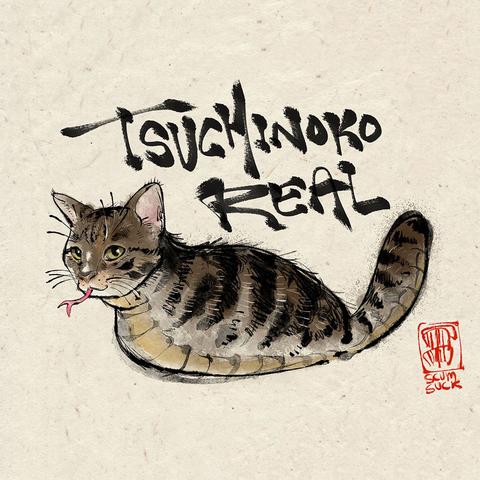
Japan, however, has something rather stranger. Something squat, elusive and deeply odd. A creature that looks less like a majestic dragon and more like a snake that has swallowed a football and become furious about it.
The tsuchinoko is one of Japan’s most enduring cryptids. Depending on where you are in the country, it may also be called bachi hebi, nozuchi or several other regional names. The word “tsuchinoko” itself is often translated as “child of the hammer” because of the creature’s peculiar shape, narrow at the head and tail but swollen in the middle like a wooden mallet. It is said to slither through remote mountain forests, bamboo groves and hidden valleys, leaving behind little more than startled witnesses and contradictory stories.
Unlike many folkloric monsters, the tsuchinoko occupies a fascinating space between yokai legend and modern cryptozoology. It is ancient enough to appear rooted in old Japanese mythology and oral storytelling, yet modern enough to have inspired bounty hunts, television specials and mass public expeditions during the twentieth century. Entire villages have embraced the creature as part of their identity. Rewards worth millions of yen have been offered for a captured specimen. Witnesses still come forward claiming to have seen one crossing a road, darting into undergrowth or coiled silently beside streams deep in the mountains.
And yet somehow, despite all of this, nobody has ever conclusively proved that the creature exists.
Descriptions of the tsuchinoko vary from prefecture to prefecture, which is exactly what you might expect from folklore that has spread orally over centuries. Most accounts describe a snake between thirty and eighty centimetres long with a dramatically thickened centre section. Some reports claim it possesses venomous fangs similar to a viper. Others insist it can leap remarkable distances, sometimes up to a metre through the air in a second bounding motion that defies normal snake behaviour.
Some legends even claim the creature can speak, though it is apparently prone to lying. A fondness for alcohol also appears in certain regional tales, which somehow makes the tsuchinoko feel less like a terrifying beast and more like the sort of dubious local character one might encounter staggering out of a countryside pub at closing time. [1]
One of the most intriguing aspects of the legend is how deeply entwined it is with the Japanese countryside itself. The tsuchinoko is rarely associated with cities or populated regions. It belongs to the hidden Japan of mountains and cedar forests, of isolated valleys and agricultural villages, because Japanese folklore is heavily tied to landscape.
Spirits, monsters and yokai often emerge from the edges of civilisation. They inhabit caves, forests, rivers and abandoned roads. In many ways the tsuchinoko reflects a longstanding cultural idea that nature still conceals mysteries beyond human understanding.
There are possible references to tsuchinoko like creatures in ancient Japanese texts, including interpretations connected to the Kojiki and Nihon Shoki, two of Japan’s oldest surviving chronicles dating back to the eighth century. While scholars debate whether these references truly describe the modern tsuchinoko, serpent entities known as nozuchi appear within early mythological traditions. These strange snake like beings were associated with fields, hills and wild places, and may represent an ancestral root of the later legend. [2]
As with so many cryptids around the world, the tsuchinoko underwent a remarkable transformation during the twentieth century. What had once been regional folklore became a national phenomenon. During the 1970s and especially the 1980s, sightings exploded across Japan. Newspapers covered reports seriously enough to fuel public fascination.
Television crews travelled into mountain regions hoping to capture evidence. Amateur monster hunters descended on rural villages carrying cameras, traps and an enthusiasm that occasionally bordered on hysteria.
Perhaps the most famous wave of sightings occurred in Shimokitayama, a village in Nara Prefecture. In 1988, local officials launched a formal “Tsuchinoko Expedition” and offered a substantial financial reward for a live specimen. Hundreds of people joined the hunt. Tourists poured into the area. Shops sold souvenirs and local businesses embraced the creature as a mascot of sorts. Even after no evidence emerged, the legend had already reshaped the village’s identity. Decades later the tsuchinoko remains tied to local tourism and cultural events. [1]
This curious intersection of folklore and economics says something rather important about modern monster legends. Cryptids are not merely creatures. They are stories communities tell about themselves. In isolated rural areas facing population decline and economic hardship, legends can become cultural lifelines. The tsuchinoko hunt drew attention to villages many Japanese people had never heard of. It generated media coverage and tourism. In a strange way, whether the creature existed or not almost ceased to matter.
Yet sightings continued.Witness reports are remarkably consistent in some respects and utterly bizarre in others. Many witnesses describe a thick bodied snake moving unusually quickly through leaf litter or along roadsides. Others claim the creature emits squeaking or chirping sounds. Some accounts insist it can roll like a wheel by swallowing its own tail, a trait oddly reminiscent of the hoop snake legends of North America. [1]
There have also been alleged discoveries of tsuchinoko remains. In 2000, reports emerged from Okayama Prefecture that a skeleton matching descriptions of the creature had been found. Predictably, excitement followed. Also predictably, no definitive scientific confirmation emerged from the claims.[3]
Cryptozoologists and sceptics alike have proposed a variety of explanations for the sightings. One popular theory is simple misidentification. Japan is home to several snake species whose appearance can change dramatically after feeding. A snake swollen from consuming prey may briefly resemble the familiar hammer shaped silhouette associated with the tsuchinoko. Others point toward introduced reptile species such as blue tongued skinks or short tailed skinks, whose stout bodies and unusual movement could potentially explain certain reports. [4]
But there is another possibility, one familiar to anyone who studies folklore seriously. Sometimes legends persist because they fulfil emotional and psychological needs. The tsuchinoko thrives in regions where dense forests still feel ancient and unknowable. Japan’s mountains possess an atmosphere difficult to explain unless you have walked through them yourself. There is an intensity to the silence. A sense that the woods are observing you rather than the other way around. Even now, large parts of rural Japan remain astonishingly wild.
And in wild places, people see things.Folklore often acts as a bridge between rational reality and emotional truth. The tsuchinoko may not exist as a biological species, but as an expression of mystery it is absolutely real. It represents the lingering belief that modernity has not explained everything. That despite satellites, smartphones and endless technology, strange things may still move through forests after dark.
That idea feels especially important in Japan, where ancient folklore and futuristic modernity coexist in fascinating ways. A businessman may ride a bullet train to Tokyo while carrying a lucky shrine charm in his pocket. Rural communities may hold centuries old festivals honouring spirits while teenagers nearby hunt Pokémon inspired partly by yokai traditions.
The tsuchinoko sits perfectly within that cultural overlap between myth and modern imagination.Popular culture has embraced the creature enthusiastically. Tsuchinoko appear in video games, manga, anime and films. They are sometimes comic, sometimes sinister, occasionally even adorable. This pop cultural survival has helped keep the legend alive for younger generations who may never have heard the old countryside stories directly from grandparents or local elders. [5]
Perhaps what makes the tsuchinoko so compelling is that it refuses to fit neatly into one category. It is not entirely a monster. Not entirely an animal. Not entirely a spirit. It slips between definitions as easily as it supposedly slips through mountain grass. Some villagers fear it as a bad omen or messenger of the gods. Others treat it almost affectionately, as part of regional identity and tradition. [6]
There is also something wonderfully human about the legend. Unlike enormous sea monsters or towering ape men, the tsuchinoko feels oddly plausible at first glance. Witnesses are not describing giant glowing dragons descending from the heavens. They are describing a peculiar little creature glimpsed for a few seconds beside a road or stream. The sheer ordinariness of the reports somehow makes them more unsettling.
Most people who have spent time in rural places know the feeling. You catch movement from the corner of your eye. Something darts into ferns or disappears beneath stones before your brain fully processes it. Usually it is a bird, a snake or a trick of the light. Usually.
But folklore lives in that tiny space occupied by the word “usually”.
And perhaps that is why the tsuchinoko endures.
Because somewhere in the deep forests of Japan, beneath cedar shadows and drifting mountain mist, there remains the possibility that something strange still wriggles unseen through the undergrowth.
Further reading and sources:
Wikipedia overview of the tsuchinoko:[Tsuchinoko Overview](https://en.wikipedia.org/wiki/Tsuchinoko?utm_source=chatgpt.com)
Yokai.com article exploring the folklore and modern craze:[Tsuchinoko Folklore and Sightings](https://yokai.com/tsuchinoko/?srsltid=AfmBOora6m4Qdft2PG_aYq0hpNGV0vIXnY9DhqM1Bt1nhEe7034E1TnT&utm_source=chatgpt.com)
Atlas Obscura feature on the creature and modern hunts:[Can a Cryptid Revitalise a Japanese Village?](https://www.atlasobscura.com/articles/wonder-is-everywhere-february-2?utm_source=chatgpt.com)
Uncanny Japan podcast and folklore discussion:[Hunting for a Tsuchinoko](https://uncannyjapan.com/podcast/hunting-for-a-tsuchinoko/?utm_source=chatgpt.com)
South China Morning Post article on modern belief and film coverage:[Modern Tsuchinoko Beliefs in Japan](https://www.scmp.com/lifestyle/arts-culture/article/3263041/mythical-japanese-snake-creature-many-villagers-swear-real-explored-new-film-looks-how-japan-has?utm_source=chatgpt.com)
[1]: https://en.wikipedia.org/wiki/Tsuchinoko?utm_source=chatgpt.com “Tsuchinoko”
[2]: https://uncannyjapan.com/podcast/hunting-for-a-tsuchinoko/?utm_source=chatgpt.com “Hunting for a Tsuchinoko (Ep. 108) – Uncanny Japan”
[3]: https://abookofcreatures.com/2015/05/25/tsuchinoko/?utm_source=chatgpt.com “Tsuchinoko”
[4]: https://fr.wikipedia.org/wiki/Tsuchinoko?utm_source=chatgpt.com “Tsuchinoko”
[5]: https://www.youtube.com/watch?v=_daM472syNw&utm_source=chatgpt.com “26 What is a tsuchinoko? (All About Japan’s Most Famous …”
[6]: https://www.scmp.com/lifestyle/arts-culture/article/3263041/mythical-japanese-snake-creature-many-villagers-swear-real-explored-new-film-looks-how-japan-has?utm_source=chatgpt.com “Mythical Japanese snake creature many villagers swear is …”
Stories wander. Legends travel. But the words, artwork and original research found within Mysterious Times remain the property of their creators.
©2026 Mysterious Times Magazine. All rights reserved.
#Cryptozoology #Folklore #Japan #JapaneseFolklore #legends #MysteriousTimes #Snake #Tsuchinoko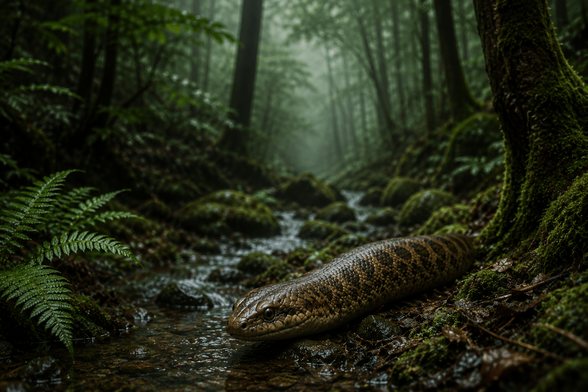
 Bones In Jars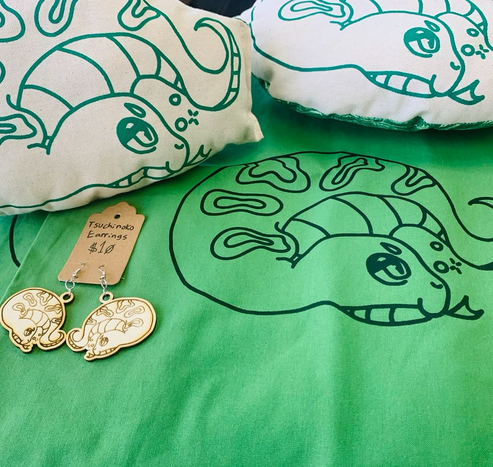
 maddiebiscuits 🐰 comms open!
 Phoenix
 yung gribble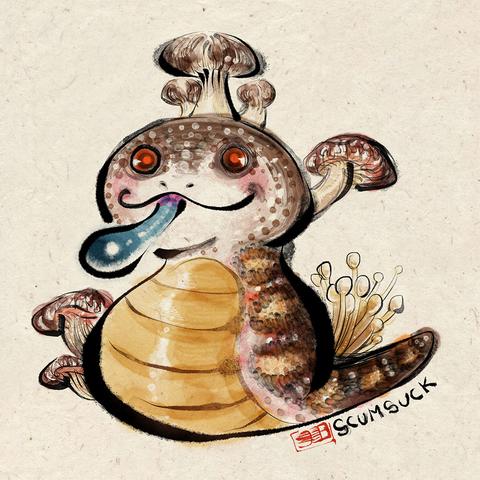

 Anime Animals アニメの動物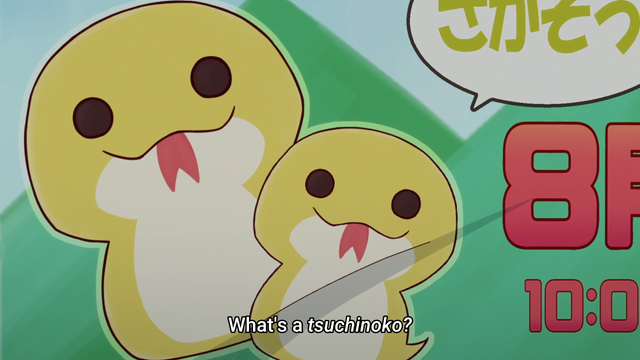

 Richie Enameller
 undeadkitty13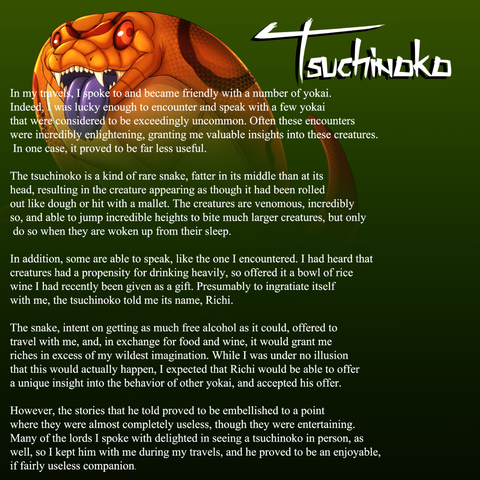
 feral himbo