 WPS News
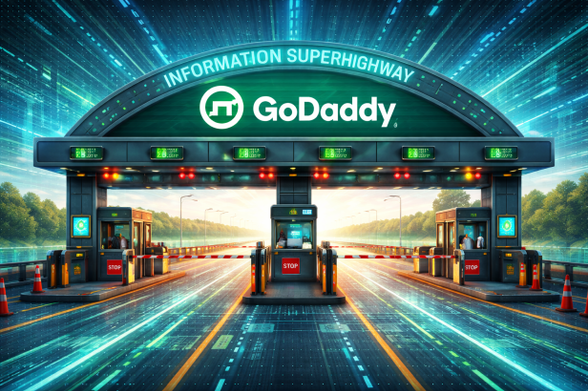
GoDaddy Is Not a Service Provider — It’s an Internet Toll Booth
By Cliff Potts, CSO, and Editor-in-Chief of WPS News
Hiawatha, Iowa, USA
Published June 4, 2026
GoDaddy Controls Access, Not Outcomes
GoDaddy is routinely described as a “service provider.” That description is false — and the distinction matters.
GoDaddy does not primarily provide services. It controls access.
At the core of its business is domain registration: an administrative choke point embedded into the basic architecture of the internet. Domains are not optional. They are not a premium feature. They are the address system. If you want to exist online in any meaningful way, you must pass through a registrar. GoDaddy positioned itself early at that gate and never left.
This is not innovation. It is rent collection.
The Toll-Booth Model of the Modern Internet
Once positioned at the choke point, GoDaddy layered revenue extraction on top of dependency — hosting, email, SSL certificates, “website builders,” SEO packages, security add-ons.
None of these offerings are inherently fraudulent. What matters is how they are framed and sold: not as tools with measurable outcomes, but as implied necessities justified by fear and confusion.
The pitch is simple: if something breaks, you will be blamed.
The solution is always another subscription.
This is toll-booth logic. You do not pay because value is created. You pay because passage is required.
Scale Without Accountability
The early internet rewarded first movers not with accountability, but with insulation. GoDaddy learned this lesson quickly.
Scale did not produce excellence. It produced inertia.
Once millions of domains sit inside a single system, failure becomes survivable. Customers may suffer, but they rarely leave. Migration is complex. Fear is effective. Confusion is profitable.
In this environment, performance stops mattering. Control does not.
Monetizing Dependence, Not Success
GoDaddy’s public identity — cheerful branding, small-business language, “we help you succeed” rhetoric — exists to obscure a more basic reality: the company monetizes dependence, not outcomes.
Most customers will never generate meaningful revenue from their websites. That is not a side effect. It is built into the funnel. Hope scales better than success stories, and disappointment does not disrupt recurring billing.
Calling this a service relationship misleads both customers and regulators. Services are evaluated by performance. Toll booths are evaluated by traffic volume. GoDaddy optimizes for the latter.
Why Complaints Rarely Change Anything
This distinction explains why complaints rarely produce reform.
When failure occurs inside a service model, it is a defect.
When failure occurs inside a toll model, it is noise.
The system is functioning exactly as designed: extracting recurring payment from locked-in users while externalizing frustration, confusion, and risk.
The modern internet did not become expensive because it became sophisticated. It became expensive because intermediaries learned exactly where to stand — and once embedded, they could charge for standing still.
GoDaddy is not broken.
It is functioning precisely as an internet toll booth should.
That is the problem.
For more social commentary, please see Occupy 2.5 at https://Occupy25.com
References (APA)
Kende, M. (2017). Internet governance, intermediaries, and the role of gatekeepers. Internet Society.
Khan, L. M. (2017). Amazon’s antitrust paradox. Yale Law Journal, 126(3), 710–805.
Varian, H. R., Shapiro, C., & Carl, S. (1999). Information rules: A strategic guide to the network economy. Harvard Business School Press.
Zuboff, S. (2019). The age of surveillance capitalism. PublicAffairs.
#digitalEconomy #domainRegistrars #GoDaddy #internetInfrastructure #platformCapitalism #rentSeeking #techMonopolies #webHosting #WPSNews
 ScrollBots.com
 Marcus Schuler
 souvlaki at KillBait
 TECHi
TECHi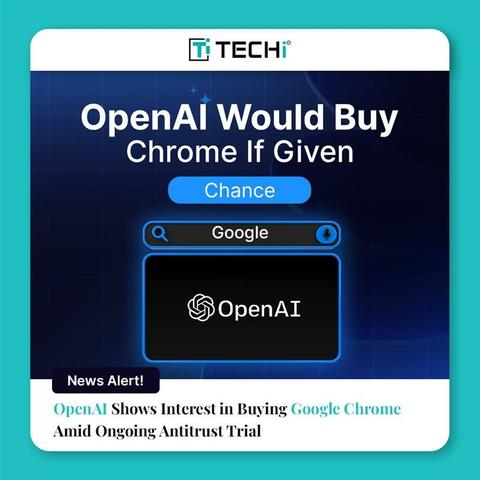

 Winbuzzer
 lps
lps