Outbreak: Streptococcus Pyogenes

Facility: Undisclosed Congregate Living Setting
Facility Type: Community Congregate Living
Unit/Floor/Area: Facility Wide
Location: #Windsor #Ontario
Facility Tracking Hash: #WECH0019

Date: 2026-05-06

Public Health Unit: Windsor-Essex County Health Unit
PHU Tracking Hash: #OnObWECH

Click or follow tracking hashtags to see current and historical data for individual facilities or a specific public health unit.

#Strep #StrepA #GAS #GroupAstrep #streptococcal

Streptococco, carenza di antibiotici per contrastare il boom di infezioni

Con la fine della pandemia e il progressivo allentamento di misure protettive le infezioni sono riprese

Il Fatto Quotidiano

#Japan reports record spike in potentially deadly #bacterial #infection, CTV: https://www.ctvnews.ca/health/japan-reports-record-spike-in-potentially-deadly-bacterial-infection-1.6929563

As of June 2, Japan’s Health Ministry had recorded 977 cases of #streptococcal toxic shock syndrome (STSS), which has a mortality rate of up to 30%. Some 77 people have died from the infection between January and March, the latest figures available.

Japan reports record spike in potentially deadly bacterial infection

Cases of a dangerous and highly fatal bacterial infection have reached record levels in Japan, official figures show, with experts so far unable to pinpoint the reason for the rise.

CTVNews

#Flesheating #bacterium cases hit record high in #Japan https://www.bangkokpost.com/world/2808935/-flesh-eating-bacterium-cases-hit-record-high-in-japan

KYODO - #Streptococcal toxic #shock #syndrome, a potentially deadly disease caused by a "flesh-eating" bacterium, is spreading rapidly in Japan, with cases in the first half of this year already surpassing last year's record, a national infectious disease institute said Tuesday.

‘Flesh-eating’ bacterium cases hit record high in Japan

KYODO - Streptococcal toxic shock syndrome, a potentially deadly disease caused by a

https://www.bangkokpost.com

Experts warn that a rare but dangerous bacterial infection is spreading at a record rate in Japan, with officials struggling to identify the cause.
The number of cases in 2024 is expected to exceed last year’s record numbers, while concern is growing that the harshest and potentially deadly form of group A streptococcal disease
#streptococcal #toxic #shock #syndrome (STSS)
– will continue to spread, after the presence of highly virulent and infectious strains were confirmed in Japan.

The National Institute of Infectious Diseases (NIID) said: “There are still many unknown factors regarding the mechanisms behind fulminant (severe and sudden) forms of streptococcus, and we are not at the stage where we can explain them.”
Provisional figures released by the NIID recorded 941 cases of STSS were reported last year.
In the first two months of 2024, 378 cases have already been recorded, with infections identified in all but two of Japan’s 47 prefectures.

https://www.theguardian.com/world/2024/mar/15/japan-streptococcal-infections-rise-details

Mystery in Japan as dangerous streptococcal infections soar to record levels

Health officials racing to identify cause of rise in streptococcal toxic shock syndrome – known as the ‘flesh-eating disease’ – which has a 30% fatality rate

The Guardian
Mystery in #Japan as dangerous #streptococcal infections soar to record levels - https://www.theguardian.com/world/2024/mar/15/japan-streptococcal-infections-rise-details "Health officials racing to identify cause of rise in streptococcal toxic shock syndrome, which has a 30% fatality rate"
Mystery in Japan as dangerous streptococcal infections soar to record levels

Health officials racing to identify cause of rise in streptococcal toxic shock syndrome – known as the ‘flesh-eating disease’ – which has a 30% fatality rate

The Guardian
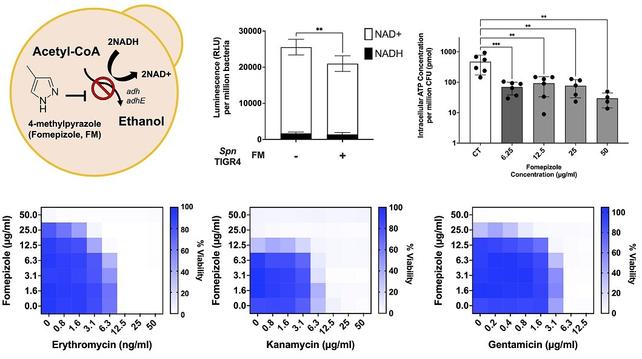
#AntibioticResistance is a growing problem for #Streptococcal infections. @motile_microbe &co show that disrupting fermentation with #Fomepizole increases sensitivity of S. pneumoniae to #antibiotics, incl in vivo #pneumonia model validation #PLOSBiology https://plos.io/3mYWTwx
Targeting NAD+ regeneration enhances antibiotic susceptibility of Streptococcus pneumoniae during invasive disease

Antibiotic resistance is a increasingly important problem for Streptococcus pneumoniae infections. This study shows that blocking fermentation and disrupting redox balance increases the sensitivity of this bacterium to antibiotics, including validation in vivo using a pneumonia model with antibiotic resistant pneumococci.

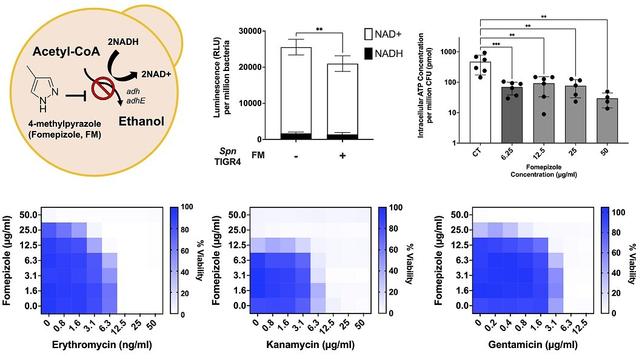
#AntibioticResistance is a growing problem for #Streptococcal infections. @motile_microbe &co show that disrupting fermentation with #Fomepizole increases sensitivity of S. pneumoniae to #antibiotics, incl in vivo #pneumonia model validation #PLOSBiology https://plos.io/3mYWTwx
Targeting NAD+ regeneration enhances antibiotic susceptibility of Streptococcus pneumoniae during invasive disease

Antibiotic resistance is a increasingly important problem for Streptococcus pneumoniae infections. This study shows that blocking fermentation and disrupting redox balance increases the sensitivity of this bacterium to antibiotics, including validation in vivo using a pneumonia model with antibiotic resistant pneumococci.

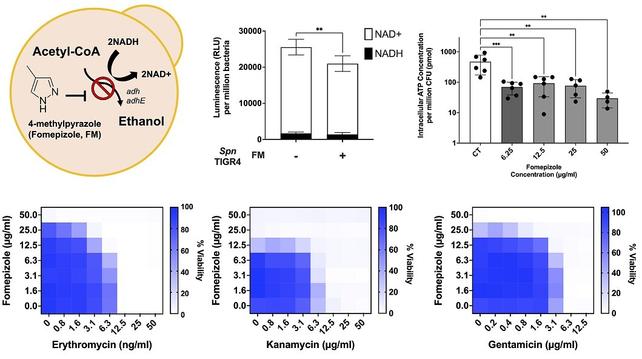
#AntibioticResistance is a growing problem for #Streptococcal infections. @motile_microbe &co show that disrupting fermentation with #Fomepizole increases sensitivity of S. pneumoniae to #antibiotics, incl in vivo #pneumonia model validation #PLOSBiology https://plos.io/3mYWTwx
Targeting NAD+ regeneration enhances antibiotic susceptibility of Streptococcus pneumoniae during invasive disease

Antibiotic resistance is a increasingly important problem for Streptococcus pneumoniae infections. This study shows that blocking fermentation and disrupting redox balance increases the sensitivity of this bacterium to antibiotics, including validation in vivo using a pneumonia model with antibiotic resistant pneumococci.

HAN Archive - 00484 | Health Alert Network (HAN)

Health Alert Network (HAN). Provided by the Centers for Disease Control and Prevention (CDC).