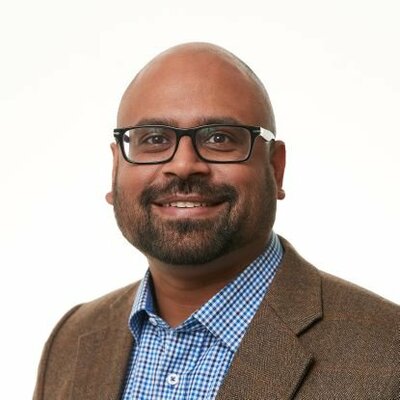
 Dr. Ameil J. Joseph
If you are a social work professor, social worker, social service worker, social work student, or anyone impacted by any of the above, please read, share, & consider supporting.
Thank you to the over 140 people who have already.
#stopaswb #stopaswbON
https://docs.google.com/forms/d/1JMHy28mQuhlyFKNoTf9rXiiniaW1GN3BqnVZdqOFkTY/edit

OPEN LETTER: Taking a stand against systemic discrimination: Stop the social work "entry to practice" exam in Ontario
The Ontario College of Social Workers and Social Service Worker (OCSWSSW) (the regulatory body for social workers and social service workers in Ontario) passed a motion in September of 2021 to approve "entry-to-practice" examinations for social work and social service work applicants to the college. The OCSWSSW has also declared that the Association of Social Work Boards (ASWB) is responsible for developing and implementing the exams. While many have raised concerns about this motion and the exam itself, the implementation process continues to advance with plans to launch these exams in Ontario in 2027. Recent findings out of both the United States and Canada (British Columbia and Alberta) showed that historically oppressed and marginalized groups have lower success rates in entrance to practice exams. These exams therefore function as a concrete systemic barrier to marginalized communities seeking greater representation among the social work profession that disproportionately serves them. The overall ASWB findings from 2018-2021 showed an approximately 80% first-time pass rate for White graduates and around a 40% first-time pass rate for Black graduates. Indigenous graduates passed at around a 60% rate their first try and both Asian and Latinx graduates fared only slightly better. In the Canadian context, a snapshot of the finding shows that in both British Columbia and Alberta, across BSW, Masters and clinical exams, first time pass rates for White graduates were above 90%. The exam generated consistently lower pass rates for: Indigenous graduates: in BC, 74.3% passed the Bachelor’s exam and 78.6% passed the Master’s exam; in Alberta, 54.5% passed the Bachelor’s exam Asian graduates: In BC, 80.6% passed the Bachelor’s exam and 77.9% past the Master’s exam; in Alberta, 46.7% passed the Bachelor’s exam and 27.4% passed the Master’s exam. Similarly, across all exam types, in both provinces, first-time pass rates for graduates whose primary language is English were consistently higher (average 86%) than graduates whose primary language is not English (average 62%). The full ASWB Exam Pass Rate Analysis can be found here: Contributing to the conversation - Association of Social Work Boards (aswb.org) Specific data on Canadian provinces that currently have the exam can be found here: ASWB exam pass rates by state/province - Association of Social Work Boards In the US, over these three years, the exam has served to ensure that White social work graduates have twice the ease of entering the profession as Black graduates and an easier time entering the profession than Indigenous and other racialized groups. This is systemic discrimination and oppression. The same study also analyzed the “eventual pass rate” – meaning graduates who are ever able to enter the social work profession. 90.7% of White graduates eventually pass, compared to 79.7% of Asian graduates, 76.6% of Latinx graduates, 73.5% of Indigenous graduates, and 57% of Black graduates. Therefore, 43% of Black social work graduates over these three years were prevented from entering professional practice only because of this exam – not because of how they were with clients, not because of how they performed in their more holistic course work and practica, and certainly not because of how their own lived experience gives them the kinds of knowledge and experience that can never be taught in a classroom or evaluated in an exam, but only because of their score on a standardized multiple-choice exam. The social work profession urgently needs to rely on, and further develop, approaches to assessment that do the very opposite of what the entrance exam has been conclusively shown to do. It is important to note that standardized testing is rooted in white supremacy. Eugenicists created these tests and brought them to the mainstream to demonstrate the superiority of "the Nordic race group" (Brigham, 1923) and to advocate for the segregation of White people and non-White people and migrants in the education system to prevent its decline. Since their inception over a century ago, standardized tests have been employed as instruments of racism and systemic discrimination, entrenching privilege and class as merit. While they were considered scientific, they remain deeply biased and reproduce racial hierarchies. Since intelligence and ethnicity were thought to be related, the results of standardized tests could be used to exclude undesirable groups of people. In fact, the extant research shows that Black, Indigenous, and racialized students experience bias from standardized tests administered from childhood through to post-secondary education (e.g., Au, 2016; Lee, 2006; McConkie, 1998; National Research Council, 2011; Ravitch, 2013; Sackett, Schmitt, Ellingson, & Kabin, 2001; Solórzano, Ceja, & Yosso, 2000; Teranishi & Briscoe, 2006). In the context of the social work exam, this instrument reproduces white supremacy by delineating what is considered social work knowledge while replicating racial and socioeconomic inequalities. Moreover, standardized tests function as a tool of white supremacy as racist outcomes appear to be objective and natural, attributed to the failure of individual students, groups, or cultures and not to the existing structural inequalities that reproduce the status quo. As standardized tests structurally enforce the dominant norms of whiteness, they effectively silence the knowledge and experiences of Black, Indigenous, and racialized people. Specific to the social work exam, the tool itself shapes the nature of the profession and people who can practice. It also will shape social work education, turning attention away from valuable consciousness raising and critical self-reflection, which are key to working toward a profession that does less harm to racialized, Indigenous, poor, disabled, and otherwise oppressed clients. The exam is sorely misaligned with the Canadian Association of Social Work Education Standards, the Truth and Reconciliation Commission’s Calls to Action and the Calls for Justice from the National Inquiry into Missing and Murdered Indigenous Women and Girls. All these bodies have had a key role in redefining the social work profession’s obligations as reaching beyond creating institutional functionaries. Instead, contemporary social work recognizes professional competence as including the ability to operationalize a critical understanding of how systemic relations of power, which disproportionately and negatively impact marginalized communities, and to challenge and re-imagine mainstream practices, understandings, and systems. Social work as a field has enough to contend with in respect to historical and contemporary colonial complicities with inequitable systems in child welfare, mental health, housing, and beyond. Omitting and ejecting particular communities from social work practice serves to ensures that ways of knowing, intervening, and resisting oppression via the lived experience of Black, Indigenous and other racialized groups is also ejected. This cannot be permitted to proceed. Since the release of these data, the Council of Social Work Education in the US has announced that they are removing the licensing exam pass rates from the Education Policy and Accreditation Standards due to these alarming disparities. Several actions and publications have also been initiated in the US to stop the ASWB entry-to-practice exams in light of the data released. https://linktr.ee/stopaswb?utm_source=linktree_profile_share<sid=04fc25ba-1de3-43bf-b4ad-e8e42d07d3ec https://naswmetrodc.socialworkers.org/News/ID/2532/NASW-Metro-DC-Chapter-Statement-on-Confirmed-Racial-Disparities-in-ASWB-Social-Work-Licensing-Exam-Pass-Rate-Data https://i-cch.medium.com/stopaswbresponse-968da6488ce4 https://docs.google.com/forms/d/e/1FAIpQLSed2LJvpgPxVsWhO8_KV2hEJ5Zmf73BpJolWYcKqm4WW097BA/viewform https://stopracisttesting.wixsite.com/welcome We invite you to join us in taking action to stop the ASWB tests in Ontario. Below, you can co-sign this letter which will be shared with other Schools of Social Work in Ontario, with community agencies, organizations, services and programs where social workers and social service workers learn, work, and serve, it will also be shared with policy makers and governance bodies. This exam has been conclusively shown to systemically discriminate against Indigenous, Black, and racialized graduates. For Ontario to even consider implementing it is extremely troubling. Rather than reforming the exam, it should be removed from the registration process altogether. Sincerely, Co-signers: 1) Ameil J. Joseph Associate Professor, School of Social Work, McMaster University 2) Jennifer Ma, Assistant Professor, School of Social Work, McMaster University 3) Saara Greene, Professor and Director, School of Social Work, McMaster University 4) Janice Chaplin, Field Education and Associate Professor, School of Social Work, McMaster University 5) Jennie Vengris, Associate Professor, School of Social Work, McMaster University 6) Christina Sinding, Professor, School of Social Work, McMaster University 7) Chris Chapman, Associate Professor and Interim Director, School of Social Work, York University 8) Maddie Brockbank, PhD Candidate & Sessional Instructor, School of Social Work, McMaster University 9) Birgit Umaigba RN MEd, Professor, Critical Care Program, Centennial College. 10) Jennifer Poole, Associate Professor, School of Social Work, Toronto Metropolitan University 11) Bren LeFrançois, University Research Professor, School of Social Work, Memorial University of Newfoundland and Labrador 12) Valerie Borum, Professor and Director, School of Social Work, Toronto Metropolitan University 13) Calvin Prowse, BA, BSW, MSW alumni, McMaster University; Critical Disability Studies MA student, York University 14) Cyndy Baskin, Associate Professor and Associate Director Undergrad, Toronto Metropolitan University 15) Kojo Damptey, Sessional Instructor African and African Diaspora Studies, McMaster University 16) Aisha Wilks, PhD Student - English and Cultural Studies, McMaster University 17) Susan Preston, Associate Professor, School of Social Work, Toronto Metropolitan University 18) May Friedman, School of Social Work, Toronto Metropolitan University 19) Kendal David, PhD Student - School of Social Work, Carleton University 20) Sirma Bilge, Professor -Sociology, Université de Montréal 21) Else Marie Knudsen, Assistant Professor of Social Work, Trent University 22) Kristin Smith Associate Professor, School of Social Work Toronto Metropolitan University 23) Josiah Coolen, Medical Student, McMaster University 24) Dr. Jijian Voronka, associate professor, university of Windsor 25) Shana Almeida, Assistant Professor, Toronto Metropolitan University 26) Julia Elizabeth Janes, Assistant Professor, School of Social Work, Memorial University of Newfoundland and Labrador 27) Brooke El Skaf, BSW, PhD Student at Dalhousie University 28) Alexandra Zanniw 29) Ilyan Ferrer, Assistant Professor, School of Social Work, Carleton University 30) Tara McWhinney, PhD Candidate and Contract Instructor, School of Social Work, Carleton University 31) Yahya El-Lahib, Associate Professor, Faculty of Social Work, University of Calgary 32) Brittany Morris, PhD Student, School of Social Work, Carleton University 33) Jesse Whelen, MSW student, McMaster University 34) Angelica Esposito, BSW, MSW student, McMaster University 35) Purnima George, Associate Professor, Toronto Metropolitan University 36) Yelena J. Skuljicak 37) Gessie Stearns, MSW 38) Kristin Roe, MAdEd, MSW, RSW - Diversity, Equity and Inclusion Lead at Ontario Association of Children’s Aid Societies 39) Chriselle Vaz, BSW, MSW 40) Dr. Patricia D. McGuire, Associate Professor. Carleton University 41) Meaghan Mott BSW, MSW 42) Maimuna Khan, PhD Student, School of Social Work, McMaster University 43) Kieran Manion, PhD, Postdoctoral Research Fellow, University Health Network 44) Parsa Shahid, HWDSB Teacher 45) Elizabeth Grigg, PhD Student School of Social Work - McMaster University 46) Sherry Parsley, BA, BSW, MSW 47) Caitlin Cull MSW RSW 48) Mark Anderson 49) Andrew Morrison, MEd OCT SCDSB 50) Kayla Crabtree, Advance Standing BSW student, Toronto, Metropolitan University 51) Ruxi Gheorghe, PhD Student - School of Social Work, Carleton University 52) Carlene Edwards McDonald, Advanced Standing BSW student, Toronto Metropolitan University 53) Jaleesa Brown CYW, SSW, Advanced Standing BSW Student, Toronto Metropolitan University 54) Shahrzad Elyati, Advanced Standing BSW student, Toronto Metropolitan University 55) Linzey Corridon, PhD Candidate, Department of English and Cultural Studies, McMaster University 56) Dr. Natasha Johnson, Pediatrician & Adolescent Medicine Specialist, Associate Chair Equity, Diversity & Inclusion, Department of Pediatrics, McMaster University 57) Iona Sky (MSW) - EDI and Practice Change Leader & Visionary 58) Danielle Tolomeo 59) Sarah Jama - Executive Director of the Disability Justice Network of Ontario 60) Laura Cook 61) Equity Network 62) Jen Vasic, MSW, RSW 63) Mary Anne Peters, Coordinator, Programs for Newcomers, Mohawk College 64) Susan Braedley Associate Professor School of Social Work, Carleton University 65) Leslie Catling 66) Judah Oudshoorn, PhD Candidate, Faculty of Social Work, WLU 67) Craig Burley, Barrister & Solicitor, Hamilton, Ontario 68) Cassandra Hamill 69) Terry-Lee Marttinen, PhD Candidate, Centre for Medical Humanities, Oxford Brookes University 70) Stephen D’Angelo 71) Nirali Patel 72) Farzana Doctor, MSW, RSW 73) Morgan Stanek, SSW, RSSW 74) Arielle Sugarman 75) Kirstin Webb, BSW 76) James Fauvelle 77) Sarah Todd, Professor, School of Social Work, Carleton University 78) Lauren Pragg, MA, MSW student, WLU 79) Elizabeth Obermeye 80) Bonnie Freeman, Associate Professor McMaster School of Social Work 81) Stephanie Milliken, BSW, MA, MSW student, McMaster University 82) Jude Johnston, RSSW MSW 326318 83) Nazia Zeb, MSW 84) Ali Jones, MSW student, McMaster University 85) Hannah Brunsdon, MSW, RSW (ACSW) 86) Steven W. Pharris, MSW, JD, LCSW Oklahoma, United States 87) Molly McGovern, MSW Student, Carleton University 88) Kusum Bhatta, PhD student, School of Social Work, McMaster University 89) Laurie Nielsen 90) Barbara Heron, Professor, School of Social Work, York University 91) Rose Singh, PhD student, School of Social Work, Memorial University of Newfoundland and Labrador 92)Noella Niyongere 93) Susan McGrath CM, Professor Emerita, School of Social Work, York University 94) Anne O'Connell, Associate Professor, School of Social Work, York University 95) Jessica Haberman RSSW, peer mentor and student at University of Toronto 96) Alexa Harris, BA, HBSW, MSW 97) Marianne McNanny MSW, RSW 98) Laura Brown RSSW 99) Jenna Labelle HBSW, RSW 100) Lianne Bourguignon BScn RN 101) Benjamin Millard MSW, RSW 102) Hayley Clin, BSW 103) Alex Johnstone, MSW 104) Marisa Barnhart, MSW, RSW, Course Instructor, Trent University 105) Althea Gorospe, BSW, RSW, Master of Social Work Student 2022-23, Toronto Metropolitan University 106) Rachel Lamont, MD, FRCPC, Assistant Professor, Department of Psychiatry, McMaster University 107) Karine Silverwoman ( MSW) 108) Allyson Ion, MSc, PhD, MSW(c) 109) Sinthu Srikanthan, BA (Indigenous Studies & Sociology), BSW, MSW, RSW 110) Karine Rogers, MSW RSW 111) Lori Naylor RSW 112) Josh Sebastian, BSW, MSW student, McMaster University 113) Salomeh Mohajer MSW RSW Sessional Instructor McMaster School of Social Work 114) Jennifer Le, BSW, MSW Student, York University 115) Sarah Beland, SSW 116) Yujia Zhu, MS, MSW, RSW 117) Tiana Johnson, HBSW Student, McMaster University 118) Alexe Bernier, PhD Student, School of Social Work, McMaster University 119) Sarah Trevitt, Honours BSW student at McMaster University 120) Aasiya Satia, Educational Developer on Anti-Racist Pedagogies, McMaster University 121) Edward Lee, Associate Professor, School of Social Work, Université de Montréal 122)Louise Murray-Leung, PWLE, Social Development Studies Alumni, University of Waterloo 123) Willow Samara Allen, MPPA, PhD, Leadership Studies, University of Victoria 124) Blessing Ojembe, PhD, McMaster University, MSW York University 125) Nadeem Akhtar, MA MBBS MRCPsych, Associate Professor, Department of Psychiatry and Behavioural Neurosciences, McMaster University 126) Rochelle Maurice, PhD Candidate, School of Social Work, McMaster University 127)Sri Prasad, OT Reg. (Ont.) 128) Lauren Bedford, BSW, RSW, Laurier University 129) Barbara Roberts MSW RSW 130) Jaleesa Bygrave, RSW 131) Amirah Hassan, MSW, RSW 132) Amanda Ramkishun, BA, MS, McMaster University Alumni 133) Matthew DeCarlo, PhD MSW, La Salle University, Philadelphia, PA 134) Vera Cheng, BSW, MSW 135) Sandra Danial, H.Ba, MSW, RSW Private Practice Clinician 136) Bryce Du 137) Jenny Pham, BSW McMaster University 138) Vickie Yankey, BSW McMaster University 139) Patrina Duhaney, Assistant Professor, Faculty of Social Work, University of Calgary 140) Tom Roes MSW RSW 141) Heidi Mehta, MSW 142) Tess C. Buchanan MSW/RSW Field Education Coordinator/Academic Advisor Lakehead University 143) Jessica Bonilla-Damptey 144) Milly Oprah Nalwanga BSW