 kunstplaza
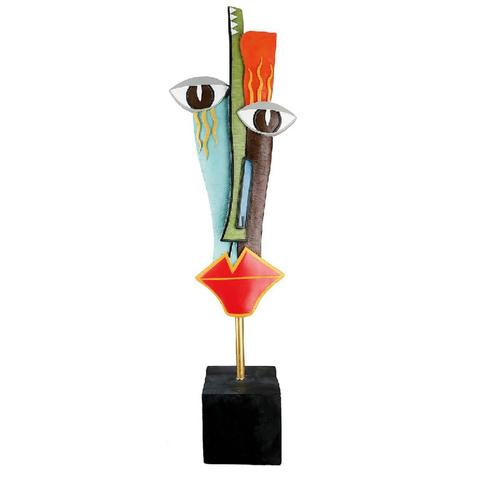
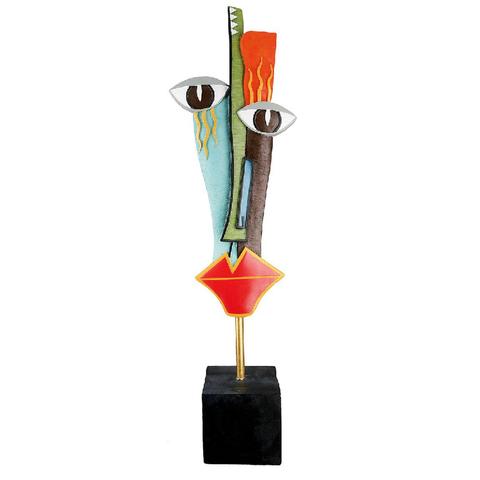
ICYMI: Abstrakte Statement-Skulptur „Delaunay“, Hommage an die moderne Kunst https://www.kunstplaza.de/shop/abstrakte-statement-skulptur-delaunay/?utm_source=dlvr.it&utm_medium=mastodon #moderneKunst #abstrakteKunst #RobertDelaunay

De texter jag publicerat genom åren har i stort sett alltid saknat bilder. I en del artiklar har jag haft med bilder men då alltid bilder jag tagit själv eller som är fria att använda på olika sätt (utgången upphovsrätt, Creative Commons-licens, officiella bilder från myndigheter och företag etc).
https://blog.zaramis.se/2025/09/09/konst-eller-nyhetsbilder/
"Portuguese Woman (The Large Portuguese)," Robert Delaunay, 1916.
Delaunay (1885-1941) was a French painter who started as a Post-Impressionist, then founded the Orphism movement, before moving on to Abstract art. Such was the lot of an artist in the turbulent early years of the 20th century!
Today we have an example from his Orphist years. Orphism is an offshoot of Cubism, and focuses on bright colors and images broken into geometric shapes. Many Orphists use the motif of the circle with colorful concentric rings, as you see here.
Delaunay was certainly breaking things down here, but it's still recognizable as a human figure with some tropical plants, but what she's carrying is unclear. Still, this painting is about the colors and shapes more than it's telling a story. Orphism pretty much died during WWI, and afterwards Abstraction became popular.
From the Thyssen-Bornemisza Museum, Madrid.


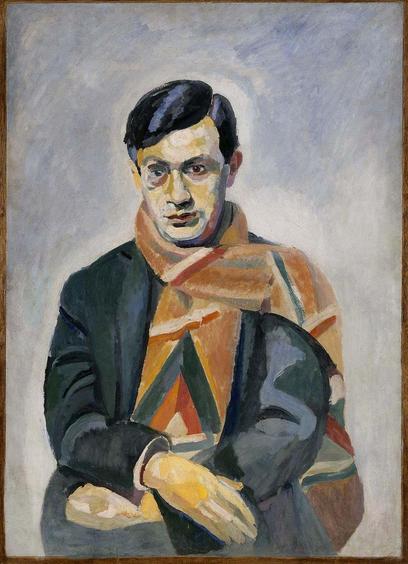
Tristan Tzara, Samuel Rosenstock ao nascer (Moinesti, Roménia, 16 de Abril de 1896 – Paris, 25 de Dezembro de 1963), poeta e escritor judeu romeno, mais tarde francês, um dos fundadores do Movimento Dada, nascido, em 1916, em Zurique.
Tristan Tzara, 1923, por Robert Delaunay.
Robert Delaunay (12 de Abril de 1885 — 25 de Outubro de 1941), pintor francês.
As Três Graças / The Three Graces, 1912.

Robert Delaunay (12 de Abril de 1885 — 25 de Outubro de 1941), pintor francês.
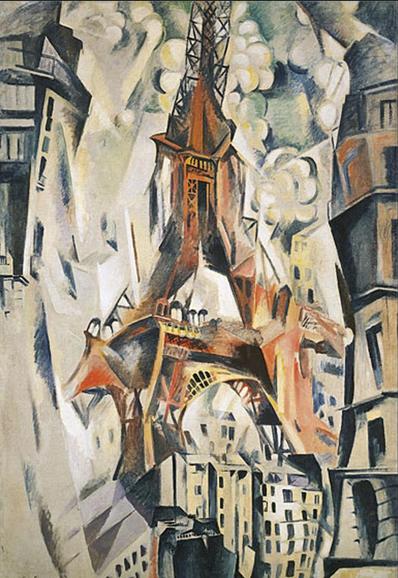
Torre Eiffel, 1911.
"Nude Woman Reading," Robert Delaunay, 1915.
Delaunay (1885-1941) was one of the founders of Orphism, a short-lived style of art that was a bridge between Cubism and Abstract Art.
He didn't do many nudes, but he painted nine variations on this scene with varying degrees of abstraction. This is pretty representational; although she's fairly abstract, we get enough with her hair and the fat rolls on her side that make her seem genuine and real. The oval framing of the painting accentuates her curve. And the bold colors are definitely Delaunay; he loved experimenting with color and hue.
This is technically a sort of semi-abstract, but nicely captures a moment alone when a woman, either dressing or un-, is taken by something on the page before her.
From the National Gallery of Victoria, Melbourne.

 Plastyczny Online
 Anders_S
 Hotspur🏳️🌈🇺🇦
 Rachel
 Laura 🇵🇹