Update: Now I've solved sixteen Project Euler problems in muLISP on the #hp200lx. Sometimes I'm not mathy enough to find a closed-form solution to certain puzzles involving millions of terms. For those I am limited by only having 640KB RAM and 8 MHz processor, and it's necessary to send the program to a desktop (or even my phone!) running SBCL. Even though muLISP is not a Common Lisp, the porting is straightforward. One particular program that would have taken a full 24 hours on the palmtop completed in 0.3 seconds on my desktop.

As a #retrocomputing head I am attracted to the pre-Common Lisp dialects which were in use when Lisp actually experienced its heydey. CL was a good compromise, forward compatible with most of these dialects, but imo lacks the small size and conceptual unity that make a language easy to learn. I've found it easier to learn muLISP and gradually pick up CL features where appropriate when I'm on a modern PC. And I greatly appreciate CL for existing and being as stable as it is.

As much as I admire the purity of Scheme, the fragmentation hurts it a lot. Every implementation has some flaw or another that drives me away.

#lisp

Working around dragons with the Lemote Yeeloong laptop and OpenBSD

0 comments

Lobsters

Please be advised that there is a matrix chat room for BASIC programming here at:

https://matrix.to/#/#basic:solarpunk.au

#TinyBASIC #basic #retrocomputing

You're invited to talk on Matrix

You're invited to talk on Matrix

Working around dragons with the Lemote Yeeloong laptop and OpenBSD

http://oldvcr.blogspot.com/2026/06/working-around-dragons-with-lemote.html

#OpenBSD #RetroComputing #Tech

Working around dragons with the Lemote Yeeloong laptop and OpenBSD

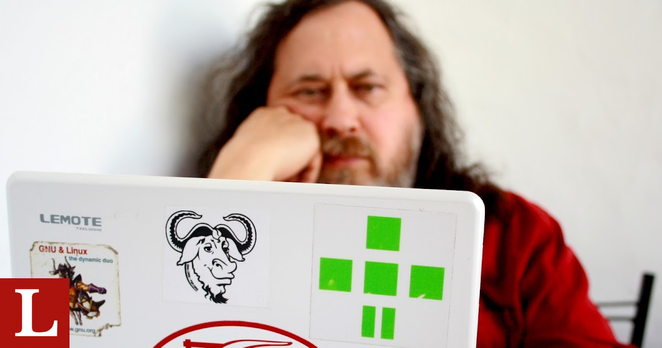
Behold: the Guru of GNU ! (Photo by Habib Mhenni, Wikimedia Commons, CC BY-SA 3.0.) True enlightment only comes from a truly free computi...

If you have a few hours to waste and like compilers and weird - PowerPC - assembly, try the 254 lessons of Decomp Academy!

https://decomp-academy.dev/

#assembly #compiler #PPC #PowerPC #ReverseEngineering #retrocomputing #decompilation

Decomp Academy — Learn GameCube Decompilation (MWCC GC/2.0)

Learn to decompile GameCube PowerPC assembly into byte-matching C, graded live by the real MWCC GC/2.0 compiler.

Decomp Academy

plus3 v0.9.6

is out — a maintenance release.

plus3 reads and writes ZX Spectrum +3 disk images (.dsk), verified against real +3 hardware.

plus3 is now dependency-free: the CLI was rewritten on the Go standard library, so it builds offline from a clean checkout with nothing to download. Prebuilt binaries for Linux, macOS, Windows, and the BSDs are attached to the release.
Also new: a full command manual (MANUAL.md) documenting every command and flag.

https://github.com/ha1tch/plus3

#ZXSpectrum #RetroComputing #Z80 #golang #Speccy #Spectrum #golang #foss

GitHub - ha1tch/plus3

Contribute to ha1tch/plus3 development by creating an account on GitHub.

GitHub

RELEASE: plus3 v0.9.3

a Go tool & library for reading and writing ZX Spectrum +3 disk images (.dsk).

Six commands: create, add, list, info, extract, delete — plus a BASIC detokeniser that turns tokenised Spectrum programs back into readable listings. The writer is verified against real Spectrum +3 hardware, and the pkg/diskimg library can be embedded in emulators, assemblers, and build tools.

This project had been dead for too long, the code had been lingering there for two years incomplete, in the middle of an unfinished refactoring campaign, and I decided to tie up all the loose knots and loose wires among my projects this week.

plus3 also ships docs on the obscure +3DOS format pitfalls I hit along the way, so the next person doesn't have to rediscover them.

Huge thanks to Marta @FromTheFourthPlanet of the SpecIde emulator project — I learned a great deal from its FDC implementation.
https://github.com/MartianGirl/SpecIde

Plus3 repo at:
https://github.com/ha1tch/plus3

#ZXSpectrum #RetroComputing #Spectrum #Z80 #golang #retrodev #Speccy #foss

Qui va au camp #InterHack ?

On fait du #RetroComputing ?

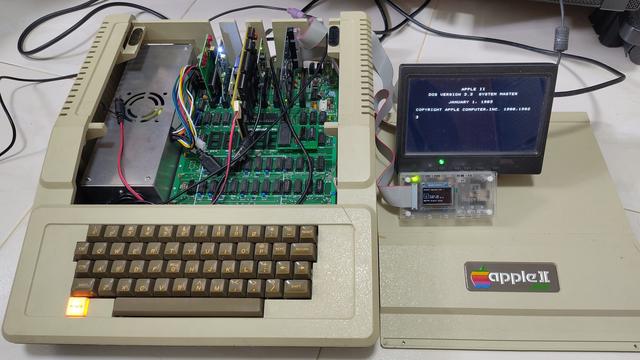
Bringing Swift To The Apple II

Swift is a relatively modern program language, appearing in 2014 as a replacement for Objective-C. Since then, it’s become a popular solution for programming apps across Apple platforms. That…

Hackaday