This Urban Subway Poster Mockup With a Fisheye Effect Makes Your Poster Designs Look Undeniably Real https://weandthecolor.com/urban-subway-poster-mockup-with-fisheye-effect-showcase-poster-designs-in-photoshop/208785

This high-resolution urban subway poster mockup by Gustavo Comunello places your designs inside a cinematic transit environment with a bold fisheye perspective.

#adobephotoshop #adobestock #photoshop #posterdesign #graphicdesign

Urban Subway Poster Mockup with Fisheye Effect — Showcase Poster Designs in Photoshop

When it comes to design presentation, context is crucial. Customers envision a poster in the real world rather than evaluating it in a vacuum. Therefore, displaying your work in its original location is the most persuasive thing you can do. Adobe Stock contributor Gustavo Comunello’s urban subway poster mockup accomplishes just that, and it does so with an advantage that most transit mockups totally lack: a wide-angle fisheye perspective that gives the entire scene the appearance of a photograph rather than a rendering.

That’s an important distinction. The distinction between a product photo and an editorial in a magazine is the same as that between a flat, frontal mockup and one shot with obvious environmental distortion. The specifications are communicated. The feeling is sold by the other.

Download the mockup from Adobe Stock

Please note that this mockup requires Adobe Photoshop. The latest version can be downloaded from the Adobe Creative Cloud website; visit this link.

Urban Subway Poster Mockup for Adobe Photoshop with Fisheye Effect by Gustavo Comunello. Download the mockup from Adobe Stock

Why Does a Fisheye Lens Make a Subway Mockup More Convincing?

The fisheye effect triggers a specific visual instinct. Your brain reads wide-angle barrel distortion as proof of a physical camera. No one renders a 3D scene and adds fisheye distortion unless they want it to look real. So when viewers encounter this urban subway poster mockup with its curved horizon and compressed depth, they perceive photographic authenticity — even if the scene is entirely digital.

This is what I call the Fisheye Realism Index (FRI): a design presentation principle where deliberate optical distortion increases perceived environmental authenticity. A higher FRI means your mockup reads as a real-world capture, not a studio composite. Comunello’s template scores exceptionally high on this scale.

The perspective pulls the subway car’s interior into a convex arc. Handrails bend. Ceiling panels curve. The rows of windows on both sides compress into the frame edges. Meanwhile, the poster stays centered — optically anchored, the clear subject of the composition. That centering is intentional. It guides the eye without interrupting the environmental illusion.

Transit Context Framing: The Framework Behind Effective Transit Mockups

Presenting work in context isn’t just a visual trick. It’s a rhetorical strategy. I’ve started calling this Transit Context Framing (TCF) — the deliberate placement of a design inside a transit environment to simulate the perceptual pressure of real-world viewing conditions.

Transit advertising is one of the most demanding display contexts that exists. Commuters are distracted. Lighting is artificial and uneven. The viewer isn’t standing still — they’re moving, or thinking about moving. So a poster that works inside a subway car has already passed a serious Ambient Pressure Test (APT): does this design hold its ground under noisy, dynamic, high-contrast conditions?

When you use this urban subway poster mockup for a client presentation, you’re not just showing the design. You’re implicitly proving that it can survive its environment. That’s a fundamentally stronger argument than a clean white-background flat lay.

What the Mockup Actually Gives You

The template renders at a substantial 5,000 × 3,750 pixels — high enough to hold up on large screens, in print presentations, or in editorial features. Adobe Photoshop’s Smart Object system makes placement straightforward. You drop your artwork in, the template applies the correct perspective and lighting, and the result integrates cleanly into the scene.

Comunello’s scene includes two compositions. The first shows the poster slot populated with a sample graphic — a gradient-washed layout with geometric line art and bold typography that reads naturally inside the frame. The second shows the empty slot with a placeholder grid. Both compositions use the same fisheye angle and the same interior lighting, giving you a clear before-and-after reference for your own swap.

The interior environment itself is well-constructed. Blue padded seats line the lower frame. Overhead fluorescent strips cast a cool, institutional light across the ceiling panels. Handrails catch that light and create subtle highlights. All of that visual data contributes to what I call the Contextual Distortion Premium (CDP) — the measurable increase in perceived design value that comes from a compelling, realistic presentation context.

Who Should Use This Urban Subway Poster Mockup?

This template fits several creative disciplines at once. Graphic designers presenting transit advertising campaigns will find the most direct application. The scene accurately replicates a real subway car advertising slot, so the proportions and context are immediately recognizable to any client familiar with out-of-home advertising.

Brand strategists also benefit here. Showing a visual identity system in a transit context tests the brand’s real-world scalability faster than any mood board can. If the logo, color, and typography read clearly from the center of a distorted subway car frame, they’ll work almost anywhere.

Motion designers and art directors building portfolio pages can use this Photoshop poster mockup to elevate campaign presentations beyond the standard device-frame-on-desk formula. The transit context adds narrative — it implies a finished campaign, a real rollout, a visible presence in the city.

The Aesthetic Argument for Dark, Cinematic Mockup Environments

Most presentation mockups default to bright environments. White walls, daylight, clean surfaces. That aesthetic communicates clarity and professionalism. However, it also neutralizes the design itself — because the design has no atmospheric competition.

Dark transit environments work differently. The dim, artificial lighting inside Comunello’s subway car creates high contrast between the illuminated poster and the surrounding environment. Your design glows against the scene. Consequently, the visual hierarchy becomes dramatically clearer than it would be in a neutral-light mockup.

This is a legitimate presentation strategy, not just an aesthetic preference. The Ambient Pressure Test principle holds that any design shown in a demanding, real-world environment communicates more confidence than the same design shown in an idealized studio setting. Darkness makes your poster work harder — and if it still lands, that’s the proof you need.

How to Get the Most Out of This Photoshop Subway Mockup Template

Placement alone won’t get you a great result. The mockup does the environmental heavy lifting, but your design still needs to match the scene’s energy. Consider these guidelines before you drop your artwork in.

Match the Color Temperature

The subway interior uses cool, blue-tinted fluorescent light. Warm, golden palettes will create a slight disconnect. If your design runs warm, try adding a very subtle cool overlay at low opacity to integrate the tones. The goal is cohesion, not uniformity.

Test Your Typography at a Distance

Transit advertising gets read from across a car, often in motion. Use this urban subway poster mockup to check whether your headline reads at a small scale. Zoom out to 25% in Photoshop and evaluate legibility before presenting. If it works there, it works in the real world.

Leverage the Vignette

The fisheye effect naturally darkens the frame edges. That vignette focuses the eye toward the poster center. Designs with centered compositions and clear focal points benefit most from this format. Layouts that rely heavily on edge elements may lose detail in the compressed corners.

Why This Format Represents the Future of Presentation Design

The shift toward environmentally embedded mockups isn’t accidental. As generative AI changes how clients perceive “finished” design work, the bar for presentation quality is rising fast. A flat PNG looks like a draft. A well-placed urban subway poster mockup inside a photorealistic environment reads like a campaign in production.

Forward-looking prediction: within two to three years, static white-background presentations will signal junior-level work in competitive pitches. Environmental mockups with high FRI scores — transit, architecture, retail — will become the baseline expectation for mid-to-senior creative professionals. The designers who build fluency with these tools now will carry a clear advantage.

Download the mockup from Adobe Stock

Comunello’s template is, therefore, not just a convenience tool. It’s a signal of where presentation standards are heading. The fisheye distortion, the dark transit atmosphere, the institutional lighting — all of it positions your design inside the messy, real, beautiful world it’s actually meant to occupy.

Frequently Asked Questions

What software do I need to use this urban subway poster mockup?

Adobe Photoshop is the required software. The template uses Smart Objects, so you simply double-click the layer, paste or place your design, save, and the mockup updates automatically. You don’t need advanced Photoshop skills to use it effectively.

What is the resolution of this subway poster mockup?

The mockup renders at 5,000 × 3,750 pixels — high enough for large-format presentations, editorial use, and print portfolio displays.

Who created this mockup template?

Gustavo Comunello, a contributor to Adobe Stock, designed this template. You can license it directly through the Adobe Stock marketplace.

Can I use this mockup for client presentations?

Yes. Once you license the template through Adobe Stock, you can use it commercially — including in client proposals, portfolio presentations, and agency pitch decks.

What poster dimensions work best with this urban subway poster mockup?

The mockup simulates a standard transit advertising frame, which typically follows a portrait orientation. Portrait posters in roughly a 2:3 or 3:4 ratio integrate most naturally into the existing composition.

Does the fisheye effect distort the poster design itself?

The fisheye distortion applies to the environmental scene. The poster within the frame remains correctly proportioned, so your design reads accurately. The surrounding environment curves while your artwork stays optically clean.

Is this mockup suitable for showcasing branding work?

Absolutely. The transit context makes it an excellent vehicle for demonstrating how a visual identity system performs in real-world, out-of-home advertising conditions, which is directly relevant to brand strategy presentations.

What makes a subway poster mockup with a fisheye effect better than a flat mockup?

The fisheye perspective activates what designers call the Fisheye Realism Index — it reads as photographically authentic rather than digitally composed. That authenticity increases client confidence and makes your work feel ready for deployment rather than still in development.

Feel free to find other trending graphic design templates here at WE AND THE COLOR.

#adobePhotoshop #AdobeStock #posterDesign #posterMockup #subway #urban

Elvis. 🎤

Minimal, but iconic.

#vectorart #digitalart #elvis #posterdesign #minimalism

Elvis. 🎤

Minimal, but iconic.

#vectorart #digitalart #elvis #posterdesign #minimalism

🤩 Das nenn ick mal n kreativen QR-Code! Und es funktioniert und korrespondiert sogar mit dem Illu-Design auf der Seite. ✅ Großartig! Bin Fan! 🤗

ℹ️ https://www.kindernothilfe.de/kampagnen/mahlzeit

#Poster #Plakat #Berlin #Design #Layout #QRCode #Creativity #PosterDesign #Kindernothilfe #Kinder

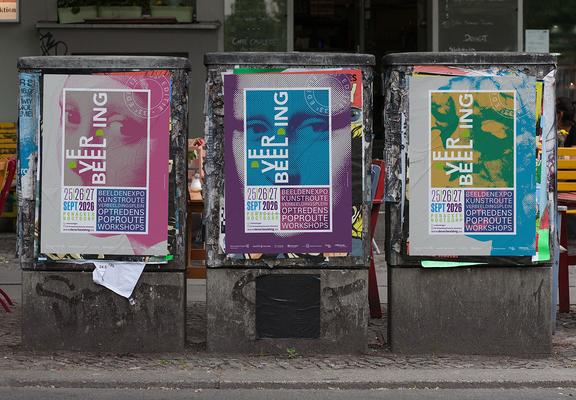
A Multiple Poster Mockup That Places Your Design on a New York City Wall — Instantly https://weandthecolor.com/a-multiple-poster-mockup-that-places-your-design-on-a-new-york-city-wall-instantly/208649

Many designers struggle to visualize how a poster will look outside the design canvas. This urban poster mockup by The MuF Templates solves that by placing designs on a realistic New York City street wall.

#posterdesign #photoshopmockups #mockups #design #graphicdesign #photoshop

A Multiple Poster Mockup That Places Your Design on a New York City Wall — Instantly

Most designers know the frustration: a great poster design stuck on a white canvas, with no real sense of how it actually lives in the world. That disconnect between screen and street is exactly where a professional poster mockup earns its place. And this urban poster mockup by The MuF Templates does not just solve that problem — it makes the solution look extraordinary.

This is a Photoshop PSD file built for designers who care about presentation as much as they care about craft. It renders your work against a raw New York City street wall, complete with wheat-paste creases, natural folds, directional sunlight, and real architectural grit. Furthermore, it does all of this at a resolution of 6000 x 4000 px, which means your output works equally well for web presentations, client decks, and print.

So before you spend money on a photo shoot or wait weeks for physical samples, consider what this single mockup file can do for your workflow.

You can download the mockup from Adobe Stock

Please note that these templates require Adobe Photoshop. The latest version can be downloaded from the Adobe Creative Cloud website; visit this link.

Urban multiple poster mockup on a wall in the streets of New York City for Adobe Photoshop by The MuF Templates. You can download the mockup from Adobe Stock

Why Do Designers Still Underestimate the Power of a Street-Level Poster Mockup?

Context changes everything in design. A typeface that looks clinical on a white artboard suddenly feels alive on a crumbling brick wall. A color palette that seems too bold in isolation reads perfectly at street scale. This is what I call Contextual Street Staging — the practice of placing design work inside an environmental context before client presentation or public release.

Most designers skip this step. They export a flat JPEG, drop it onto a slide, and call it done. However, that approach costs them in two ways: clients struggle to visualize the final output, and the designer loses the persuasive edge that comes from showing real-world impact.

A quality urban poster mockup removes that friction entirely. Moreover, it gives your work a narrative — a place, a mood, a moment. That matters far more than designers typically admit.

What Makes Urban Context Different From Studio Mockups

Studio-style flat lay mockups have their place. But they communicate something fundamentally different. They say: here is the object. Urban environment mockups say: here is the object in the world. For poster design specifically, that distinction is critical.

Posters are street objects. They belong on walls, construction hoardings, scaffolding panels, and concrete blocks. Therefore, presenting a poster design in a New York street context is not just aesthetically stronger — it is the most honest representation of what the piece will actually become.

Inside This Urban Posters Mockup: What You Actually Get

The MuF Templates built this PSD poster mockup around a real New York City street wall featuring a construction hoarding running the full width of the scene. The wall accommodates multiple poster placements across two horizontal rows, which gives you enormous flexibility for showcasing single designs, campaign series, or typographic systems side by side.

Additionally, the scene captures a sharp, high-contrast daylight situation. Sunlight rakes across the surface from the upper left, casting long shadows from the surrounding architecture. That light behavior is not generic — it mimics the specific quality of direct midday sun on a Manhattan block, which gives the scene its unmistakable energy.

The Wheat-Paste Effect and Why It Matters

Every poster in this mockup features an authentic wheat-paste texture. Creases run vertically and horizontally across the paper surface. Edges curl slightly. Folds bunch at the seams. This detail is what separates this photorealistic poster mockup from flat compositing tools that simply overlay artwork onto a photograph.

The texture communicates material reality. It tells the viewer: this design exists in physical space. Consequently, presentations using this mockup land with significantly more conviction than clean, sterile alternatives. Clients respond differently when they see their brand occupying real square footage on a real wall.

Resolution That Works for Both Screen and Print

At 6000 x 4000 pixels, this high-resolution poster mockup sits well above the threshold for most professional applications. You can crop into the scene, zoom in on specific panels, or export full-frame — all without any visible quality loss. Furthermore, at that resolution, the file supports large-format print output, which makes it useful well beyond digital presentation contexts.

This matters especially for designers working with print clients, advertising agencies, or brand identity studios, where the final deliverable needs to perform across multiple media simultaneously.

How to Use This Photoshop Poster Mockup in Minutes

One of the strongest arguments for using a well-built Photoshop mockup template is the speed. Professional photo shoots for this kind of environmental presentation cost hundreds — sometimes thousands — of dollars. They also require scheduling, location permits, printing physical samples, and post-production time. This mockup eliminates every single one of those steps.

Here is the process, straight and simple:

Step-by-Step: Placing Your Design

Open the PSD file in Adobe Photoshop. You will find clearly labeled Smart Object layers inside the layer panel. Double-click any Smart Object thumbnail. Your design canvas opens as a separate document at the correct dimensions.

Place your artwork into that document, then save and close it. Photoshop automatically composites your design into the scene with all texture, shadow, and light effects applied. Repeat for each poster panel you want to populate.

The entire process takes between two and five minutes per design variation. Moreover, you can swap artwork instantly without rebuilding the scene, which makes this editable poster mockup ideal for presenting multiple design options to clients in a single session.

Non-Destructive Workflow and Smart Object Architecture

Smart Objects preserve your original artwork at full quality regardless of how many times you edit or resize it. That means your PSD poster mockup workflow stays clean, reversible, and presentation-ready at every stage. You never flatten layers. You never degrade source files. Additionally, you can maintain a version-controlled library of design explorations within a single organized file structure.

This is what I define as Modular Presentation Architecture — a workflow system where every design variable (artwork, color, typography, scale) can be adjusted independently without disrupting the environmental composition. It is the professional standard for high-volume design studios, and this mockup supports it fully out of the box.

Who Needs This Urban Posters Mockup the Most

Graphic designers presenting campaign work to clients benefit most directly. However, the use cases extend considerably further. Brand identity consultants use environmental mockups to show visual identity systems at scale. Motion designers use them as thumbnail and key art references. Illustrators use them to present limited-edition print work. Art directors use them to pitch outdoor advertising concepts without committing budget to physical production.

Furthermore, social media content creators and freelancers building portfolio pieces for platforms like Behance or Instagram gain an immediate professional credibility boost from using high-quality environmental mockups. Presentation quality signals craft quality. That connection is real, and clients feel it even when they cannot articulate why.

Saving Real Money on Design Presentations

Consider the alternative to a mockup like this. A professional location shoot in New York City runs from $500 to $2,000+, depending on crew, permits, and post-production. Physical large-format printing costs additional time and budget. For freelance designers or small studios operating on tight margins, those costs are prohibitive.

This free-to-use or affordable poster mockup compresses that entire process into a single file download. Therefore, designers redirect their budget toward billable work, client relationships, and creative development rather than logistical overhead. Over the course of a year, the time and cost savings are genuinely significant.

The Street Realism Framework: A New Standard for Poster Presentations

I want to introduce a concept I call the Street Realism Framework — a set of criteria for evaluating whether a poster mockup actually serves the design rather than just decorating it. The criteria are: environmental authenticity, surface texture fidelity, light behavior accuracy, compositional neutrality, and output resolution sufficiency.

This mockup passes all five criteria. The NYC street environment is authentic. The wheat-paste surface texture is faithful to the real material. The sunlight’s behavior follows accurate directional logic. The composition does not compete visually with the design being presented. And the 6000 x 4000 px resolution exceeds minimum professional thresholds for both digital and print output.

Most free poster mockup PSD files fail two or three of these criteria. They place designs on walls that feel synthetic, under lighting that has no directional logic, at resolutions that degrade on large screens. The MuF Templates avoided all of those failures here.

Why New York City is the Environmental Stage

New York City carries specific cultural and visual weight in design culture. Its streets communicate urgency, scale, and cultural relevance. A poster placed on a Manhattan wall reads differently from the same poster on a generic suburban wall. The city itself functions as a design context — it implies audience, energy, and ambition.

Consequently, using this New York City street poster mockup does more than demonstrate how a design looks on a wall. It positions that design within one of the most design-literate urban environments on earth. That is a presentational advantage that no studio background can replicate.

Getting the Most From Your Posters Mockup: Practical Tips

Use the multiple poster panels to present campaign systems rather than single designs. A brand identity, for example, lands far stronger when four or five touchpoints appear together in the same urban scene. The eye reads them as a system. That system coherence is exactly what sophisticated clients want to see before approving a direction.

Additionally, crop the mockup scene to focus on specific panels for social media content. A tight crop of a single wheat-paste panel with strong typography becomes immediately shareable — it looks editorial, textured, and real. Furthermore, consider presenting the mockup alongside the flat design in a two-slide sequence. Show the concept clean, then show it in the street. That sequence builds a narrative that static flat files simply cannot deliver alone.

Pairing This Mockup With Other Presentation Assets

For maximum presentation impact, pair this outdoor poster mockup with a brand board showing colors, typography, and logo usage. Then use this NYC street scene as the closing visual — the moment where everything comes together at an environmental scale. That structure consistently produces stronger client reactions than leading with the environmental scene.

Sequence matters in design presentations. Use this mockup as the payoff, not the opener.

You can download the mockup from Adobe Stock

Frequently Asked Questions About This Urban Poster Mockup

What software do I need to use this poster mockup?

You need Adobe Photoshop to open and edit this PSD file. The Smart Object layers are fully compatible with Photoshop CS6 and all later versions, including the current Creative Cloud releases.

Can I use this poster mockup for commercial projects?

Always check the licensing terms provided by The MuF Templates directly. Most professional mockup templates on Adobe Stock include a standard commercial license, but verify the specific terms before using the file in client-facing work or paid campaigns.

How do I place my artwork into the Smart Object layers?

Double-click the Smart Object thumbnail in the Photoshop Layers panel. A new document opens at the correct artboard size. Place your artwork, then save and close the document. Photoshop automatically updates the mockup scene with your design applied.

Does this poster mockup work for both vertical and horizontal poster formats?

This specific mockup features horizontal street banner formats across two rows. It works best for wide-format posters and panoramic print layouts. For vertical poster formats, pair it with a complementary vertical street mockup from the same creator series for a consistent visual language across your presentation.

What resolution is this urban poster mockup?

The file renders at 6000 x 4000 pixels at high DPI, making it suitable for large-screen presentations, print design, and social media exports at full quality. You will not encounter resolution degradation at any standard output size.

Can I customize the background or environment in the scene?

The environmental background is a photographic layer embedded in the PSD structure. Advanced Photoshop users can mask, recolor, or adjust it using standard non-destructive techniques. However, the scene is intentionally designed as a finished environment — most users will find the default composition more than sufficient for professional presentation needs.

Where can I find more mockups by The MuF Templates?

The MuF Templates publishes their full mockup library through Adobe Stock. You can browse their complete collection directly on the Adobe Stock platform, where you will find additional urban, indoor, and format-specific mockup options to expand your presentation toolkit.

Hunfry for more? Check out more professional mockups and design templates here at WE AND THE COLOR.

#adobePhotoshop #AdobeStock #photoshopMockups #poster #posterDesign #posterMockup #posters