The Long Afterlife Of The Console Modchip

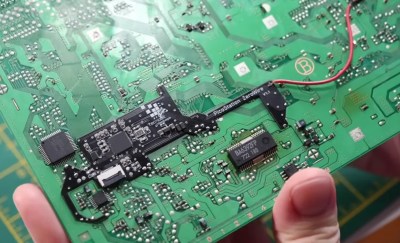
For a late-1990s engineer with good soldering skills, many a free pint of beer could be earned by installing modchips on the game consoles of the day. Modchips were usually a small microcontroller …

Hackaday
PlayStation 3 Emulator RPCS3 Can Almost Play Three-Quarters Of PS3 Games

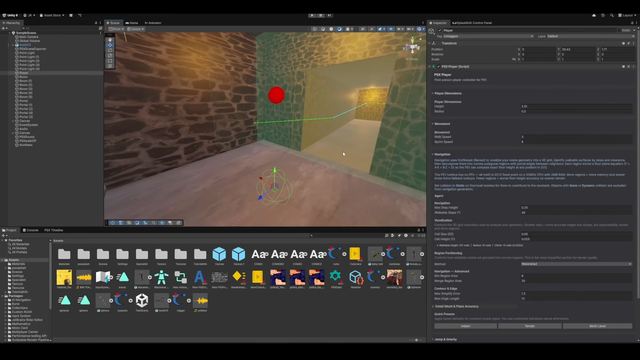
Although already having entered the territory of ‘retro gaming’, the Sony PlayStation 3 remains a notoriously hard to emulate game console. Much of this is to blame on its unique PowerP…

Hackaday
A PSOne In The Palm Of Your Hand

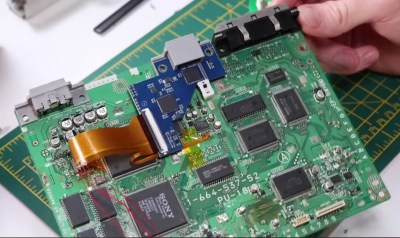
Sony’s original Playstation wasn’t huge, and they did shrink it for re-release later as the PSOne, but even that wasn’t small enough for [Secret Hobbyist]. You may have seen the t…

Hackaday

Vale, dejo este toot por aqui para advertir a cualquiera interesado en el hackeo de PlayStation 2: cuidado con las apps de Homebrew que toquetean la Memory Card y demás sistemas de almacenamiento de la consola.

Ayer intenté probar una app llamada Apollo y me corrompió la información guardada en la MC. No solo perdí las partidas guardadas (estaba por terminar Devil May Cry 3, Adios Yakuza y Zone of the Enders 😭), sino que se me borró el Free MCBoot y ya no pude jugar a los juegos en digital.

Por suerte pude esta mañana volver a hacer la instalación, pero las partidas ya no se pueden recuperar y no sé que otras configuraciones se me habrán pasado.

Una situación bastante fastidiosa, que bueno que la Memory Card quedó intacta, porque me asusté.
#playstation #playstation2 #ps2 #PlaystationHacks

A Simple Portable PS4 Build

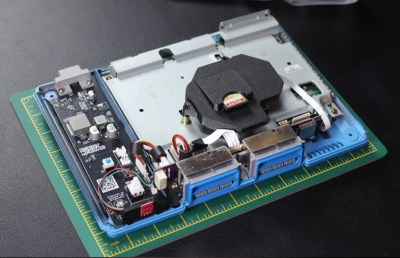
Building a portable console is hard, right? You have to do lots of wiring, maybe trim a few PCBs, and learn all about the finer points of high-end motherboard design! Or, you could keep it simple. …

Hackaday
Make Your Own Play Station (The Space Is Important)

The early history of the Sony Playstation lies in a stillborn collaboration between Nintendo and Sony to produce an SNES with a CD-ROM drive. So the story goes, Nintendo’s Philips deal angere…

Hackaday
Drop-In Upgrade PCB Brings USB-C To DualShock 4

Despite a somewhat shaky start, it seems like everyone is finally embracing USB-C. Most gadgets have made the switch these days, and even Apple has (with some external persuasion) gotten on board. …

Hackaday

PSP Turned Robot Remote With Custom Software

There's no question that Sony's PlayStation Portable (PSP) was an impressive piece of hardware when it was released in 2004, but for all its technical wizardry, it wasn't able to shake Nintendo's vice-like grip on the handheld market. Perhaps that explains why we still see so many nostalgia-fueled hacks for Nintendo's Game Boy and Dual Screen (DS) systems, while PSP hacks tend to be few and far between.

But looking at projects like this one that turn the PSP into a capable robot controller (video, embedded below) we can't help but wonder if the community has been missing out. Thanks to an open source software development kit for the system, [iketsj] was able to write a WiFi controller program that can be run on any PSP with a homebrew-compatible firmware.

The other side of the equation is a simple robot powered by an ESP32. To take control of the bot, the user connects their handheld to the WiFi network being offered by the MCU and fires up the controller application from the main menu. It's all very slick, and the fact that you don't need to make any modifications to the PSP's hardware is a huge plus. From the video after the break we get the impression that the remote software is pretty simplistic in its current form, but we imagine the only really limitations are how good you are at writing C code for what by today's standards would be considered a fairly resource constrained system. We'd love to see that widescreen display lit up and showing live first-person video from the bot's perspective.

Many of the PSP hack's we've seen over the years have been about repurposing the hardware, or in some cases, replacing the system's internals with something raspberry flavored. Those projects have certainly been interesting in their own ways, but we really like the idea of being able to push a largely stock system into a new role just by writing some custom code for it.

#playstationhacks #robotshacks #softwarehacks #customfirmware #playstationportable #psp

PSP Turned Robot Remote With Custom Software

There’s no question that Sony’s PlayStation Portable (PSP) was an impressive piece of hardware when it was released in 2004, but for all its technical wizardry, it wasn’t able to …

Hackaday

PlayStation 4 Controller Gets a USB-C Upgrade

Micro USB was once the connector of choice for applications where USB-A was too big, but now USB-C has come to dominate all. It's becoming standard across the board for many peripherals, and [Ian] recently decided that he wanted to upgrade his PS4 controller to the newer standard. Hacking ensued.

The hack consists of a small breakout board that enables a USB-C connector to be fitted into the PS4 controller in place of the original micro USB port. [Ian] explains what needs to be done to complete the mod, which first involves disassembling the controller carefully to avoid damage. The original microUSB breakout board can then be removed, and fitted with one of a selection of replacement boards available on Github to suit various revisions of PS4 controller. A little filing is then required to allow the new connector to fit in the controller case, and [Ian] notes that using an 0.8mm thick PCB is key to enabling the new breakout board to fit inside the shell.

It's a neat hack that makes charging PS4 controllers way easier in the modern environment without having to keep legacy micro USB cables around. We've actually seen similar hacks done to iPhones, too, among other hardware. Video after the break.

[Thanks to Chandler L for the tip!]

#playstationhacks #microusb #playstation4 #ps4 #usbc

PlayStation 4 Controller Gets A USB-C Upgrade

Micro USB was once the connector of choice for applications where USB-A was too big, but now USB-C has come to dominate all. It’s becoming standard across the board for many peripherals, and …

Hackaday