I just discovered that the latest release of #pkgdown now adds an llms.txt file to the rendered site by default. Immediately disabled the new 'feature' and added human.json instead 🙃
https://codeberg.org/g-rppl/movetrack/commit/01f7455a13c0c7682ac33305b80564fe08ce74b1
#rstats #rpackage #noAI #humanjson
Disable pkgdowns llm-docs "feature" - use human.json instead · 01f7455a13
movetrack - Model flight paths from radio-telemetry data using a hidden Markov model.
Day 5: Package Structure with pkgdown Site Generation 🌐
Create beautiful documentation websites for your packages! ✨
Setup: 🔧
usethis::use_pkgdown()
pkgdown::build_site()
💡 Pro Tip: Use usethis::use_pkgdown_github_pages() for automatic deployment.
📚 Resources: https://pkgdown.r-lib.org
#rstats #pkgdown #Documentation #RPackageAdvent2025 📖
It is very true, the
#rstats package
#pkgdown is really very easy to use ! Only two lines of code and my package has a website! 😎 Thank you developers!
https://pkgdown.r-lib.org/
Build websites for R packages
Generate an attractive and useful website from a source package. pkgdown converts your documentation, vignettes, README, and more to HTML making it easy to share information about your package online.
How gglobalclocks home page is looking.
https://github.com/EvaMaeRey/gglobalclocks Arg! What's going on here? 🙃
#pkgdown adventures.

GitHub - EvaMaeRey/gglobalclocks: global clocks!
global clocks! Contribute to EvaMaeRey/gglobalclocks development by creating an account on GitHub.
@beps I truly understand what you mean. I am now talking a little about #RKWard. We have a solid integration of #git, #rio and some other tools. #quarto works. A tight integration of #styler would be nice. We have a good R console and a terminal. Likewise, we don't have the deep integration of #devtools, #roxygen2 and #pkgdown. Some find it good (I) others find it a hindrance.
In the end, there are many good choices.
#rstats
Hey, a new version 2.0.0. of my 𝗯𝘀𝘃𝗮𝗿𝘀 package has lots of new options, such as functions for predictive and structural analyses. But it also comes with a new 𝗽𝗸𝗴𝗱𝗼𝘄𝗻 website! 🕸️📦💯
https://bsvars.github.io/bsvars/
#rstats #bsvars #pkgdown #free #opensource #software

Bayesian Estimation of Structural Vector Autoregressive Models
Provides fast and efficient procedures for Bayesian analysis of Structural Vector Autoregressions. This package estimates a wide range of models, including homo-, heteroskedastic, and non-normal specifications. Structural models can be identified by adjustable exclusion restrictions, time-varying volatility, or non-normality. They all include a flexible three-level equation-specific local-global hierarchical prior distribution for the estimated level of shrinkage for autoregressive and structural parameters. Additionally, the package facilitates predictive and structural analyses such as impulse responses, forecast error variance and historical decompositions, forecasting, verification of heteroskedasticity, non-normality, and hypotheses on autoregressive parameters, as well as analyses of structural shocks, volatilities, and fitted values. Beautiful plots, informative summary functions, and extensive documentation complement all this. The implemented techniques align closely with those presented in Lütkepohl, Shang, Uzeda, & Woźniak (2024) <doi:10.48550/arXiv.2404.11057>, Lütkepohl & Woźniak (2020) <doi:10.1016/j.jedc.2020.103862>, and Song & Woźniak (2021) <doi:10.1093/acrefore/9780190625979.013.174>.
Academics opting to write statistical software documentation in pdfs only rather than html/markdown is holding back the adoption of social scientific methods for #DataScience
For #Rstats, use #pkgdown: https://pkgdown.r-lib.org/
For #PyData, use #sphinx / #readthedocs : https://sphinx-book-theme.readthedocs.io/en/stable/
#socialscience
Build websites for R packages
Generate an attractive and useful website from a source package. pkgdown converts your documentation, vignettes, README, and more to HTML making it easy to share information about your package online.
New blog post: "Share your
#RStats work following good dev practices from a single
#Notebook"
👍 Discover `fusen::init_share_on_github()`: From
#notebook to
#pkgdown website in one command
👉
https://statnmap.com/2022-10-28-share-your-r-work-following-good-dev-practices-from-a-single-notebook/

Creating a Node.js Website with GitHub Copilot Workspace Using Best Development Practices in R
As a developer primarily focused on R, I strive to follow good development practices: writing clear user documentation with articles and examples; creating robust tests; and automating checks and deployments with CI/CD workflows. These habits have allowed me to build reliable and maintainable projects, but I asked myself: Are these practices transferable if I venture into a different ecosystem, such as Node.js?
To answer this question, I set myself a personal challenge: create a fully functional website using Node.js and JavaScript, while taking the opportunity to test GitHub Copilot Workspace as my primary development assistant. My goal was to see if Copilot could guide me from start to finish, assuming I knew nothing. I also wanted to test the hypothesis that even without deep expertise in a language or framework, success is achievable by relying on solid practices and the right tools.
@Russpoldrack I usually have a repo per project anyway, so I'm now using quarto for project websites (using github pages), and then I use quarto/revealjs to add a slide deck as a link on the project website.
Basically the same approach as what @matti and I wrote here with {vertical}, but using #QuartoPub instead of #pkgdown. This is all R-centric, but doesn't need to be.
https://link.springer.com/article/10.3758/s13428-020-01436-x

Sharing and organizing research products as R packages - Behavior Research Methods
A consensus on the importance of open data and reproducible code is emerging. How should data and code be shared to maximize the key desiderata of reproducibility, permanence, and accessibility? Research assets should be stored persistently in formats that are not software restrictive, and documented so that others can reproduce and extend the required computations. The sharing method should be easy to adopt by already busy researchers. We suggest the R package standard as a solution for creating, curating, and communicating research assets. The R package standard, with extensions discussed herein, provides a format for assets and metadata that satisfies the above desiderata, facilitates reproducibility, open access, and sharing of materials through online platforms like GitHub and Open Science Framework. We discuss a stack of R resources that help users create reproducible collections of research assets, from experiments to manuscripts, in the RStudio interface. We created an R package, vertical, to help researchers incorporate these tools into their workflows, and discuss its functionality at length in an online supplement. Together, these tools may increase the reproducibility and openness of psychological science.
 Georg Rüppel
 ᴅʀ. ᴍᴏᴡɪɴᴄᴋᴇʟ'ꜱ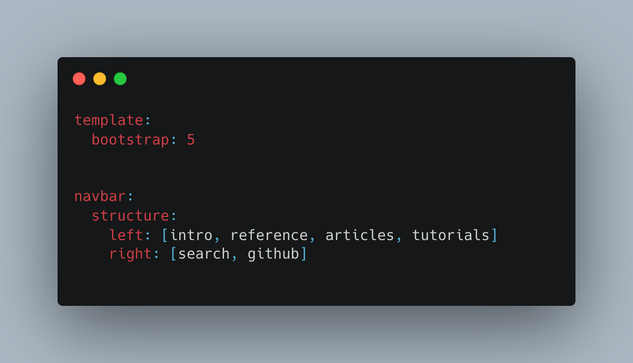

 Martine Jansen
 Gina Reynolds
 devSJR

 bsvars
 hersh
hersh statnmap
 Matt Crump