Nicole Sharp
Fluid Flows Break Up Microswimmer Clumps
The field of active matter looks at the collective motion of particles and organisms–how birds flock and fish school. In systems of “dry” squirmers–those that have no hydrodynamic interactions with one another–clumps of squirmers can form with empty spaces in between them. This is known as motility-induced phase separation, or MIPS. Researchers wondered whether microswimmers in a fluid–which do produce hydrodynamic forces that can affect one another–would also show MIPS.
In a new study, researchers show, instead, that hydrodynamic interactions between swimmers will prevent (or destroy) these clumps. Through a combination of theoretical work and simulation, the authors found that translational flows between swimmers swept the swimmers out of clumps as they formed. Rotational flows between swimmers made them able to change direction faster, which also kept stable clumps from forming. (Image and research credit: T. Zhou and J. Brady; via APS)
Hydrodynamic interactions destroy clumps of microswimmers. This simulation shows microswimmers that are initially in a clumped formation before hydrodynamic interactions are “turned on”. Once the swimmers can affect one another through the flows their motion creates, the clumps quickly break apart. #activeMatter #biology #collectiveMotion #fluidDynamics #hydrodynamics #microswimmers #phaseSeparation #physics #science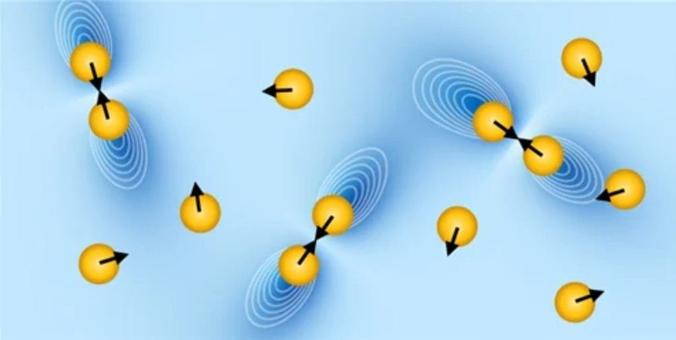
 Otti Croze