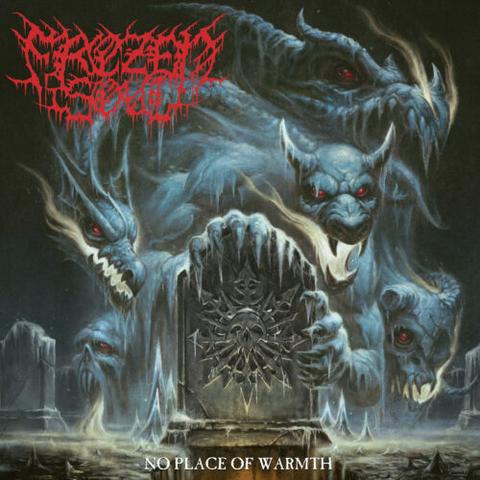
Frozen Soul – No Place of Warmth Review By Kenstrosity

Texan five-banger Frozen Soul crept into my promo pile back in 2021 with their glacially imposing Crypt of Ice. Unfortunately, I missed covering the improved follow-up Glacial Domination properly, relegating it to a Filter blurb instead. But that’s no excuse for Century Media to withhold No Place of Warmth from me when it was time. No matter, because Frozen Soul deserve a full-bodied tongue bath from this hot-blooded sponge, and I intend to give it with great relish.

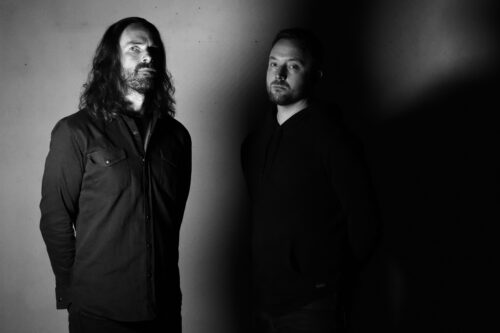
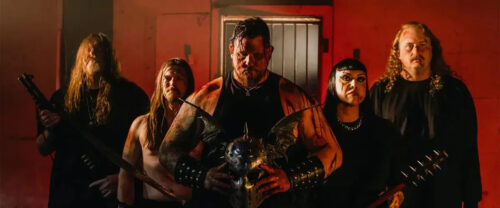
The Frozen Soul formula carries over into No Place of Warmth, but evolves incrementally just as Glacial Domination did three years prior. As these homo glaciali continue their ascent into a full upright stance, their Bolt Thrower-meets-Sanguisugabogg-meets-Rotpit riff orgy enters a new realm of ferocity, carrying a murderous momentum and relentless grooves across a dick-skin-tight 35 minutes. Vocalist Chad Green puts down a vicious performance of caveman roars, rancid rasps, and infectious barks. Matt Dennard pounds the mammoth skins with a single-minded bludgeoning that oozes blood, pus, and attitude. Bassist Samantha Mobley, always rumbling beneath these well-tread tundras, anchors the affair in muscular heft and scalpel precision (though the unforgiving compression in the mix makes her great work difficult to make out in many listening environments). Most importantly, however, are guitarists Chris Bonner’s and Michael Munday’s unflappable riffs and infectious hooks. Familiar perhaps to a fault but nonetheless brutally effective, Frozen Soul’s guitar work crests a summit on No Place of Warmth, generating heaps of energy with minimal tooling and using it to slam skulls into each other with devastating impact.

What more could you ask for in a stripped-down, meat-and-potatoes death metal record? A better mix, sure, but not much else. “Invoke War (ft. Machine Head)” brings Bolt Thrower aggression, anvils, and icepicks to my cranium with cold prejudice, leaving me a drooling mess whose only joy in life demands MOAR RIFFS. Thankfully, the slamtastic “Absolute Zero,” “Dreadnought (ft. Sanguisugabogg),” and “Skinned by the Wind,” along with mid-paced stompers “Chaos Will Reign,” “DEATHWEAVER,” and “Frost Forged” shoot overdoses of riff-laced adrenaline directly into my veins, reducing me to animalistic mindlessness. As that progresses, the urge to zoom becomes a new inconvenience in daily life, but Frozen Soul prepared for that. Rippers “No Place of Warmth (ft. Gerard Way),” “Eyes of Despair,” “Ethereal Dreams,” and “Killin Time (Until It’s Time to Kill)” roar and rage through flesh and bone with sleazy grooves that fit right at home at any local bar brawl, giving my overflowing energy reserves an outlet through fist and boot.

You might notice a rare occurrence in the preceding paragraph: I highlighted every song on No Place of Warmth to extol their virtues. This was no accident, as every track has something memorable and engaging to take away, but No Place of Warmth isn’t perfect. As mentioned earlier, No Place of Warmth is crushed pretty heavily. Consequently, Samantha’s bass struggles for audibility—despite offering ample textural heft—behind chunky guitars and ferocious roars. With a little less compression and a few tweaks to instrumental positioning, her input would be heard more fully and thereby make even greater impact. Additionally, Matt Dennard’s bass kick feels a bit plastic, creating a bit of tactile unpleasantness during initial spins. In other areas, the album’s various guest spots don’t stand out as distinctly as a guest spot should. It took a few spins to nail down Machine Head’s contributions to “Invoke War,” especially, and Gerard Way’s unexpected blackened rasps deserve greater presence, too. I still can’t confidently pick out Sanguisugabogg in “Dreadnought,” though it is a killer tune. As a criticism, this mostly points to a thoughtfulness in features that Frozen Soul neglected, but that they might easily rectify with more intentional writing that gives those features more significance and definition going forward.

All told, No Place of Warmth is more than just rock-solid Bolt Thrower worship. It is a consistently entertaining record tailor-made to ensure gains in the gym, incite massive mosh pits in any given venue, and cause spinal trauma to any receptive passers-by. It’s nothing new, and nothing groundbreaking, but its tectonic grooves and boundless vitality crack the crust regardless. Should you be in need of more quality death metal this year—and we all know you can never have too much—No Place of Warmth is a worthy part of a balanced breakfast rotation.

Rating: Very Good!
DR: 4 | Format Reviewed: PCM
Label: Century Media Records
Websites: Bandcamp | Official | Facebook
Releases Worldwide: May 8th, 2026
#2026 #35 #AmericanMetal #BoltThrower #CenturyMediaRecords #DeathMetal #FrozenSoul #May26 #NoPlaceOfWarmth #Review #Reviews #Rotpit #Sanguisugabogg #Slam
Black Cilice – Votive Fire Review By Alekhines Gun

In a genre as insular as the often meme’d-and-mocked “one man raw black metal” offerings, Black Cilice have managed to become kind of a big deal. With an early release schedule that makes Coffins look like a bunch of slackers, their output has finally begun to slow down over the years, going from multiple splits and demos in one season to multi-year bouts of interruption. Votive Fire comes after an unusual four-year gap between full-lengths, claiming a slightly improved production and an emphasis on bigger songs. Black Cilice have been on a bit of an evolutionary bent as of late, transitioning from an almost impenetrable wall of noise into crafters of riffs with real might without sacrificing mood. I was curious to see how this newest creation would manifest itself, so go get your favorite goat to sacrifice and come take a walk through the fires with me.

How raw is raw? While older Black Cilice albums channel piercing treble tones through wind-tunnel cacophony, later works have tinkered with just a touch of varied emphasis. Previous LP Esoteric Atavism had decipherable leads which shimmered over the blast-heavy chords, and recent EP Tomb Emanations1 had a radical focus on emphasized doomy chord progressions in lieu of sheer assault. Votive Fire continues this slight change, returning to the more fog-and-moonlight murk of Transfixion of Spirits, but this time the band gives the listener a slightly brighter lantern. The drums have the bass kick cranked way up, giving every slowed rhythm a tribal pulse. The rest of the kit benefits too, with the expected speed in bits of “Into the Inner Temple” letting cymbals shine brightly in their fills and accents, somehow well articulated while still buried enough to offend people looking for something with the clarity of Necrophobic.

The net result of this production is an album that seeks to be meditative and soothing more than frightening and oppressive. The compositional approach of Votive Fire is four long songs that pick a key motif and then, ever so slightly, tweak and evolve the main riff through tempo changes and sustained chord pounding. It’s in these slower moments that the Fire shines the brightest; see the climactic slowdown ending “Released by Fire”, where the open space lets the drums run full scales while the looping chord progressions slowly build tension before exploding into another burst of speed without losing the established melancholy. That melancholy permeates the whole of Votive Fire. While Black Cilice could hardly be accused of ever making something uplifting, this particular album sidesteps the typical bleak claustrophobia with a vision much more inclined to introspection and self-reflection.

The one knock on Votive Fire is that, from a formula standpoint, each song follows roughly the same pattern: repetitive, hypnotic progressions under crystalline blasts evolving into a chunkier, punkier refrain before collapsing back into more anguished strums, all lashed forward by the glass-shattering vocals. With such a scant song selection, it may seem a little silly to try to find highlights. However, this is a headphone purist’s dream album, where the repetition of formula disguises the unique twists genuinely present, rewarding repeated listens in the right environment. “Vows Sworn for Centuries” hides a real gem of a riff in a shifting blast-beat instead of a slowdown, and “Deconstruction of All Realities” carries a main midtempo refrain which is both ritualistic and head-bangable. The production helps with this, somehow managing to mix everything to the bottom instead of to the front and letting the listener search for details articulated in the mire, rather than pushing everything forward and letting the disparate elements compete for attention. Consequently, this is a rare album that is raw af but somehow graceful to the ears, inviting the listener to dive deeper rather than partake in a display of auditory masochism.

Votive Fire manages to give itself an identity apart from previous Black Cilice releases, but where it can rank depends on what you’re looking for. It’s not as aggressive and riff-centric as Esoteric Atavism, not as punishingly raw as Summoning the Night, or as frighteningly atmospheric as Transfixion of Spirits. Instead, by fusing the riff game of the former into the misty comfort of the latter, Votive Fire transcends being a slab of aural abuse by way of offering moments with genuine, wistful beauty. That’s not a label I often get to associate with this genre, but I’m hardly disappointed. If you’re bored by the air-conditioner sound of your average one-man black metal, go light a candle and let the Votive Fire offer you a glimpse into something more, just beyond the veil.

Rating: 3.5/5.0
DR: 5 | Format Reviewed: 320 kbps mp3
Label: Iron Bonehead Productions
Website: Album Bandcamp
Available Worldwide: May 1st, 2026

#2026 #35 #BlackCilice #Coffins #IronBoneheadProductions #May26 #Necrophobic #PortugueseMetal #RawBlackMetal #Review #Reviews #VotiveFire
Panopticon – Det Hjemsøkte Hjertet Review By Thus Spoke

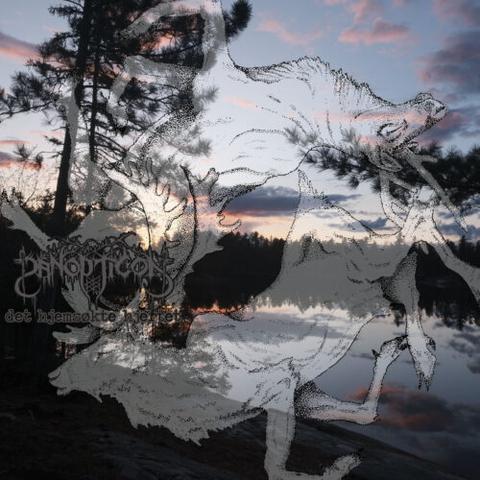
What feelings come with an ending? Grief? Gratitude? Hope? As the Laurentian Trilogy comes to a close with Det Hjemsøkte Hjertet,1 the reflections on things passed which each album casts in a different light are at their most poignant. Panopticon turns from personal catharsis (…And Again into the Light) to metaphorical mirroring of individual crisis with that which devastates the natural world (The Rime of Memory), and now the very fabric of every one of us as people—bound inextricably to our experiences and environment. Mourning the loss of a loved one; memories of a people left behind by industrialisation; vanished caribou who once roamed the forests and the trees that grew old before the saw; a losing battle with time; isolation, love, joy. These fragmented, vivid, impressions of The Haunted Heart masterfully draw together an opus as potent musically as it is emotionally, five years almost to the date since it began.

Det Hjemsøkte Hjertet’s conclusiveness is tangible, its every note suffused with nostalgia and closure—even opener, “Woodland Caribou,” feels like a resolution. Drums boil and crash with anguish, tremolos are effervescent with feeling, and strings are more prominent and more stirring than ever before. But even in its finality of reprising themes and devastating climaxes, Det Hjemsøkte Hjertet reveals that everything does not truly end after all. With a chorus of guest vocalists,2 Austin Lunn tells a story of a life coming to a close in chapters that reflect not only on one person’s experiences, but those of a culture and a wilderness extending beyond them. It’s the most immediate Panopticon has ever been: lacking any preamble, moving faster and with assured ardour through every blackened arc, reaching deeper into your soul with every singing string refrain. Det Hjemsøkte Hjertet sees an infusion of characteristic folk, black metal, and magical atmosphere in a way that’s at once so heart-wrenchingly intimate and viscerally overwhelming it can hardly be described as less than perfection.

From the moment it begins, Det Hjemsøkte Hjertet has hold of you, most strikingly because of how breath-catchingly gorgeous it is. Some of the saddest, most profound melodies of Panopticon’s career (“Woodland Caribou,” “Blood and Fur Upon the Melting Snow,” “Ghost Eyes in the Firelight”) combine with some of the wildest (“The Great Silence, Extinct,” “The White Cedars,” “A Culture of Wilderness”). Even the heaviest moments dazzle in their dissonant devastation with mournful urgency (“The Great Silence…,” “A Culture…”). But what takes this beauty and rage into transcendence is how these tides of emotion are so tightly wound together, referencing one another, the refrains of The Laurentian Trilogy, and even all of Panopticon up until this moment. The soft sigh of a violin refrain (“Woodland Caribou”) sobs in precipitating a mid-album climax (“Blood and Fur…”), and the dancing tremolo-string swoops of “The Great Silence…” are mirrored in “Blood and Fur,…” and “The White Cedars.” The shuddering heaviness of “A Culture…” reawakens the gravity of “Moth-Eaten Soul”3 while untamed exuberance (“A Culture…,” “Blood and Fur…”) revives “An Autumn Storm”4 and the spirit of Roads to the North, and flute—accompanied only by the crackling of a fire—brings the acoustic introspection of the trilogy firmly to the forefront (“Lyset”).

But it’s the final act, “Ghost Eyes in the Firelight,” that pulls these threads—and one’s heartstrings—taut. Gracefully drawing in the elements from throughout the trilogy, it then softly and assuredly builds to a conclusion that hums ever more with familiarity. As the shimmering tremolos rise to a steady beat, you realise it’s the central theme of “…And Again into the Light” lifting upwards on their featherlight wings. All the lyrics on Det Hjemsøkte Hjertet sing with poignancy, but in this ascent that poignancy peaks,

The light from the window fades like the winter recently past.
Free of this mortal coil, free at last.
A slight pain in his chest grew as he laid down upon the melting snow.
Gazing upward into the night sky, he closed his eyes to the dark night,
but behind the blackness of his eyelids,
the stars remained
but behind the blackness of his eyelids,
the stars remained

…and again into the light

As cymbals judder and guitars perform a final flourish, the haunting calls of loons signal the completion of this circle, the spilling in of the light to the serenade of violins to a devastating reprise, filling your chest with its warmth and your eyes with tears.5 A more perfect way to end things could not exist. My heart clings longingly to the place evoked by Det Hjemsøkte Hjertets consuming atmosphere and touching humanity. I cry with the empathy of its creator, crying for time gone, for those no longer here, for the lost wilderness, for the empty homes and hearts and the silent forests. But I also cry with a kind of transcendent joy. Because in closing, things begin anew. Just as the final whining strings lead into the beginning of …And Again into the Light, they blur too into that of “Woodland Caribou.” A ring, the renewal of hope. The darkness does not last. The fire will not burn out.

Rating: Iconic
DR: ? | Format Reviewed: Stream
Label: Bindrune Recordings | Nordvis Productions
Websites: Bandcamp | Instagram
Releases Worldwide: May 8th, 2026

#2026 #50 #AmericanMetal #AtmosphericBlackMetal #BindruneRecordings #BlackMetal #DetHjemsøkteHjertet #Folk #May26 #NordvisProduktion #Panopticon #RABM #Review #Reviews
Twin Serpent – True Norwegian Blackgrass Review By Tyme

One of my absolute favorite articles of clothing in my closet is a beat-up, slightly holey, faded black Darkthrone t-shirt from 1998, with the band logo on the front, and “True Norwegian Black Metal” printed across the back. I share this, for what I hope are obvious reasons, to explain what initially drew me to Twin Serpent’s sophomore record, True Norwegian Blackgrass. That, and it was floating in an exclusive area of the sump pit reserved for those nuggets Steel specifically says need a review. Four years removed from their Loyal Blood Records 2022 debut, Feels Like Heaven, North Of Hell, which garnered comparisons to Godspeed You! Black Emperor and Tom Waits, this “cute outsider band” from Trondheim has a new label, Svart Records, and on True Norwegian Blackgrass, Twin Serpent teases “12 songs about love, betrayal and black holes with country licks, rock ‘n roll kicks and heaps of punk attitude.” So, coif those multi-colored mohawks, strap on those bullet-belts and arm spikes, and pull those cowboy boots on as we take True Norwegian Blackgrass for a prairie ride.

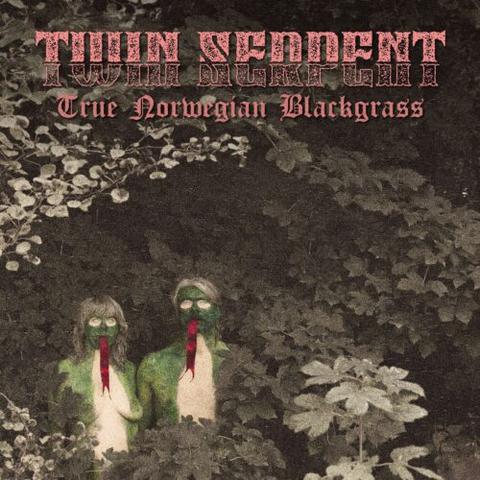
True Norwegian Blackgrass is a punk-infused, crust-country bluesabilly-thon full of quirky energy. Ditching the corpse paint and blood baths, Twin Serpent’s aesthetic is born from deliberate artistic intent—just scope that cover art touted as “weird, rowdy, and just a little bit black metal.” Face paint? Pfffft! Full body snake paint and no fucks given come standard. Spirited from the start, album opener “Space Heater” glides in on a wave of Dick Dale-esque surf guitar before going full-on Dead Kennedys with oodles of punkish energy and roars from Timo Silvola and Hanna Fauske that would have Fenriz smiling. From there, however, True Norwegian Blackgrass traverses a more eclectic musical terrain without sacrificing its punk moxie. Silvola’s countrified banjo plucks and acoustic strumming bring Bridge City Sinners and The Goddamn Gallows to mind (“Stellar Suicide”), but can folk out too on tracks like “Kipu Kivi,” which also features him chanting in his native Finnish. Back-boning Twin Serpent’s “rock”ier side are Fauske’s driving bass lines, Tony Gonzalez’s electric riffs and leads, and the shifty, exactly-what-we-need-when-we-need-it drumming of Viktor Kristensen. Together, these three bring a bluesy, alt-rock flair that had me feeling everything from Violent Femmes (“Hundromshelvete”) and Days of the New (“Tusen Takk”), to The Cramps (“Radiophobia”). To say True Norwegian Blackgrass seems a scatterbrained stew of styles would be an understatement, but I’ll be damned if Twin Serpent doesn’t pull it off.

Twin Serpent write big hooks, stacking True Norwegian Blackgrass with memorable moments. Whimsical percussion, poppy bass lines, and fuzzy guitar work make “Ærlig Talt” an off-kilter, punky fun ditty, while the catchier-than-thou chorus of the hoe-down-ready “Freak Flag” is stickier than hell, and should inspire mass consumption of cheap beer. My favorite song, ballad “Ain’t Home No More,” features a great harmonic duet between Silvola and Fauske, sung over simple banjo and acoustic guitar before feathering in surging electric chords that, in a live setting, could easily trail off into a stellar jam section. “Holy Ghost,” another tavern-tier stand-out, features more of Silvola and Fauske’s vocal harmonizations and sports a chorus that will have you swaying on your bar stool, arm around your drinking buddy, belting it out while sloshing beer from your pint glass.


Twin Serpent
’s versatility is their greatest strength. I imagine they’d fit in just as easily gigging at the local brew pub as they would a barn dance or even Chicago’s Riot Fest. Covering so many musical landscapes, an album like True Norwegian Blackgrass could have easily landed as an unfocused mess. But it’s the vocal interplay, harmonies, and trade-offs between Silvola and Fauske—reminiscent of early B-52’s—keeping things intact. As many different places as this record goes, it still manages to sound like Twin Serpent, and with twelve tracks spanning 37 minutes—most songs clocking in between two and three minutes each—it never loiters long enough to get boring or tiresome. Dubbed “the wizard technician,” Vebjørn Svanberg Numme harnesses all of the foursome’s idiosyncrasies and channels them through a production that perfectly captures everything that makes the Twin Serpent sound tick.

True Norwegian Blackgrass is a wonderful change-of-pace album you could totally spin when you don’t know what to listen to. Twin Serpent have added all the right ingredients to create a recipe loaded with eclectic energy and punk rock attitude. From note one, I was hooked and had more fun with True Norwegian Blackgrass than I’d ever guessed. I fully recommend you give it a try too.

Rating: 3.5/5.0
DR: 7 | Format Reviewed: 320kbps mp3
Label: Svart Records
Websites: Bandcamp | Facebook | Instagram
Releases Worldwide: May 8th, 2026

#2026 #35 #AltCountry #BridgeCitySinners #DaysOfTheNew #May26 #Norwegian #PunkRock #Review #SvartRecords #TheCramps #TheGaddamnGallows #TrueNorwegianBlackgrass #TwinSerpent #ViolentFemmes
Voidthrone – Dreaming Rat Review By Grin Reaper

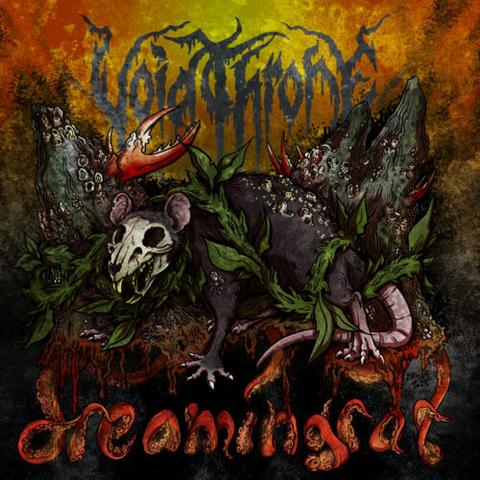
There’s a lot of weird shit floating around the metalsphere, and that includes Voidthrone’s newest addition, Dreaming Rat. The Seattle quartet has been kicking around for a decade, and in that time have released three prior platters of escalating lunacy. Without question, Dreaming Rat is Voidthrone’s most unhinged concoction to date, and a quick look at their Bandcamp credits gives prospective listeners a window into the alchemical ingredients they cook with, including Otamatone, conch shell, jaw harp, vibraslap, digeridoo, spoons, and a fretless bass. Throw in vocalist Zhenya Frolov’s deranged vocal stylings, and you’ve got yourself a bona fide manic expression of dissonant blackened death metal. With so many disparate components in Dreaming Rat’s stew, does Voidthrone soothe the savage beast or unleash a waking nightmare?

Listening to Dreaming Rat is a bit like experiencing an auditory fever dream, where disconnected fragments congeal into lurid, atonal anarchy. Voidthrone didn’t arrive at this sound overnight, though. Debut Spiritual War Tactics whipped and frothed with the restrained vitality of Krallice, and follow-up Kur added jazz-informed touches in the vein of Imperial Triumphant. Physical Degradation evolved Voidthrone’s sound, integrating more unconventional instrumentation and pushing the band’s songwriting past its comfort zone. On Dreaming Rat, Voidthrone takes the blueprint laid out on Physical Degradation and indiscriminately expands the range for strange. The result sees Frolov stretching his vocal performance into frenzied tirades, covering the gamut from Replicant’s vomitous barks to Sigh’s oddball deliveries. The instrumentation also gets exponentially wackier, as it conjures the rabid wrath of Pyrrhon along with the chaotic instincts of Afterbirth, resulting in an unpredictable romp to the end of the world.

At Dreaming Rat’s core, Voidthrone details the life and death of a solar system through bleak eras, segmenting the album into present, past, and future. The arcs are presented in that order, with each one comprised of three songs. The present describes the apex of a civilization, harnessing the promises forged upon the hopes and chaos of the past. Meanwhile, Voidthrone paints a grim outlook for the future, specifically calling out ‘an extinguished, lonely death of the physical, spiritual, and cognitive.’1 The lyrics throughout Dreaming Rat read like the demented ravings of a madman’s manifesto,2 and while I don’t think I could have divined the album’s overarching concept from them alone, reading them amplifies the bedlam Voidthrone has crafted on Dreaming Rat.

Writing music this lawless may seem haphazard, but over repeated listens, I’ve begun to glimpse the method to Dreaming Rat’s madness. Without question, everyone in Voidthrone earns their stripes. Ronald Foodsack’s guitars drench Dreaming Rat with warbling dissonance, perpetually in flux so that there’s never a riff or refrain to inhibit the music’s incessant lurch. Whether moving at frantic paces (“III-I. Surfing the Abyss”) or decelerating to a plodding crawl (“II-II. Morbid Seagull”), Ron’s six-stringed blitz never stalls. Additionally, Gavin Brooks contributes acoustic guitar and solos while manning the glorious fretless bass.3 Technical death metal has hogged the fretless bass for too long, and I’m glad Voidthrone has the stones to add it to disso metal’s tool chest. Tracks like “I-I. Bergen” and “II-I. Homeless Animal” showcase the character the instrument offers, bolstering the ever-shifting nature of Dreaming Rat. Drummer Josh Keifer grounds the band ably, locked into a supporting role that allows the other instruments to take center stage while he keeps things on the rails. Frolov’s feral vocals and the host of unconventional instruments further enrich Voidthrone’s distinctive identity, establishing what sounds like it could be the death throes of the universe.

What Voidthrone accomplishes with Dreaming Rat is fascinating and unique, and merits everyone’s attention. Sure, some songs could be trimmed to make such a scathing album a bit shorter and more palatable, and the three arcs could use some musical cues to distinguish songs thematically from one another, but Dreaming Rat is a crowning achievement for the band. Voidthrone’s psychedelic psychosis makes bold promises on paper and completely delivers in fact, and when I’m in the mood to get really weird with it, this will be the album I reach for.

Rating: Very Good!
DR: 7 | Format Reviewed: 320 kbps mp3
Label: Self-Release
Websites: Bandcamp | Facebook
Releases Worldwide: May 8th, 2026

#2026 #35 #Afterbirth #AmericanMetal #BlackMetal #DeathMetal #DissonantBlackMetal #DissonantBlackenedDeathMetal #DissonantDeathMetal #DreamingRat #ImperialTriumphant #Krallice #May26 #Pyrrhon #Replicant #Review #Reviews #SelfRelease #SelfReleases #Sigh #Voidthrone
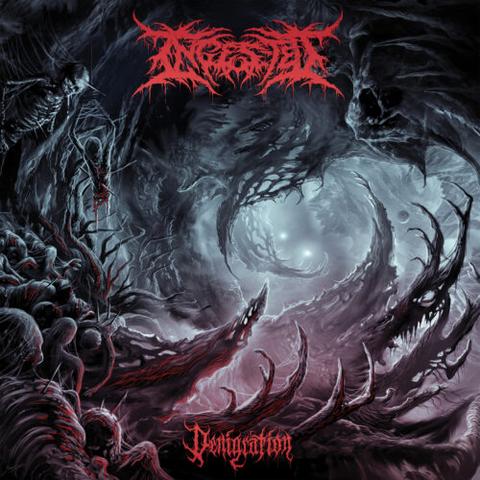
Ingested – Denigration Review By Lavender Larcenist

It is hard to believe that Ingested is hitting their eighth record. A band that managed to bring slam to the relative mainstream, combining the grotesque, guttural brutality of extreme music with more core-infused elements. Their previous record, The Tide of Death and Fractured Dreams, leaned a little too hard into these elements. Losing much of the slam and focusing on simplified song structures to its detriment. Their latest release, Denigration, marks the first without founding vocalist Jason Evans, someone who defined the sound of Ingested. Unfortunately for the band, the album is also marked by tumult. With the departure of Evans, his replacement was quickly outed over sexual assault allegations, and at the last minute, guitarists Sean Haynes and Andrew Virrueta took over. The album was re-tooled to replace the vocals (something I commend the band for wholeheartedly), but was something excised in the process, or is it a return to form for a band that had seemingly lost its extreme roots?

I hate to break it to you, but Denigration is an album as messy as the story behind its creation. The album starts strongly, and unfortunately enough, with what is probably its best track. Half the band screams the opening line before the song drops into an absolute blast of destructive drumming. The track is simple but effective, and contains just enough variety and speed to keep things interesting. Haynes and Virrueta do an admirable job bringing heft and technical skill to each track, but they too often devolve into the same bouncing slam riffs to the point of bleeding together. Individual songs are hard to tell apart, and while founding drummer Lyn Jeffs has always been talented, the snare production basically kills his entire performance. This is nearly St. Anger levels of snare-tragedy, and the drums aren’t the only victim; production across the record is uniformly terrible.

Denigration’s Achilles heel is its soundscape. While dynamic range isn’t necessarily a surefire sign of quality, this album has songs that go as low as a 2 on the scale. Tracks are a cacophony in the worst way; the snare is downright grating and overly loud, while the rest blends into a miasma of noise and chuggery. This is an album with so little range between individual tracks that it can feel like one long song, which is grueling for a slam record. Top this with the fact that the last-minute fill-in vocalists are clearly amateurs, especially compared to Evans, and you get an album that sounds like a debut by a young band making early mistakes. I have to imagine replacing the vocals at the last minute did serious damage to their original mix, but Ingested has a history of production issues on top of this. Combining these two has made for an album that can hurt to listen to at times.

I don’t mean to disparage the band; in fact, this was a record I was genuinely hoping would be great. I have always had a soft spot for Ingested’s unique brand of slamcore. Evans vocals are top-tier, and they were always willing to take the genre to creative places. Julia Frau’s vocals on “Ashes Lie Still,” Kirk Windstein’s epic chorus on “Another Breath,” and Josh Middleton’s on “Expect to Fail” define the band’s willingness to explore their sound. On Denigration, the guests only work to divert from the monotony between tracks; even then, their addition feels perfunctory. This doesn’t feel like the band that wrote bangers like “Misery Leech,” “Skinned and Fucked,” or “The List.” At least they are trying to emulate their slam roots with a more streamlined sound built around the classic Chug & Guttural™ combo. There will be those who find this record more palatable than Ingested’s recent deathcore-adjacent trajectory, even if the production takes crushed and curb-stomps it.

When I originally started spinning Denigration for review, numerous elements kept coming to my attention that now feel obvious, seeing how many things changed at the last minute. What should have been a creative refresh for a band that felt like it was relying a little too much on vocal talent has turned into the exact opposite. Denigration fails to bring the hooks, a key to any good slam record, while also being hamstrung by terrible production, middling vocals, and a lack of creativity. Hopefully, Ingested can come back stronger from all this and make the great album I know they are capable of, but all Denigration did was send me straight to the band’s better records.

Rating: Bad
DR: 3| Format Reviewed: 320 kbps mp3
Label: Metal Blade Records
Websites: Bandcamp | Official Site
Releases Worldwide: May 8th, 2026

#15 #2026 #BritishMetal #DeathMetal #Deathcore #Denigration #Ingested #May26 #MetalBladeRecords #Review #Reviews #Slam
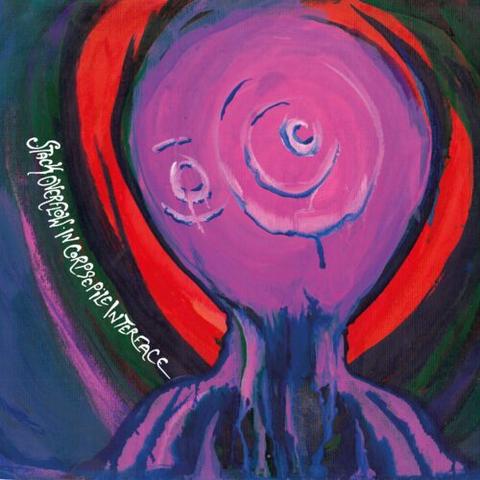
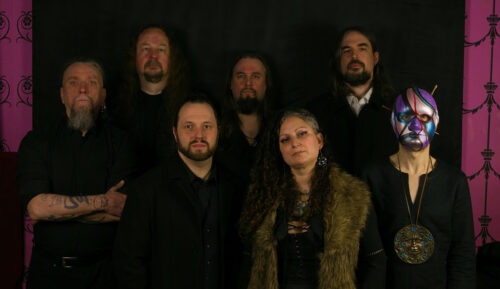
A Forest of Stars – Stack Overflow in Corpse Pile Interface Review By Grymm

There’s a common misconception from readers of this fine blog that we writers are well-versed, well-traveled, and have kept abreast of all the happenings and goings-on within the world of our favorite genre of music. I hate to pop your bubble gum, but that’s wildly untrue. We all have lives, careers, and people in our lives that take time away from listening to new music from artists that we have always loved or, in my case here, artists we’ve been wanting to check out, but for some reason haven’t. A Forest of Stars, the British avant-garde septet, are that band for me. Their newest, Stack Overflow in Corpse Pile Interface, their first album in eight years and sixth overall, is here for dissection, and I’m going in almost completely blind, and without a single note heard prior.

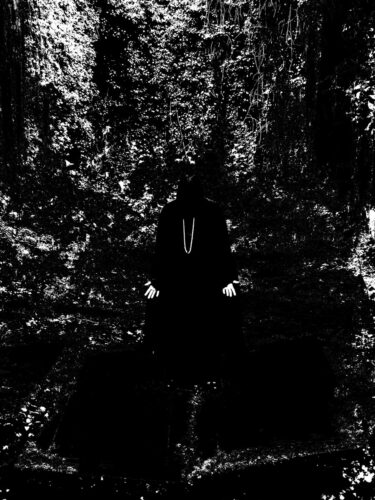
I’m already anticipating the hate mail for this, but from what everyone told me of AFoS, it’s a heady mix of British Black Metal,1 doom metal, and spoken word. All good things, in my book! Plus, Katheryne, Queen of the Ghosts helped bring back the violins for My Dying Bride’s 2009 album, For Lies I Sire, which again is a good thing! And despite it being over 73 minutes, Stack Overflow rarely meandered or sat in place for too long, making for an engaging listen throughout. Opener “Ascension of the Clowns” sets a doomed tone, quietly and somberly setting the scene before Mister Curse begins ranting like the proselytizers across the street from where I work. Maniacal and unrelenting, Curse’s caustic delivery and unhinged performances sometimes seem at odds with the framework of the music, but the two sides need each other as much as they want nothing to do with each other.

And that odd dichotomy propels Stack Overflow, especially in the final half-hour-plus one-two punch of both “Sway, Draped in Vague” and “Not Drinking Water.” The former, also awakening a faux dreamy vibe before sending the listener careening through the backstreets of London, with Curse and Katheryne trading off vocal lines while Mr. T.S. Kettleburner and Mr. William Wight-Barrow unleash some incredible riffs and tremolo melodies blanketing Katheryne’s sweeping violins towards the song’s middle, making the song’s 17 minutes feel like a journey. “Not Drinking Water,” in contrast, feels downtrodden in the beginning, containing some of the album’s slowest moments, before hitting what could accurately be called a humdinger of a jam session right at the song’s midpoint, with solos and hooks galore to wrap up both a fantastic closer, as well as a hell of a way to finish out the album.


Of course, there are some issues with Stack Overflow. While most of the material flows seamlessly, there does seem to be some fat to trim, especially in some of the more atmospheric moments. Also, while there isn’t a single weak moment on the album, it really is best experienced in one sitting with most of the lights off, some candles, your favorite beverage, and (if you partake) your smoking implement of choice, and for some, 73 minutes is a big ask for many of us, especially if you’re busy like I am. However, if you can make the time and get in the right headspace, you will be rewarded handsomely.

I’m due for some weirdness, especially in the departure of Voices.2 Not only does Stack Overflow in Corpse Pile Interface scratch that itch until it bleeds, but it also turned me on to a band that I went from “I need to check them out sometime” to “Okay, how much is their stuff on Bandcamp?” in record time. A Forest of Stars, in a just world, should be heralded as purveyors of odd, eclectic metal. Here’s hoping that Stack Overflow in Corpse Pile Interface is as much a jumping-on point for many of you as it was for me. Believe me, you can do a hell of a lot worse.

Rating: 4.0/5.0
DR: 7 | Format Reviewed: 320 kbps mp3
Label: Prophecy Productions
Websites: Bandcamp | Facebook
Releases Worldwide: May 8th, 2026
#2026 #40 #AForestOfStars #AvantgardeMetal #BritishMetal #May26 #MyDyingBride #ProphecyProductions #Review #Reviews #StackOverflowInCorpsePileInterface #Voices
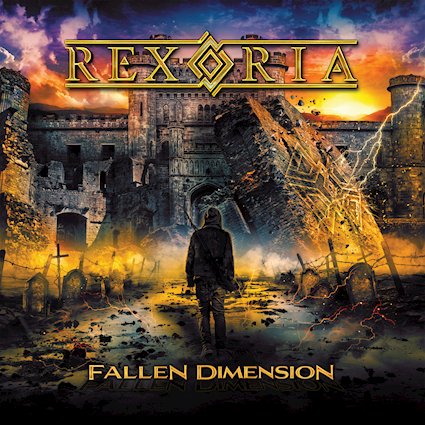
Rexoria – Fallen Dimension Review By ClarkKent

Typically, you can judge a cheesy power metal album just from its cover art. Look at the laser-powered sharks/dinos from Victorius, the D&D fantasy elements of Power Paladin, or the stuffed assembly of characters on Angus McSix, and you know you’re getting yourself a heap of cheddar. The covers are busy, bombastic, and as brightly-colored as Frida Ohlin’s hair (see band photo below). Sweden’s Rexoria bucks that trend. The cover art for Fallen Dimension looks like it belongs on a work of dystopian prog like Vanderlust. They deliver something far more light-hearted, though—symphonic power metal. Rexoria deem themselves the birth of a genre called “Royal Metal”—it’s in their name. Rex means king, and Oria means gold. Royal metal. Get it? So just what is this new tag? More importantly, would you like your royale with cheese?

Fallen Dimension blends old school heavy metal with modern power metal and a dash of keyboard synths. While they boast of symphonics in their promo sheet, Rexoria have more in common with Unleash the Archers than Mystfall. They combine the joyful energy of Frozen Crown with the straightforward approach of Sabaton. With honed pop structures, Rexoria set aside the wankery of many power metal bands and dive quickly into their anthemic choruses. Blink, and you might miss the music that happens between the opening spoken word segment and hooky chorus on opener “Metallic Rain.” If you like the bop and energy of power metal without its often masturbatory shredding, then this is for you. Rexoria has solos, but they’re in and out in a flash, all to ensure songs end in a (mostly) tidy 3-4 minutes. The downside is that where bands like Frozen Crown and Unleash the Archers do some really cool stuff with their guitars, the guitars on Fallen Dimension sound generic and bland.

Frontwoman Frida Ohlin gives Rexoria a more distinctive sound relative to more recent power metal bands. She has a gritty voice akin to Joan Jett rather than the smooth and joyful tone of Frozen Crown’s Giada Etro. She delivers some really good choruses, bringing to life the likes of “Break the Wave” and “Running with the Stars” with her energetic delivery. She even shows a more tender side on the rock ballad, “Heart of Sorrow,” a duet with Johnny Gioeli (Axel Rudi Pell). Her grit keeps the bouncy, formulaic songs from going too far down the road of pop music. It’s not that the other players are incompetent—they just don’t have much to work with. The drums are standard, galloping blast beats, and the guitar riffs are competent if uninspired. Rexoria brought in a new bassist (Adam Nordquist) for Fallen Dimension, but I rarely heard him. Usually a record like this benefits from outside hooks, and the synths tend to be hit or miss. There are some good ones, such as those on “Metallic Rain,” but on follow-up “Awakening,” I couldn’t help but wonder if they started recycling synth lines.

In general, Fallen Dimension is a pleasant listen that’s also forgettable due to its jack-of-all-trades nature. Rexoria’s plug-and-chug approach allows for an enjoyable energy and choruses that hit the right notes. Yet there’s very little to distinguish them from the power metal pack. The opening riff on “Wasted Land” sounds a lot like something from a Fellowship record, while a majority of their other riffs are hardly more creative than your run-of-the-mill radio rock music. I didn’t dislike any of the songs, yet nothing really grabbed me either. Some of the choruses stuck in my head for a little while, but without any real emotional impact. Rexoria has all the pieces in place—they’re just missing that extra something to make them shine.

Power metal serves as a bridge between extreme and popular music. It often contains pop structures that appeal to a wider audience, yet can still stretch the limits with exciting musical prose that can appeal to thrill-seeking extremists. The pitfall of flirting with more commercial styles is that it often leads to formulaic and watered-down music. Rexoria boasts in their promo sheet of millions of Spotify streams and half a million YouTube views, so clearly they are finding success. It would just be nice to see them take some risks. Too often, success gets in the way of art. I hope Rexoria can continue to find success while also developing the art of their music.

Rating: 2.5/5.0
DR: N/A | Format Reviewed: Stream
Label: Black Lodge Records
Websites: Bandcamp | Facebook | Official Site
Releases Worldwide: May 8th, 2026

#25 #2026 #AngusMcSix #AxelRudiPell #BlackLodgeRecords #FallenDimension #Fellowship #FrozenCrown #JoanJett #May26 #Mystfall #PowerMetal #PowerPaladin #Review #Reviews #Rexoria #Sabaton #SwedishMetal #UnleashTheArchers #Vanderlust #Victorius
Electric Sun Defence – Estuary Review By Killjoy

It’s easy to take the Internet for granted, given how ubiquitous it is these days. A couple of decades ago, it would have been unthinkable for someone like me who lives in the United States to stumble upon music made by a group from Eigg. Hailing from this small Scottish island—with a population of only about 100—Joe Cormack and Pete Colquhoun formed Electric Sun Defence following the early dissolution of their former group, The Massacre Cave, after just one album that was released in 2020. Estuary represents the next step along this trail of spirited progressive/post-metal that these two bandmates began blazing years ago.

It turns out that Estuary is an apt metaphor for Electric Sun Defence’s music. Estuaries, formed when freshwater rivers mix with the salty ocean, account for some of the world’s most productive wildlife ecosystems. Similarly, Estuary inhabits the sweet spot between the melodicism of prog and the coarse textures of post-metal. Much like The Ocean and Void of Light, Electric Sun Defence is prone to change from tranquil to tempestuous at a moment’s notice. The flurries of activity are glued together with delicious, delicate post-rock segments in the vein of pg.lost or Red Sparowes. The balance between these competing interests can feel fragile at times, but they manage to coexist and enrich their musical environment together.

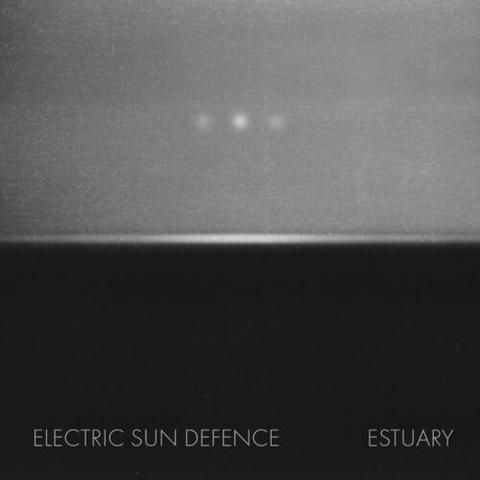
Estuary’s standout strength is the masterful buildup and discharge of tension. This is immediately clear as the title track begins, layering bass and horns atop cymbal taps and serene guitars, then eventually erupting into a furious post-metal wave. “Fountain of Blood” takes things further with harsh guitar riffs that also contain the perfect amount of groove. “The Master’s Garden” deftly winds between glassy post-rock and distorted chords, climaxing with an intricate guitar melody. Though the intensity waxes and wanes, there is a clear trend of increasing aggression as Estuary progresses, becoming more like a combination of Cult of Luna and Dvne for the final two tracks, “Phantom Limb Amputee” and “In Bestia.” During the latter, Pete Colquhoun really gets to let loose with forceful and frenetic rhythms behind the kit. Don’t let the monochromatic album art fool you; Electric Sun Defence paints with a wide array of aural hues.

The dynamic composition is good, but when paired with an intuitive flow, the experience borders on transcendent. Each track fluidly transitions to the next, and the fact that none of them exceeds 8 minutes helps to keep Estuary from becoming stale. This is a rare instance of the shorter interlude tracks serving a larger purpose, albeit in a subtle way. “Spiderweb” is pretty enough that I can look past its bothersome soundbites, and “Dysmorph” functions as a reprieve while setting the stage for the raging “Phantom Limb Amputee” that follows. The grouping of these tracks with the shoegaze elements in “Choke Leper” causes the momentum to sag a little, but not terribly so. Another minor weak point is that the vocals—especially the cleans—can sound muffled, but the strength of the instruments helps compensate.

Though I entered Estuary with no expectations, it turned out to be exactly what I was looking for at the time. It keeps the listener guessing from moment to moment with the continual assurance that they’ll love whatever comes next. Electric Sun Defence shows their versatility by wielding both emotive melody and crushing ferocity. Albums like this make me pause and appreciate the privilege we have to conveniently access great music from all over the world. Electric Sun Defence might be the best metal group in Eigg by default, but they can give others in larger regions a serious run for their money too.

Rating: 4.0/5.0
DR: 8 | Format Reviewed: 320 kbps mp3
Label: Road To Masochist
Websites: electricsundefence.bandcamp.com | facebook.com/people/Electric-Sun-Defence
Releases Worldwide: May 8th, 2026

#2026 #40 #CultOfLuna #Dvne #ElectricSunDefence #Estuary #May26 #pgLost #PostRock #PostMetal #ProgressiveMetal #RedSparowes #Review #Reviews #RoadToMasochist #ScottishMetal #TheMassacreCave #TheOcean #VoidOfLight
IATT – Etheric Realms of the Night Review By Grin Reaper

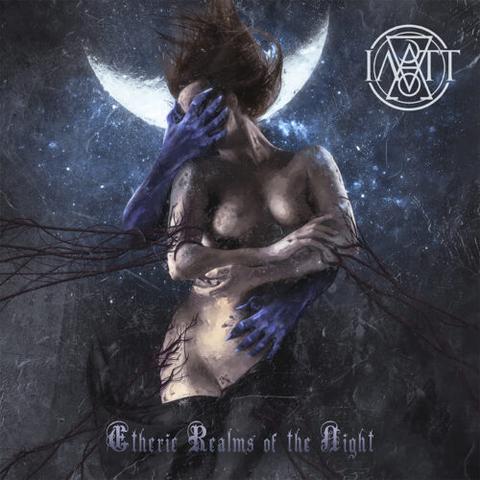
Since releasing Magnum Opus four years ago, Philadelphia’s IATT has refined their songwriting toolkit to incorporate an even wider array of ideas and sounds. New platter Etheric Realms of the Night demonstrates a compositional leap as IATT weaves a grandiose concept into music—specifically, exploring the deconstruction of consciousness as wakeful awareness decays amongst the capricious environs of the subliminal. This abstract notion is rife with potential, offering boundless possibilities for artistic exploration. Broadly speaking, IATT follows a fascinating trajectory, covering a lot of ground with each release and honing their craft remarkably since their debut. With their latest offering, can IATT send us into Etheric Realms of delight?

Etheric Realms of the Night surges with ideas and instrumentation, entwining ephemeral beauty and scathing dissonance into a fugue-like fever dream. Prior albums Nomenclature and Magnum Opus reference stalwarts Opeth, Enslaved, and Dissection, melding melody with brutality to wondrous effect. Etheric Realms of the Night retains the core of IATT’s sound while expanding it even further into flamboyantly progressive territory à la Ihsahn and Thy Catafalque, and it’s this pivot that unites Etheric Realms’ music and concept so cohesively. The flute, performed by Didier Malherbe, sets the tone at the beginning of lead track “Drift Away.” Light, airy, and flitting, its inclusion is a masterstroke in evoking dreams’ fleeting substance. Piano lines weave in and out of the compositions, enriching the gorgeously textured cascades of IATT’s dense soundscape with vague impressions of a lullaby. Yet no matter how busy any particular moment is, each facet plays in service to the whole, engendering an astonishing coherence through Etheric Realms despite the diversity of components.

The overarching narrative on Etheric Realms of the Night follows the mind’s state of consciousness as sleep erodes the physics of reality, sending us deep into the impenetrable murk of unfiltered inputs and perceptions. “Drift Away” begins with a tandem of acoustic strumming played under a lilting flute, leading to a VoiceOver thought exercise that establishes a loose framework for Etheric Realms.1 From there, the track launches into harsh vocals alongside soaring strings that give way to heartfelt cleans, a groovy drum shuffle, punchy bass countermelodies, and sprightly piano flourishes. It’s the perfect introduction for what IATT accomplishes throughout Etheric Realms, as atmospheres consistently dart and lurch in unexpected directions. This approach synchronizes perfectly with the ephemeral temperament of dreams, where paradigms are kaleidoscopic, and no foothold lasts longer than a breath. So, too, does IATT’s songwriting shift and evolve throughout Etheric Realms’ runtime, with themes and motifs fading and reemerging in altered forms.

Etheric Realms’ success hinges on performances that can support the concept IATT sets in motion, and here, too, they deliver in spades. The guitars feature prominently on Magnum Opus, frequently stepping out to deliver showy licks and sure-fingered solos. On Etheric Realms, guitarists Joe Cantamessa and Alec Pezzano are no less capable and still deliver electrifying leads and riffs. Yet it’s their restraint that works best, giving room for other parts to dazzle. Paul Cole’s drumming hypnotizes as he adopts different styles throughout, including a dance-ready samba pattern on “Pavor Nocturnus” and a Portnoyesque rumble toward the back end of “Somniphobia.” Meanwhile, bassist/vocalist Jay Briscoe unleashes the best performance of his career so far, issuing a variety of black metal rasps and lower register roars along with effective cleans. Briscoe’s stately bass lines deserve praise as well, sauntering into the spotlight or supporting with gravelly grooves as needed. Also, the saxophone on “Walk Amongst,” played by Jørgen Munkeby (Emperor, Shining), wails with such emotion and moxie that I get goosebumps every time I listen. Every moment on Etheric Realms feels well-considered and expertly crafted, and the way it all fits together is transcendent.

Etheric Realms of the Night is an unabashed triumph. In my time at AMG, this is the only review I’ve tarried on because I didn’t want to stop listening to the album. IATT supplies an arresting three-quarters of an hour that sets my dopamine release valve to ‘GUSH,’ and Etheric Realms claims a residency in my gray matter that haunts me day and night. Every time “Hypnos” concludes, I’m left mesmerized and enamored with IATT’s swirling moods and seamless conglomeration of ideas. While it’s too early for me to think about list season,2 the subconscious pull Etheric Realms possesses only grows stronger with each visit, and I dare to dream of writing about it again.

Rating: Excellent!
DR: 6 | Format Reviewed: 320 kbps mp3
Label: Black Lion Records
Websites: Bandcamp | Facebook
Releases Worldwide: May 8th, 2026
#2026 #45 #AmericanMetal #BlackLionRecords #BlackMetal #Dissection #Enslaved #EthericRealmsOfTheNight #IATT #Ihsahn #May26 #Opeth #ProgressiveBlackMetal #ProgressiveMetal #Review #Reviews #ThyCatafalque