Monday Masterpiece
Gray's Anatomy - Omnibus Edition
By: Henry Gray, T. Pick P (Editor), Robert Howden (Editor), H.V. Carter (Illustrator)

This is why I love books!

I got mine as a gift, you can find yours at Booktopia.

#graysanatomy #henrygray #hvcarter #youchooseadventurepuzzles #masterpiecemonday #booksthatinspire

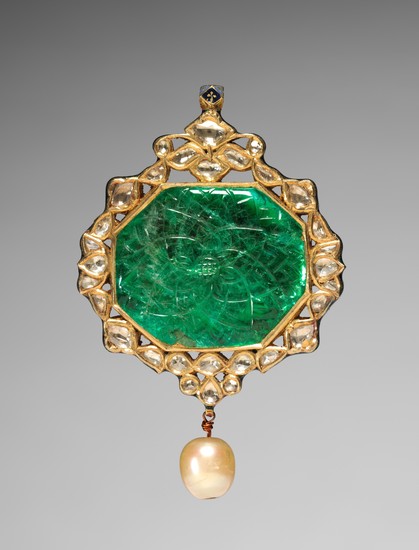
Marvel at the brilliance of 'Pendant with Chain' at #ClevelandMuseumofArt. Effortless elegance & intricate detail bound to leave you in awe. Who else is captivated?
#ArtLover #MasterpieceMonday
https://clevelandart.org/art/1966.515
Pendant with Chain | Cleveland Museum of Art

The central emerald has been subtly incised with a many-petaled lotus flower, a symbol of the sun, suggesting the radiance of the outsize gem. The enameling on the back depicts a peacock with a pair of peahens amid flowers. Peacocks signal the monsoon rains. The refined use of enamel indicates that this piece was assembled in the specialized workshops of Jaipur, but the size of the emerald suggests that it was made for imperial use.

Immerse in the tranquillity of "#ChrysanthemumsandCabbage" at #ClevelandMuseumofArt. This 19th-century piece captures the harmony of nature in its most simple forms. What's your favorite detail in this artwork?
#ArtInspiration #MasterpieceMonday
https://clevelandart.org/art/1960.40
Chrysanthemums and Cabbage | Cleveland Museum of Art

On an autumn day in Beijing, Tao Cheng had a gathering with a group of scholar-officials and created two paintings in a spontaneous, casual style. The first depicts chrysanthemums, slender bamboo stalks, and a rock in monochrome ink. Tao applied light colors for the second painting that depicts cabbage. Tao deliberately placed the images on the first sections of the paper so that his honorable guests could add their poetic inscriptions inspired by his imagery. <br><br>In the first section to the right, all seven poetic inscriptions refer to the beloved poet and recluse Tao Qian (also called Tao Yuanming, AD 365–427) who was particularly known for his profound love for chrysanthemum flowers. Most of the inscriptions in the second section express sympathy for the poor, since cabbage is the main ingredient in their humble food. Taken together, the poems and paintings allude to the life and responsibilities of the scholar-official: the importance of both an upright character and a concern for the poor citizens in order to achieve good government.

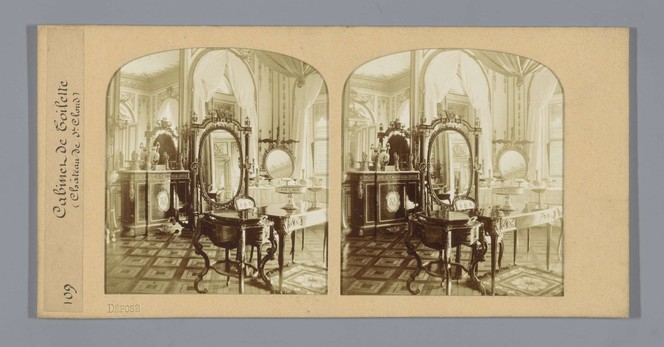
Exploring the exquisite details of Florent Grau's Kaptafel in het kasteel van Saint-Cloud at #Rijksmuseum. Mystery and grandeur from 1858 trapped in one frame. Your thoughts?
#ArtHistory #FrenchArtwork #19thCenturyArt #MasterpieceMonday
https://www.rijksmuseum.nl/nl/collectie/RP-F-F09574
Kaptafel in het kasteel van Saint-Cloud, Florent Grau (toegeschreven aan), 1858 - Rijksmuseum

Rijksmuseum
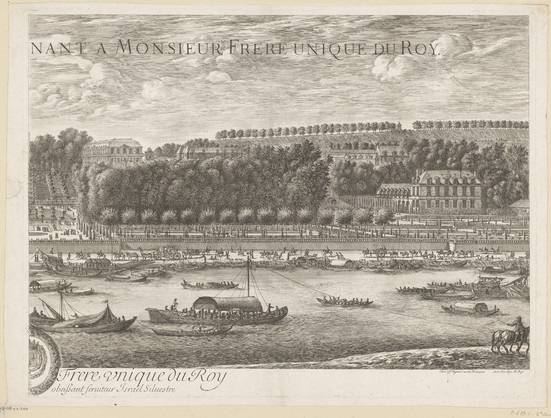
Feasting eyes on Israël Silvestre's "Gezicht op kasteel Saint-Cloud", 1671 at #Rijksmuseum. The details, the grandeur, the liveliness! How does it evoke 'history' to you?
#ArtHistory #MasterpieceMonday #IsraëlSilvestre
https://www.rijksmuseum.nl/nl/collectie/RP-P-OB-74.300
Gezicht op kasteel Saint-Cloud (rechter deel), Israël Silvestre, 1671 - Rijksmuseum

Rijksmuseum
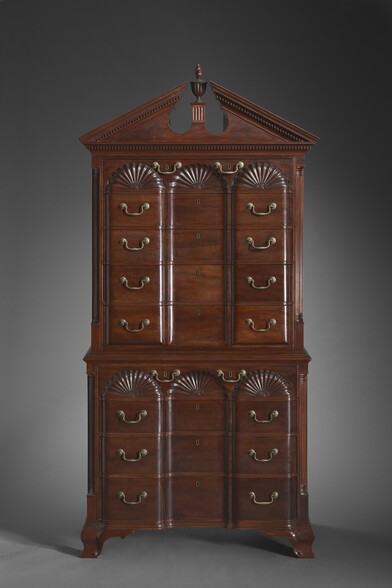
Discovering stunning 18th-century American furniture. Chest-on-Chest boasts block-fronted case perfection from #Providence. Brown family connection; Carliles or Rawsons as makers? 🤔💭🖼️
#ClevelandArt #FurnitureArt #MasterpieceMonday #artlovers
https://clevelandart.org/art/1976.170
Chest-on-Chest | Cleveland Museum of Art

Block-fronted case furniture-that is, pieces with façades that vary in the plane of their relief by extending forward at the sides and receding in the center-decorated with carved shell ornaments, has long been among the most admired of 18th-century American furniture. The sophisticated examples of such pieces were presumed to have been made in Newport, Rhode Island, particularly by members of the Townsend and Goddard families. However, recent scholarship convincingly hypothesizes that some of the finest pieces of this type of furniture were, in fact, made in Providence, Rhode Island-many of them, such as this chest, for members of the Brown family, inhabitants of that city. This piece was probably made for either Nicholas Brown (1729-1791) or, more likely, his son Nicholas Brown Jr. (1769-1841). The museum's chest-on-chest can be related stylistically and technically to other Providence pieces, but it is not yet clear who made them. Members of two cabinetmaking families, the Carliles and the Rawsons, are among the most likely candidates.