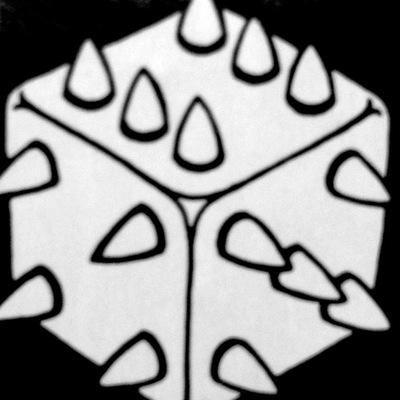
Diakka

Occultists and Theosophists term for untrustworthy spirits; “spooks” and “shells”, i.e., phantoms from Kâma Loka.

The Sanskrit term loka is cognate with English locus. The Kâma Loka is the plane or level of reality on which emotions operate, sometimes called astral, which is coexistent with and interpenetrates the physical plane.

#WordWizard #WordOfTheDay #WotD #Logophile #lexiphile #lexicography #literature #poetry #writer #writing #storytelling #story #BookStodon

quin·cunx
/ˈkwinˌkəNG(k)s/

noun
1.
an arrangement of five objects with four at the corners of a square or rectangle and the fifth at its center, used for the five on dice or playing cards, and in planting trees.

2.
ASTROLOGY
an aspect of 150°, equivalent to five zodiacal signs.

#WordWizard #WordOfTheDay #WotD #Logophile #lexiphile #Lit #lexicography #literature #poetry #writer #writing #storytelling #story #BookStadon #BookTube

mucid
/ (ˈmjuːsɪd) /

adjective
rare mouldy, musty, or slimy

Etymology

from Latin mūcidus, from mucēre to be mouldy

#WordWizard #WordOfTheDay #WotD #Logophile #lexiphile #lexicography #literature #poetry #writer #writing #storytelling #story #BookStadon

Götterdämmerung
noun
Göt· ter· däm· mer· ung ˌgər-tər-ˈde-mə-ˌru̇ŋ 

: a collapse (as of a society or regime) marked by catastrophic violence and disorder

Etymology
German, literally, twilight of the gods, from Götter (plural of Gott god) + Dämmerung (twilight)

#WordWizard #WordOfTheDay #WotD #Logophile #lexiphile #lexicography #literature #poetry #writer #writing #storytelling #story

Monstrance

mon•strance I 'mänztr(a)ns |

noun
(in the Roman Catholic Church) an open or transparent receptacle in which the consecrated Host is exposed for veneration.

origin
late Middle English (also in the sense 'demonstration or proof'): from medieval Latin monstrantia, from Latin monstrare 'to show'.

#WordWizard #WordOfTheDay #WotD #Logophile #lexiphile #lexicography #literature #poetry #writer #writing #storytelling #story #BookStadon

Hematidrosis

A condition in which capillary blood vessels that feed the sweat glands rupture, causing them to exude blood; it occurs under conditions of extreme physical or emotional stress.

The term is from Ancient Greek haîma/haímatos (αἷμα/αἵματος), meaning blood, and hīdrṓs (ἱδρώς), meaning sweat.

#WordWizard #WordOfTheDay #WotD #Logophile #lexiphile #lexicography #literature #poetry #writer #writing #storytelling #story

murmurous

adjective
mur· mur· ous ˈmər-mə-rəs  ˈmərm-rəs

: filled with or characterized by murmurs : low and indistinct

#WordWizard #WordOfTheDay #WotD #Logophile #lexiphile #lexicography #literature #poetry #writer #writing #storytelling #story #BookStadon

Eisegesis (/ˌaɪsɪˈdʒiːsɪs/) is the process of interpreting text in such a way as to introduce one's own presuppositions, agendas or biases. It is commonly referred to as reading into the text. It is often done to "prove" a pre-held point of concern, and to provide confirmation bias corresponding with the pre-held interpretation and any agendas supported by it.

#WordWizard #WordOfTheDay #WotD #Logophile #lexiphile #lexicography #literature #poetry #writer #writing #storytelling #story

Trilophodon

The genus Trilophodon, (from Greek Triloph: meaning three crested, and odon: meaning tooth, refering to the molar tooth belongs to the family of Mastodons (Mammutidae) and is sometimes called Tetrabelodon or Four tusked Mastodon.

#WordWizard #WordOfTheDay #WotD #Logophile #lexiphile #lexicography #literature #poetry #writer #writing #storytelling #story