 Editor
GOWER: ‘Jayne is a fast walker — and I can keep up with her now’ — how a Kittle man’s Parkinson’s trial is helping him stride out again
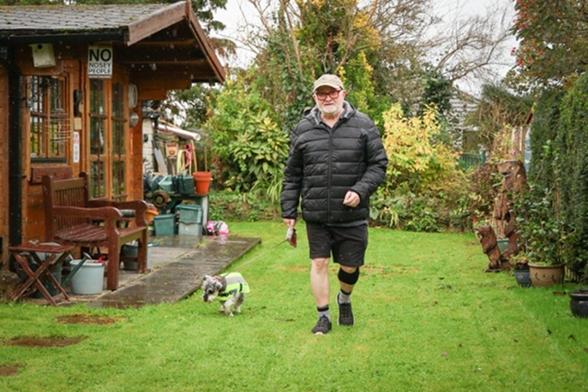
Malcolm Sims and his wife Jayne love walking with friends. But after his Parkinson’s diagnosis, Malcolm found himself shuffling rather than striding — struggling to keep up, his foot feeling as if it were stuck to the ground.
“I was referred to physiotherapy and then neurology, who sent me for a CT scan,” said Malcolm, 75, from Kittle in Gower. “We really weren’t expecting the doctor to tell us it was Parkinson’s. It hadn’t even crossed our minds.”
Around 60% of people with Parkinson’s experience at least one fall a year — and falls cost the NHS over £1 billion annually. For many patients, the slow shuffle, freezing and loss of confidence that come with the condition mean a gradual retreat from the active life they once knew.
Malcolm was determined that wouldn’t be his story. A former science teacher, he made himself a promise when he got his diagnosis: he would take part in any research he was offered.
“Scientists are always looking for ways to improve things,” he said. “When I was diagnosed, I said I’d get involved in any research I was offered, so when we saw this I thought, I’ll give it a go. It might help other people too.”
That research was the STEPS II trial at Swansea Bay University Health Board — a study investigating whether a small electrical device called the ODFS Pace, already used by stroke and multiple sclerosis patients, could improve walking in people with Parkinson’s.
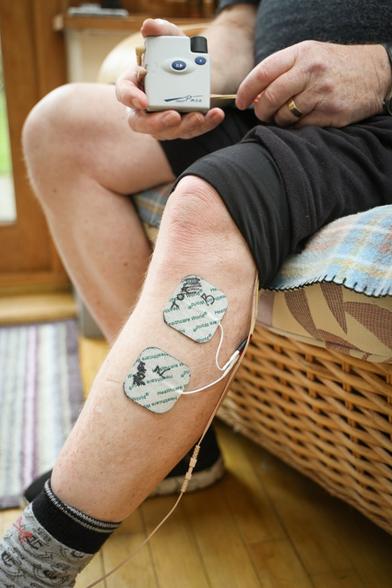
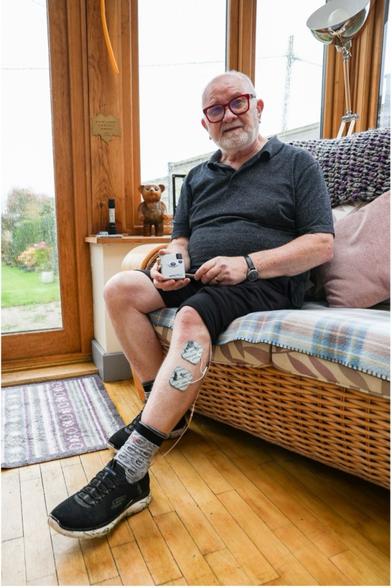
Malcolm was taught to attach small sticky pads to his lower leg. Once in place, a switch in his shoe triggered a small electrical impulse, stimulating the common peroneal nerve to make the muscles lift the foot more normally.
The ODFS Pace device, with sticky electrode pads attached to the lower leg, which was trialled as part of the STEPS II Parkinson’s research study. (Image: Rosey Thomas / Swansea Bay University Health Board)“Once it was on I’d often forget I was wearing it,” he said. “My foot would feel like it was stuck to the treadmill, but now I’m lifting it much more normally.”
The improvement in his daily life has been significant. Malcolm can now keep pace with Jayne on their regular walks — and has been able to carry on going to the gym.
“As time has gone by I’ve really noticed an improvement,” he said. “Jayne is a fast walker and I can keep up with her now. It’s made it much easier to keep active.”
What researchers found particularly striking was a “carry over” effect in some patients — where muscles moved more normally even when the device was not being worn. Lorna Tasker, Head of Rehabilitation Engineering at Swansea Bay University Health Board and one of the trial’s principal investigators, said the team hoped to see the full results published soon.
“We have 20 years of delivering this service to Multiple Sclerosis and stroke patients and hope that once published the results will give us a clearer understanding of how it may benefit people with Parkinson’s, as well as help to prevent falls,” she said.
The STEPS II trial was funded by a Medical Research Council and National Institute for Health and Care Research partnership, with contributions from Health and Care Research Wales. It was one of more than 800 clinical research trials delivered across Wales in the last year.
Wales’ Chief Medical Officer, Professor Isabel Oliver, said the scale of research activity across Wales was something to be proud of — and paid tribute to every patient who had taken part.
“By taking part in research, you are shaping your own care and helping to improve health and services for future generations,” she said.
Related stories from Swansea Bay News
Swansea Bay University Health Board stories from Swansea Bay News
All our coverage of health and care news from Swansea Bay.
Gower news from Swansea Bay News
The latest stories from Gower and the surrounding area.
 Bobsee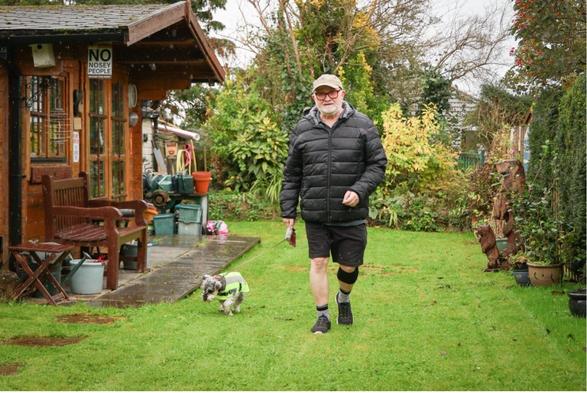
 ✪ Schimpfi ✪
 Quintessential Quicksand