 Co widzę moim okiem...
If you find yourself fighting with a friend over politics, or frustrated and furious with your nearest and dearest over whom they're supporting for president, you're hardly alone. A recent survey shows just how much the nation's bitter political divide is causing social splintering and taking a toll on friendships. Even decades-long relationships have been caving under the pressure, giving new meaning to "social distancing."
Stressed Sideliners are generally disconnected from politics and the two major parties, voting at lower rates than most other typology groups. Although Stressed Sideliners make up 15% of American adults, they were just 10% of 2020 voters due to their relatively low turnout rate. Still, they represent substantial shares of both parties’ coalitions.
https://www.pewresearch.org/politics/2021/11/09/stressed-sideliners/

7. Stressed Sideliners
One of the least highly educated typology groups, Stressed Sideliners are generally disconnected from politics and the two major parties, voting at lower rates than most other typology groups. A large majority say the economic system in this country unfairly favors the powerful, and about three-quarters favor raising the minimum wage.

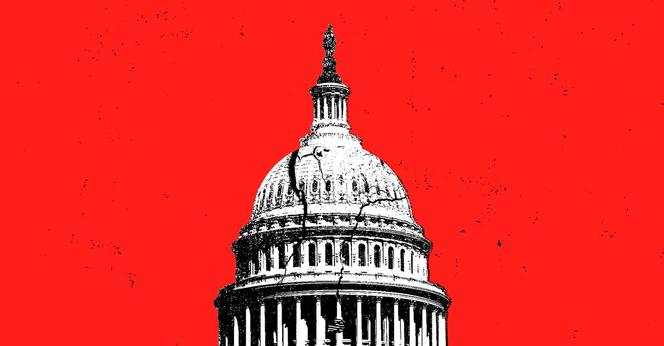
Americans have long been critical of politicians and skeptical of the federal government. But today, Americans’ views of politics and elected officials are unrelentingly negative, with little hope of improvement on the horizon.
Majorities say the political process is dominated by special interests, flooded with campaign cash and mired in partisan warfare. Elected officials are widely viewed as self-serving and ineffective.
A comprehensive new Pew Research Center study of the state of the nation’s politics finds no single focal point for the public’s dissatisfaction. There is widespread criticism of the three branches of government, both political parties, as well as political leaders and candidates for office.
Recent presidential campaigns viewed as too long, not informative. Americans are not just unhappy about the current state of politics; they also take a critical view of recent presidential campaigns. Nearly eight-in-ten (78%) say recent nominees have not been good candidates, while large majorities also say the campaigns have not focused on the right issues or been informative, and 72% say they “lasted too long.”
https://www.pewresearch.org/politics/2023/09/19/americans-dismal-views-of-the-nations-politics/

Americans’ Dismal Views of the Nation’s Politics
Americans’ views of politics and elected officials are unrelentingly negative, with little hope of improvement on the horizon. 65% of Americans say they always or often feel exhausted when thinking about politics. By contrast, just 10% say they always or often feel hopeful about politics.
Some of us are longtime double-haters in good standing. But it's worth putting those numbers in context. In 1988, only 5 percent of voters told pollsters they disapproved of both major party candidates. In 2000, that figure was 6 percent. Even the previous Trump-Biden matchup in 2020 pulled only 13 percent into the double-hater camp. For several months of this election cycle, Americans really were letting the hate flow through them in unprecedented ways.
In 2024 it's hard to shake the feeling that, from a policy perspective, the presidential contest offers less real substance than ever before. Rather than being a contest over policy, ideology, and principle, the race has descended into a spectacle of empty gestures, culture-war posturing, and a dizzying rush to outdo the opposition in meaningless rhetoric. It's the era of total policy nihilism.
It's not just economic issues. Foreign policy also became an afterthought. Today, foreign policy functions downstream from domestic electoral politics and the culture war. The complexities of global power balances, human rights, and trade relations are flattened into caricatures and sound bites.
Instead of being leaders who take seriously their obligation to govern, politicians are little more than symbols in a rhetorical war that's largely disconnected from day-to-day policy. They will literally say anything to get elected.
In election season, there's a certain dark freedom in policy nihilism. It allows candidates to campaign without accountability. If their policy proposals are flimsy and changeable, they reduce their own risk of being held to their promises. Knowing that the policy talk is meaningless allows voters to gloss over the difficult details of proposals, since the candidates are unlikely to pursue the policies they are discussing in a recognizable way once in office anyway. We're left with elections where the stakes feel apocalyptic, even as the substance hollows out.
https://www.yahoo.com/news/coming-vindication-double-haters-100023193.html

How has America slid into its current age of discord? Why has our trust in institutions collapsed, and why have our democratic norms unraveled?