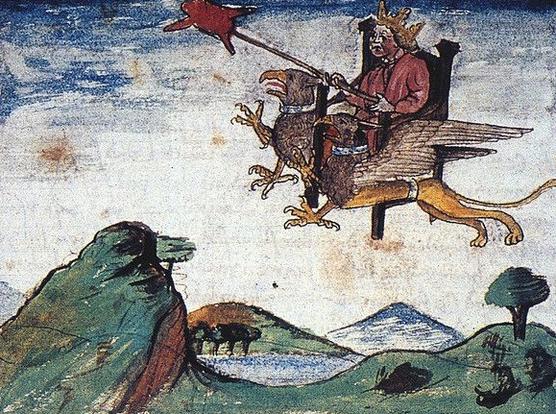
According to folklore, Alexander the Great flew through the sky on a seat tied to two griffins he had tamed. To entice them to keep flying higher, he placed meat on two skewers which he held above their heads. Some say Alexander also rode a unicorn into battle.

#FolkloreSunday #Mythology #Folklore #Monster #FabulousBeast #Griffin #AlexandertheGreat

According to folklore, Alexander the Great flew through the sky on a seat tied to two griffins he had tamed. To entice them to keep flying higher, he placed meat on two skewers which he held above their heads. Some say Alexander also rode a unicorn into battle. #FolkloreSunday
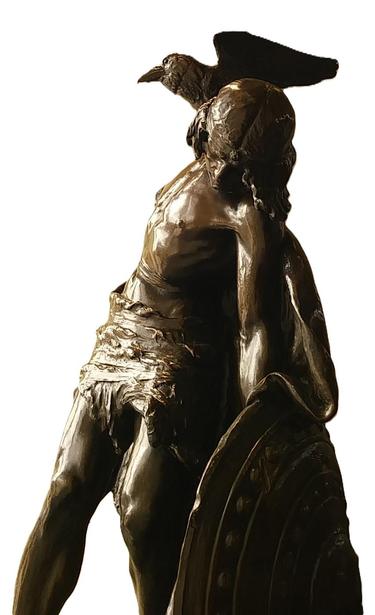
#FolkloreSunday #Celtic: `Caesar reports in his account of the Gallic War of the war goddess Badb, who appears in the form of a crow (Hofeneder 2005, 170). Also in Caesar we find the report about the tribe of the Aulerci Brannovices, who lived between Saône and Loire. Interesting is the tribal name, which derives from the Celtic word "branos" for raven and "vic" for warrior, fighter, victor. One therefore speaks of the raven warriors. The association of corvids with war among the Celts is underlined once more here (Hofeneder 2005, 228). Helmut Birkhan suspects that the warriors of this tribe may have worn helmets with raven decoration, comparable to the helmet of Ciumeşti (Birkhan 1997, 1048).`
Source: Anna und Fritz Preinfalk, Eine latènezeitliche Grube mit Dohlenknochen aus Haselbach, Gem. Perschling. In: P. C. Ramsl, K. Rebay-Salisbury, P. Trebsche (Hrsg.); Schichtengeschichten.
Universitätsforschungen zur Prähistorischen Archäologie 328, Bonn 2019, 205 - 225.

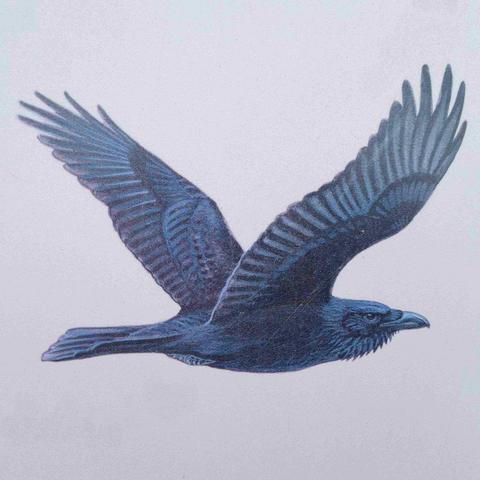
#FolkloreSunday #Celtic: `Artemidorus of Ephesus hands down a story of a harbor on the coast of the ocean whose name is "two ravens". In this harbor one could meet two ravens whose right wing was each whitish colored. When there was a dispute, the two disputants came to a certain place and deposited sacrificial cakes there for the birds. The winner remained the one whose cake was not eaten but scattered (Hofeneder 2005, 109).`
Source: Anna und Fritz Preinfalk, Eine latènezeitliche Grube mit Dohlenknochen aus Haselbach, Gem. Perschling. In: P. C. Ramsl, K. Rebay-Salisbury, P. Trebsche (Hrsg.); Schichtengeschichten. Universitätsforschungen zur Prähistorischen Archäologie 328, Bonn 2019, 205 - 225.
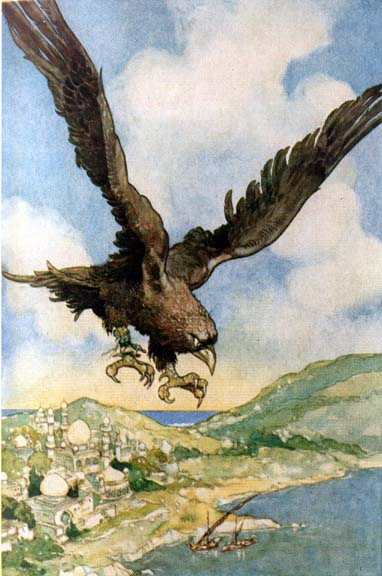
Most feared of all winged creatures is the Roc or Rukh, the massive bird of prey that stalks the Indian Ocean in the folklore of the Middle East and East Africa. Marco Polo wrote it was believed to feed on elephants, such was its size. #FolkloreSunday 🖼️: R. Bull

Most feared of all winged creatures is the Roc or Rukh, the massive bird of prey that stalks the Indian Ocean in the folklore of the Middle East and East Africa. Marco Polo wrote it was believed to feed on elephants, such was its size. #FolkloreSunday

🖼️: R. Bull

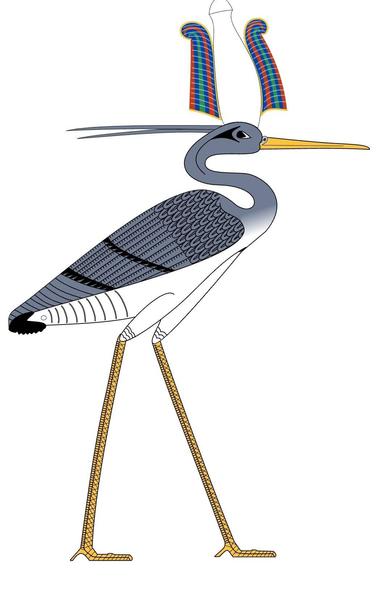
The Bennu Bird flew over the waters before Creation, and soon after the first Sun rose. A resident of Heliopolis, the bennu bird would periodically leave and return, often at times of great change. Herodotus first mentions it under a different name: the Phoenix. #FolkloreSunday
Why do bats fly? According to a Nigerian tale, bat jokingly told his friend bushrat his soup tasted so good because he bathed in it; bushrat tried this and boiled himself alive. Blamed for his death, bat became a convict: he flies from justice. #FolkloreSunday