Het ontstaan van Marseille (2)

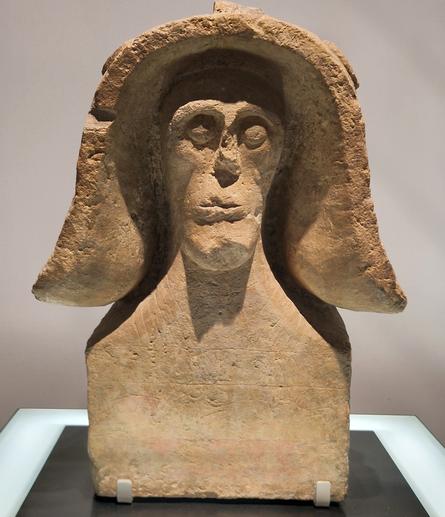
Keltische prinses (of prins) uit de zesde eeuw v.Chr. (Musée de la romanité, Nîmes)

Gisteren blogde ik over de door Justinus en Aristoteles overgeleverde sage over het ontstaan van Marseille. Samengevat: rond 575 v.Chr. arriveerde een groep Grieken die in het gebied van de Segobrigiërs een stad wilde stichten. Toevallig stond koning Nannos op het punt zijn dochter, die Gyptis of Petta wordt genoemd, uit te huwelijken. Zij moest uit de aanwezige huwelijkskandidaten haar echtgenoot kiezen door hem een beker met water te overhandigen, en koos toen een van de zojuist aangekomen Grieken, die Protis of Euxenos heette.

Veel van deze namen zijn ronduit verdacht. De mannelijke stadsstichter heette Euxenos, wat zoiets betekent als “gastvrij”. Zijn alternatieve naam, Protis, betekent “eerste”, maar lijkt te zijn afgeleid van de naam van de latere aristocraten van Marseille, de Protiaden.

De vier Gallische namen zijn interessanter. De naam Segobriga is alleen bekend uit de stichtingssage van Marseille, maar is goed Keltisch en betekent zoiets als “overwinningsfort”. Er is inderdaad een Keltische vesting in de omgeving van Marseille, namelijk Baou de Saint-Marcel. De naam van de vorst, Nannos, betekent in de Gallische taal zoiets als “dienaar” (van een godheid).

Petta is Gallisch voor “deel”, wat een beetje een rare naam is, maar kan verwijzen naar het feit dat ze een deel van het land van haar vader meenam als bruidsschat. Er is echter een plausibeler mogelijkheid, namelijk dat Petta een schrijffout is voor Gepta (d.w.z. Gyptis): in het Grieks staat er Πέττα en Γέπτα, en die laatste naam Keltisch zijn voor “sterk”.

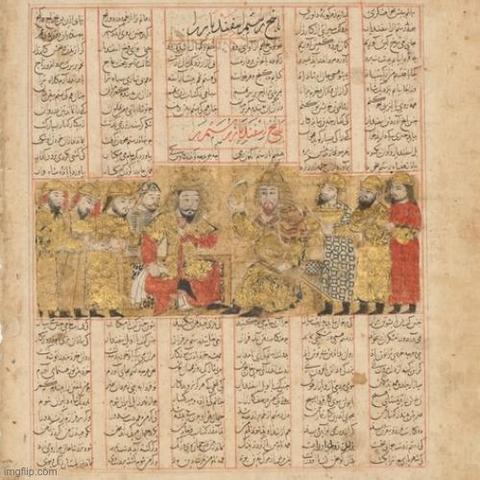
Dat de namen Gallisch ogen, wil nog niet zeggen dat het verhaal echt is gebeurd, al is het ook niet uitgesloten. De auteur die het fragment van Aristoteles overleverde, Athenaios van Naukratis, attendeerde echter al op een parallel: een Perzisch verhaal over een meisje dat haar aanstaande moest uitkiezen door het overhandigen van een drinkbeker.noot Athenaios, Tafelgesprekken 13.575. Athenaios kende dit verhaal weliswaar in een Griekse vertaling, maar dat er een Iraanse variant heeft bestaan, wordt bewezen door de Perzische dichter Ferdowsi, die haar opneemt in de Shahname: prinses Katayoun kiest Guštasp als haar echtgenoot. In de Perzische verhalen kennen de partners elkaar overigens al uit een droom.

De Indische traditie kent enkele voorbeelden van svayamvara, wat “eigen keuze” schijnt te betekenen, maar de voorbeelden die ik heb bekeken, zijn toch wel wat anders. Het gaat meer om wedstrijden tussen de huwelijkskandidaten. Ook heel interessant, maar ik vind het geen zuivere parallel.

Desondanks: het lijkt erop dat de stichtingssage van Marseille feitelijk een oeroud Indo-Europees verhaal is over een prinses die mocht kiezen, en dat dit verhaal erbij is gehaald om Marseille te voorzien van een mooie voorgeschiedenis op het moment dat men zich al niet méér herinnerde dan dat de stad was ontstaan nadat migranten uit Fokaia een handelspost hadden ingericht op een schiereiland tegenover de burcht van de Segobrigiërs.

#Aristoteles #Athenaios #BaouDeSaintMarcel #Ferdowsi #Fokaia #GallischeTaal #IndoEuropeanistiek #Justinus #Marseille #sage
Chapter 400. Rohham vs. Barman.

Riding out to cheers, Rohham, too, went for the arrows first. But Barman was an experienced warrior and horseman, and he dodged the arrows and returned several more of his own. Soon the warriors came to blows at close quarters.

This one was not so fast, with both men giving and taking many wounds. But, as they grew tired, Rohham took a second page out of Foruhal’s book and hit Barman in the thigh.

That dismounted his opponent, but it didn’t kill him. A split second later, and Barman was running away.

Rohham stopped for a moment, shocked at the dishonour of his opponent. Then he rode after him and stabbed Barman in the back as he fled.

“Rohham! Rohham!” cheered the Persians. “Honour! Honour!”

“Honour,” echoed Rohham, and then, in a bit of impromptu showmanship, he dipped his hand in his fallen enemy’s blood and wiped it all over his face.

“What did you do that for?” whispered his team, as he rode back in triumph.

“For Siyavash,” he bragged.

“You rubbed a random guy’s blood on your face, for Siyavash?”

“Don’t question a champion,” said Rohham loftily.

#BookOfKings #ferdowsi #Iran #Literature #Parody #persian #PersianLiterature #ShahNames #Shahnameh #ShahnamehParody

Chapter 399. Foruhal vs. Zanguleh.

Realizing that he had neither notable skills nor name recognition, when Foruhal’s turn came, he elected to keep his distance and just shoot arrows. 

It would not have gone down well at the beginning; arrows were all very well, but real warriors were generally expected to grapple and bash. However, the crowd had seen plenty of that in the previous rounds, and this was a bit of a change.

They cheered quite loudly when one of Foruhal’s arrows hit Zanguleh in the thigh, and then even louder when it went all the way through the thigh and stuck the horse, who reared up and threw Zanguleh, who broke his neck.

Hardly believing his luck, Foruhal poked his fallen opponent, then decapitated him just to make sure. It wasn’t the best round thus far, from a sporting point of view, but a win was a win.

#BookOfKings #ferdowsi #Iran #Literature #Parody #persian #PersianLiterature #ShahNames #Shahnameh #ShahnamehParody

Chapter 398. Guraza vs. Siyamak.

Guraza and Siyamak, realizing that that was a hard act to follow, opted to increase the spectacle value by screaming and cussing at each other at the top of their lungs. That tactic quickly cost both of them their voices. 

Each broke a mace over the other’s head, but then Guraza, seeing an opening, punched Siyamak in the face. The Turanian fell off his horse, and by good luck, he broke his neck.

Guraza collected the corpse, and his horse, to the delight of the Persian crowd. The score was now three-zero.

#BookOfKings #ferdowsi #Iran #Literature #Parody #persian #PersianLiterature #ShahNames #Shahnameh #ShahnamehParody

Chapter 395. Twenty-two Men.

Early the next morning, the two generals rode out for the coin toss and various last-minute clarifications about the rules.

“Gudarz, just listen to me for once,” said Piran. “This combat by champion needs to be decisive, or it’s even more pointless than a battle. Whoever wins, wins. Don’t slaughter my men afterwards, and I swear I won’t slaughter yours.”

“Yeah, yeah,” said Gudarz. “I’m sure I can trust you. The same way Siyavash trusted you.”

“That’s a low blow,” growled Piran.

“Why didn’t you accept my deal earlier?” needled Gudarz.

“Because it wasn’t a deal.”

“Then you can fight me.”

“I will,” said Piran calmly. He gripped his spear just a little tighter. “Champions! Ride out!”

Ten Turanian champions broke out of the ranks, coming face to face with the chosen ten Persian champions.

“So do we draw lots, or?” asked Piran.

“Let’s set up decent matches,” said Gudarz. “You vs. me at the end, that’s a given.”

“Agreed. My first up is my brother Golbad.”

“Against him, Prince Fariborz.”

“After him, Gorui, killer of Siyavash. I thought you killed him several wars ago, but I guess it was never specified and we found him in the couch cushions.” Piran gestured at him. They wanted to kill everyone responsible for Siyavash’s death, after all; they’d been very clear on that point. And he didn’t like the man either, so it was win-win.

“Fuck that guy!” yelled Giv. “I’m taking him!”

After that, a few relative nobodies were lined up: Guraza vs. some guy called Siyamak, and the complete unknowns Foruhal (Persian) vs. Zanguleh (Turanian). Interest among the spectators picked up slightly when Rohham and Barman were faced off, and then a great deal more when Bizhan stepped up to be matched with Ruin (who’d received a very stern lecture from his father about running away the night before). Hejir and the dependable, but not flashy Sepahram were a slight letdown after that. Zangeh and Gorgin, who had decided his old age could still accommodate one more great deed, were a bit disappointed to get Akhvast and Andariman.

“At least Andariman’s made a bit of a showing in this war,” muttered Zangeh. “Akhvast is either some complete nobody, or, if he’s the guy from Pashang’s war, super old.”

“Who are you calling old?” said Gorgin indignantly. In the background, Barta of ‘Who’s Barta’ fame was being matched up with someone whose nametag read “Kuhram.”

“And lastly,” said Piran, deftly skirting away from the anticlimax. “The generals themselves. Us.”

“Us,” agreed Gudarz ominously.

#BookOfKings #ferdowsi #Iran #Literature #Parody #persian #PersianLiterature #ShahNames #Shahnameh #ShahnamehParody

Chapter 394. Lahhak and Farshidvard.

“Cheer up,” harangued Piran. “We were doing so well, and one loss – did we even lose? Not really, it was a stalemate – doesn’t mean much.”

“Yeah, but a lot of us got killed,” sobbed his men.

“I know. It sucks,” said Piran. “But we can’t give up, or we’ll all be slaughtered. And, I can’t emphasize this enough, we’re perfectly capable of winning here. Without bloodshed, too. I’ve made a deal with Giv.”

“What kind of deal?” sniffled someone.

“Battle of champions,” said Piran. “I’m going to need at least ten of you to stop crying, like, now.”

“Trying,” gulped someone.

“I will cut off your heads,” said Piran exasperatedly. “Get a grip.”

“Yes sir!” Everyone jumped to their feet, smiles plastered on.

“That’s better,” sighed Piran. “Now spend the night preparing for war. I’ll announce my selections in the morning.” He beckoned Lahhak and Farshidvard aside.

“Are we selected?” asked Lahhak eagerly.

“You’re selected to lead the army in my absence,” said Piran. “Don’t do anything stupid.”

“So we won’t get to represent Turan?”

“You get to represent the descendants of Viseh,” hissed Piran. “Alive. On this planet. Don’t you understand? Human’s dead. Nastihan’s dead. Golbad will have to fight tomorrow.  All our other brothers and cousins, gone. I don’t expect to survive this either. So that’s my last order to you: Don’t. Die.”

#BookOfKings #ferdowsi #Iran #Literature #persian #PersianLiterature #ShahNames #Shahnameh #ShahnamehParody
The Iranian national epic, the #Shahnameh, was completed on #ThisDayInHistory in 1010. Perhaps the longest epic poem by a single author, #Ferdowsi's work took scattered bits of ancient history & myth from #Iran's pre-Islamic period and placed them into an easily-performed format.
Iran News | Ferdowsi Street, Tehran Bears Extensive Damage After Airstrikes

YouTube

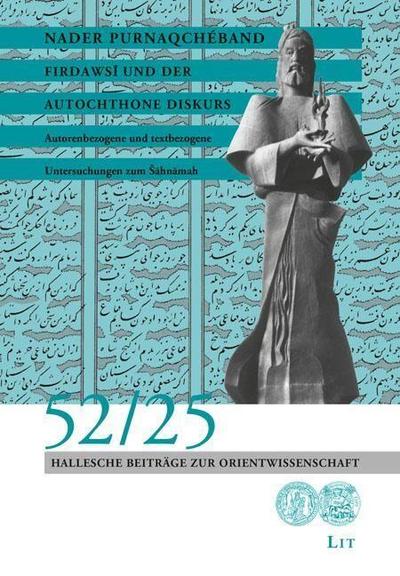
New addition to the FID's stock: ‘Firdawsī und der autochthone Diskurs : autorenbezogene und textbezogene Untersuchungen zum Šāhnāmah’ from the series ‘Hallesche Beiträge zur Orientwissenschaft’

https://halit.bibliothek.uni-halle.de/search?q=id:1931797846&l=menasearch

#Ferdowsi #Shahnameh

national epic of Persia, the #Shahnameh (“Book of Kings”), is known to have been written by the poet #Ferdowsi, at the end of the tenth century A.D. But in the text Ferdowsi claims that the story was once lost and then reassembled out of fragments by a group of wise men