Fairies of New England: The Little People of the Hills and Forests
Fairies, folk healers, and the problem of the “witch”
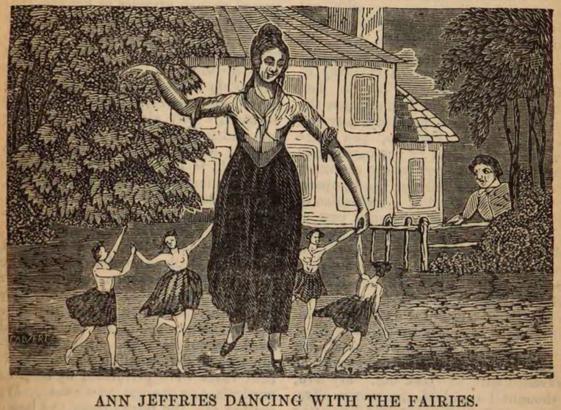
I’ve recently been reading Ann Jefferies and the Fairies: A Source Book for a Seventeenth-Century Fairy Witch, published a few years ago by folklore researcher Simon Young. The book collects documents about the Cornish fairy seer Ann Jefferies, who claimed to have received healing powers from little men and women clad in green whom she called “fairies.”
One thing that struck me while reading the book is how strongly Ann herself would have rejected the label “witch”—something that Young readily admits. Like many folk healers and fairy seers in places as far removed as England and Appalachia, Ann considered her powers to be spiritually legitimate—even Christian.
The distinction between healer and witch was particularly important for people like Ann in the seventeenth century. The mid-1600s were possibly the most dangerous time for someone who claimed supernatural powers: not only was the witch hysteria still alive—which meant that consorting with fairies might lead someone to be branded a witch—the Puritans were in the ascendancy, and Ann, a royalist, was considered extra suspect because she prophesied a miraculous return of the King (whom the Puritans had recently imprisoned). When she was asked to tell her story in the 1690s, the situation had evidently changed: although she remained scared of the authorities, interest in prosecuting folk healers or fairy seers as “witches” had apparently waned. (Even someone as committed to Christianity as the Bishop of Gloucester now sympathized with Ann’s story.) This suggests that the automatic identification of “fairy healing” with witchcraft had also weakened considerably, and fairy familiars were no longer assumed to be diabolical.
The book got me thinking a lot about folk healers and fairy seers in the geography I deal with, especially New England and Appalachia. Like Ann, these healers and seers would also have objected to the witch label. While folk healing thrived in both locations, and the tradition of special people gaining power from the fairies appeared intermittently, these healers and seers never identified as witches and often understood their work as combating witchcraft. These traditions surfaced in various forms in North America: In folktales from Pennsylvania Dutch Country, we find a hunter who learned perfect hunting ability from a “little gray man” in the Blue Mountains; a healer who practiced white magic that he learned from an “old gray man” in the Netherlands; and a herbalist who claimed to have observed a mysterious forest dwarf deep in the woods of Berks County.
In New England, we find that the fairies sometimes bestowed knowledge of the future on their favored people, just as they did on Ann. But this had nothing to do with witchcraft: I recently met a woman in North Kingstown, Rhode Island, whose Irish great-grandmother (called Mary Sullivan) claimed that “a banshee” had told her that a family member was about to die, suggesting that some New Englanders viewed the fairies as a source of hidden knowledge. In Southern Appalachia, folk healing sometimes intersected with older fairy traditions, even when people no longer openly believed in fairies as a coherent supernatural race, but such practices were clearly differentiated from witchcraft. These people most likely saw their skills as an attempt to counter the negative influence of witches.
The one folktale I’ve come across in Appalachia where an ambiguous attitude toward witchcraft exists is “The Witchie Folk.” Originating in Scotland, this tale was collected in Pennsylvania but apparently took root originally in West Virginia. In this story, we find a fairylike community of “witchie” people who are first looked at with suspicion but are later embraced as sympathetic beings. Deriving their power from the moon, the witchie folk apparently represent a memory of the old Scottish openness toward fairies that once existed in early-modern Scottish folklore, something I discuss in greater detail in my book. The story also suggests that at least some Appalachians understood that the distinction between witches and folk healers could become slippery. Perhaps some people really did believe that the only effective defense against witchcraft was accessing the same powers feared in witches themselves.
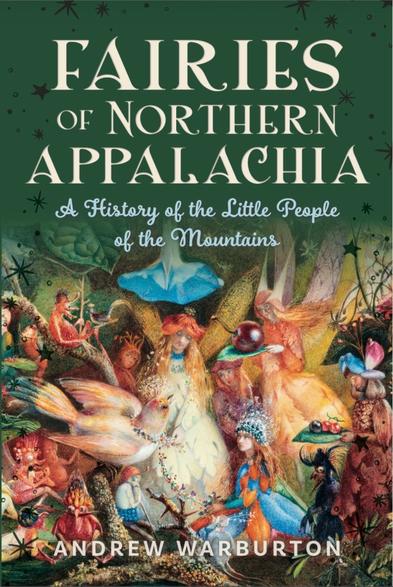
Rather than identifying as witches, most folk healers and seers like Ann—in Appalachia and England—identified as Christian and even performed their healings in the “name of the Father, Son, and Holy Ghost.” Ann’s fairies justified their bestowal of special powers by referring to the scriptures. Where fairy traditions existed explicitly in Appalachia—such as in the tradition of naming staurolite crystals in Virginia, Georgia, and North Carolina “fairy stones”—these traditions had to be “Christened,” in this case by inventing a legend that would sanctify the naming tradition and turn the fairies, ostensibly, into “Christians.” Many of these themes—Christian fairy belief, folk healing, banshees, fairy stones, and the uneasy boundary between healing and witchcraft—are explored in my forthcoming book, Fairies of Northern Appalachia. There I trace how older fairy traditions survived, adapted, and sometimes disguised themselves in the mountains and borderlands of eastern North America.
#AnnJefferies #Appalachia #banshee #christianity #Cornish #Fairies #Fairy #fairyStones #folklore #healing #history #Irish #Magic #NewEngland #NorthernAppalachia #witch #witchcraft #witches #WitchieFolk