
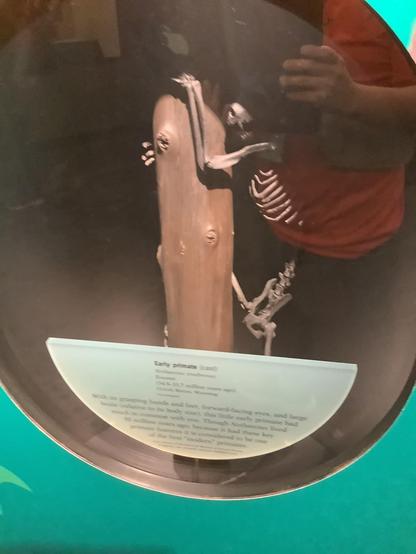
#Earlyprimates emerged around 56–66 million years ago, evolving from small, nocturnal, insectivorous mammals into tree-dwelling creatures. Known as Plesiadapiformes (proto-primates) and later #Euprimates (true primates), these animals resembled modern tree shrews or lemurs, featuring adaptations like grasping
Paper released! 👀
So happy to have had the opportunity to work with Oriol Monclús Gonzalo and colleagues on the #evolution of #euprimates locomotor behaviour!
Go check the link below to learn more about #morphometric / #phylogenetic approaches to tackle such question from extant / #fossil bone material
👇👇👇👇👇
https://www.sciencedirect.com/science/article/pii/S004724842300074X?via%3Dihub

Soon After Dinosaur Decimation, Our Primate Ancestors Began Pouncing on Prey https://www.smithsonianmag.com/science-nature/soon-after-dinosaur-decimation-our-primate-ancestors-began-pouncing-on-prey-180981107/ #primates by Riley Black

Ambush #predation and the origin of #euprimates https://www.science.org/doi/10.1126/sciadv.abn6248

Nails helped them climb trees quietly, and forward-facing eyes helped with depth perception to aid in precise leaping.

Soon After Dinosaur Decimation, Our Primate Ancestors Began Pouncing on Prey

Nails helped them climb trees quietly, and forward-facing eyes helped with depth perception to aid in precise leaping

Smithsonian Magazine