5 Steps to Build a Swipe File: A Beginner Copywriter’s Guide

A quote I am fond of is by Austin Kleon, who says: “Nobody is born with a style or a voice. We don’t come out of the womb knowing who we are. In the beginning, we learn by pretending to be our heroes. We learn by copying.”

Great artists throughout history have learned by studying and imitating the masters who came before them. During the Renaissance, artists such as Raphael developed their skills by carefully studying and copying the works of earlier masters.

This practice wasn’t considered plagiarism; it was a method of learning. By recreating great works, artists learned important principles such as composition, perspective, color, proportion and technique.

Copying was a way to understand why a masterpiece worked so that they could eventually develop their own style. The same principle applies to copywriting through the use of a swipe file.

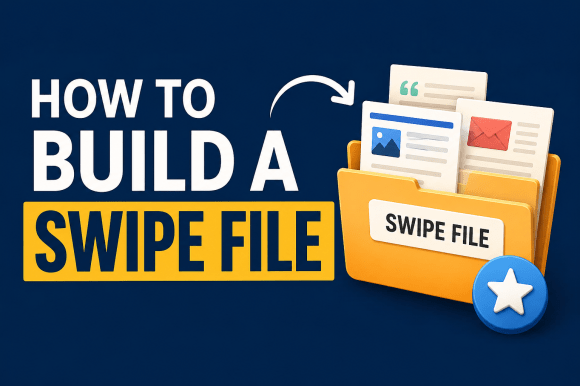
Swipe File

For those who don’t know what a swipe file is; it is just a personal library of marketing examples that you can study to understand the techniques behind effective persuasion.

It can contain examples of headlines, advertisements, sales letters, emails, product descriptions, landing pages, calls to action and any other piece of copy that effectively persuades people.

For a beginner copywriter, building a swipe file is one of the most valuable habits you can develop and sure is one of the fastest ways to improve as a copywriter.

Just as an artist studies the masters to improve their craft, a copywriter studies great copy to develop their own ability to write persuasive and effective messages.

1. Collect good copy examples

The first thing you need to do in order to build a library of good copy examples is to first learn how to recognize good copy.

This should also not be a difficult task because the world today is filled with great copywriters, both alive and from the past. Infact it won’t be an overstatement to say that great copy is everywhere. Purge the mentality of thinking that you need access to expensive advertising libraries to find examples. You can find great examples anywhere but you must put in the work to identify them.

You can find examples in:

  • Email newsletters
  • Websites (Home Pages, About Us Pages, Service Pages)
  • Social media advertisements
  • Product pages
  • Magazine advertisements
  • Sales pages
  • Direct mail pieces
  • Video advertisements
  • Brochures
  • Packaging

From now on, you need to be aggressive and keen enough that whenever you see copy that grabs your attention, makes you curious, creates desire, or convinces you to take action, save it. Keep it for later reference, study it to see why it made you react that way.

For example, you might see an email subject line that makes you open the email immediately. Save it. You might see a product description that makes a simple product sound valuable. Save it. You might see an advertisement that clearly explains a problem and presents a solution. Save it. You might see a sales letter that perfectly handles the objections you had in mind. Save it.

The goal is to train your eye to notice persuasive writing.

2. Organize your swipe file by category

“Organization isn’t about perfection; it’s about efficiency, reducing stress and clutter, saving time and money and improving your overall quality of life.”

Christina Scalise

In the quote above, Scalise argues that the real purpose of organization is not perfection but functionality. Organizing means reducing unnecessary friction.

When your belongings, tasks, information, or workspace are organized, you spend less time searching, making decisions, or dealing with chaos. The result is more efficiency, less mental pressure, and more time and energy for important activities.

The quote connects well to the process of building a swipe file. A swipe file does not need to be a perfectly categorized archive containing thousands of examples.

The goal is to create a simple system where you can quickly find useful examples when you need inspiration. The organization exists to support the creative process, not to become a task that prevents you from writing.

A swipe file becomes more useful when it is organized. You don’t want to find yourself saving random examples in one folder and later struggling to find what you need. You need to create categories based on the type of copy you want to study.

Some useful categories include:

Headlines

Headlines are one of the most important parts of copy because they determine whether someone continues reading. More people will read a copy with a good headline and bad body that a copy with a bad headline and good body.

Collect headlines that make people read the first sentence of the ad or the sub-headline because they: Create curiosity, Promise a benefit, Address a problem, Challenge an assumption, Use strong emotional language.

Study why they work.

Sales pages

Sales pages show the complete structure of persuasion and therefore a valuable resource to have in your file.

Study how they: Get the reader to read the first sentence of the ad through the headline they use, Introduce the problem, present the solution, Explain benefits, Handle objections, Build credibility, Create urgency, Ask for action.

Emails

Email marketing copy is a must have in your swipe file. 66% of consumers rank email as their preferred brand communication channel also because Email marketing is critical because it generates an average ROI of $36 to $40 for every $1 spent. Email copy teaches you how to communicate quickly and personally.

Collect emails that have: Strong subject lines, interesting opening, good storytelling, effective calls to action.

As I have listed them above there are several types of copy you could include in your swipe file as long as you know where it is categorized to be called up when needed for inspiration.

3. Analyze examples in your swipe file

Elon Musk often emphasizes the importance of reasoning from first principles. This basically means breaking a problem down into its most basic truths. His approach is that you need to understand the basic building blocks that make a complex problem work before trying to solve it.

“Treat nature by means of the cylinder, the sphere and the cone, everything in proper perspective so that each side of an object or a plane is directed toward a central point.”

This idea comes from a conversation Cézanne reportedly had with the young painter Émile Bernard in 1904. Cézanne was explaining his approach to painting: rather than copying the surface appearance of things, artists should understand the underlying structures that create what they see. By reducing complex objects into basic forms, painters could better understand volume, depth, and composition.

A similar idea appears in art through Paul Cézanne, who encouraged painters to treat nature by means of the cylinder, the sphere and the cone. This idea comes from a conversation Cézanne reportedly had with the young painter Émile Bernard in 1904.

Cézanne was explaining his approach to painting: rather than copying the surface appearance of things, artists should understand the underlying structures that create what they see. By reducing complex objects into basic forms, painters could better understand volume, dept and composition. The idea is that mastery comes from understanding the fundamentals beneath the surface.

The same principle applies to your swipe file. When studying great copy, you should not only look at the words and try to imitate the sentences. Instead, you should break the copy down into its fundamental components: What is the structure? How does the headline capture attention? What problem is being addressed? What persuasion principles are being used?

By understanding the basic mechanisms behind effective copy, you learn how to create your own persuasive messages rather than simply repeating someone else’s words. Just like an artist studies shapes and structure, a copywriter must study the principles that make copy work.

Create notes about every swipe

For every piece of copy, write notes such as:

  • What is the headline doing?
  • Who is the target audience?
  • What problem is being addressed?
  • What emotion is being used?
  • What is the main promise?
  • What makes the offer attractive?
  • What objections are being answered?
  • Why does this copy work?
  • How do they ask for action?

This turns your swipe file from a collection of examples into a copywriting study system.

Practice rewriting great copy

One exercise you could use that helps you analyze the copy is rewriting successful copy by hand. Legendary copywriter Gary Halbert was a strong advocate for this and he advised that you should get yourself a collection of good ads and direct mail pieces and read them aloud and copy them in your own handwriting.

The purpose is to understand the rhythm and structure. When you rewrite an advertisement, you will notice the sentence lengths, word choice, transitions, emotional language and how the copywriter develops the argument in the copy. This exercise will therefore train your brain to recognize effective patterns and notice what makes copy persuasive.

4. Include your own work in your swipe file

The first person you need to learn from is yourself. Therefore, your swipe file should not only contain other people’s copy but also your own writing too.

You should save the headlines you write, emails you create, sales pages you include. Over time, you can compare your old work with your new work to see how far you have come.

Your own experience should become part of your education if this is not the case then you are not learning.

5. Keep adding to your swipe File

This is something that is obvious but will still remind you anyway. Peter when writing a letter to early Christians who already believe and understand the core teachings of Christianity told them in 1 Peter 1:12 that he will always remind them, even though they know.

A swipe file is not something you build once and finish. Serious copywriters continue collecting examples throughout their careers. Even though the core principles remain like the sphere, cone and cylinder in nature according to Cezanne, marketing changes. New platforms appear. New companies develop creative ways to communicate.

It is therefore a good habit to keep collecting and studying great copy. The best copywriters are successful because they have spent years studying what works.

In conclusion, a swipe file is one of the most practical tools you can create as a beginner copywriter. It allows you to study proven examples, understand persuasion principles and develop your own writing ability.

Finally, study different industries. Do not limit yourself to your own niche. You as a beginner copywriter writing about fitness can learn from technology companies.

A financial copywriter can learn from fashion brands. Different industries solve different persuasion challenges. A luxury brand might teach you how to create desire. A software company might teach you how to explain complex ideas simply. A charity organization might teach you how to create emotional connection. Great copywriting principles apply across industries.

Let me conclude this article with a qoute from a philospher I so much like:

“For men almost always follow in the footsteps of others, imitation being a leading principle of human behaviour. Since it is not always possible to follow in the footsteps of others, or to equal the ability of those whom you imitate, a prudent man will always follow the methods of remarkable men, and imitate those who have been outstanding, so that, even if he does not succeed in matching their ability, at least he will get within sniffing distance of it. He should act as skilful archers do, when their target seems too distant: knowing well the power of their bow, they aim at a much higher point, not to hit it with the arrow, but by aiming there to be able to strike their target.”

Niccolo Machiavelli #contentWriting #copywriting #digitalMarketing #marketing #writing
The 4 Cs: Your Copy’s Quality-Control Checklist

In this blog, we have previously talked about different copywriting frameworks. To name a few: Problem-Agitate-Solution (PAS), Before-After-Bridge (BAB), Objection-Claim-Proof-Benefit (OCPB). However, writing persuasive copy does not always require complex frameworks. Matter of fact the most effective copy didn’t follow most of these frameworks but a simple set of principles that made it easier for their readers to understand their message and take action.

I raise you the 4Cs Framework. It provides a straightforward checklist that you should apply to your sales letters, landing pages, emails, advertisements, product descriptions and even blog posts.

The framework states that your copy should be:

  • Clear
  • Concise
  • Compelling
  • Credible
  • If your copy is difficult to understand, too long, boring or unbelievable, readers are unlikely to continue reading, let alone take action. But when your message checks out these four elements it becomes easy to understand, efficient to read, interesting enough to hold attention, and trustworthy enough to inspire confidence.

    Here, we will go through what each of the 4Cs means, why it matters, look at a few examples and finally see how to apply it in your own copy.

    1. Clear

    Despite the fact that readers need to understand what you are offering, why it matters, and what they should do next, many beginner copywriters still make the mistake of trying to sound intelligent by using complicated language. Unfortunately, this often creates confusion rather than persuasion.

    In the book Made to Stick, brothers Chip and Dan Heath explain simplicity as not about dumbing down an idea but about finding its core.

    They illustrate this through the military concept of Commander’s Intent. Rather than giving soldiers a long list of detailed instructions for every possible situation, commanders communicate the single most important objective that must be achieved. An example is in order.

    In the movie Apollo 13 (1995), after the spacecraft suffers a major failure, the mission control team cannot give the astronauts a step-by-step instruction for every problem because the situation keeps changing. The central objective becomes clear: “Bring them home.” Every decision is guided by that simple mission. Engineers improvise solutions and conserve power because they understand the ultimate goal, not just the individual tasks.

    Even if conditions change, the commander’s intent allows everyone to understand the ultimate goal therefore make decisions accordingly. The message is simple and memorable because it focuses on what matters most. The message is clear.

    Clear copy identifies the core message and communicates it without distractions or unnecessary complexity. When you try to communicate too many ideas at once, your main message gets lost.

    By focusing on a single, central idea you make your copy easier to understand. Clarity comes from stripping away the nonessential until the audience can immediately grasp the point. Clearly you can also see that this copywriting checklist also closely relates and respects The Rule of One.

    Examples

    Unclear CopyClear CopyOur innovative financial management ecosystem provides intelligent solutions designed to optimize personal wealth growth and enhance financial stability.Send money, pay bills, and shop online securely with PayPal.Our revolutionary skincare formulation utilizes scientifically advanced ingredients to enhance your skin’s natural appearance through a multi-dimensional rejuvenation process.Our moisturizer hydrates dry skin and makes your face look smoother and healthier.Experience next-generation transportation technology engineered with advanced electric mobility solutions that redefine urban movement through sustainable innovation.The Tesla Model 3 is an electric car that gives you fast acceleration, long-range driving, and lower running costs.Table showing examples of clear and unclear copy

    How to Make Your Copy Clear

  • Use simple language.
  • Avoid jargon whenever possible.
  • Write short sentences.
  • Focus on one idea at a time.
  • Explain benefits in plain English.
  • If readers cannot understand what you’re saying, it means you’re not talking to them which means you’re not going to sell them. Good copy communicates ideas in a way that is instantly understandable.

    2. Concise

    The second C stands for Concise. The Oxford Learner’s Dictionary defines conscise as giving only the information that is necessary and important using few words. It describes something that is short, clear and gets straight to the point without unnecessary words.

    Someone who is not concise is that friend of yours who tells a story but never seems to get to the point. We all have that friend and can sure relate to this.

    However, this does not mean all copy should be short. Long-form sales letters can be highly effective. Conciseness simply means removing anything that doesn’t contribute to the message.

    A perfect example to illustrate this is this Rolls Royce Ad by David Ogilvy. You can clearly see that every sentence in this ad earned its place. No unneccessary words were included to create the opportunity for the readers to lose interest.

    Classic Rolls_Royce Ad by David Ogilvy

    Got Milk?

    Naomi Campbell featuring in the Got Milk Campaign

    The “Got Milk?” campaign was developed in 1993 for the California Milk Processor Board, which is the organization that launched and funded the campaign to promote milk consumption in California (and it later became widely used across the United States).

    The campaign became famous for its celebrity “milk mustache” ads and simple, memorable tagline: “Got Milk?” Now imagine the campaign’s tagline was, “Do you currently have milk available in your refrigerator or kitchen to drink right now?” Do you think it would have been as successful?

    How to make your copy more concise

    After writing your first draft, look for:

    • Redundant phrases
    • Unnecessary adjectives
    • Repeated ideas
    • Long introductions
    • Filler words

    Instead of saying, “In order to improve your writing skills…” say, “To improve your writing skills…” Small changes like these make your copy stronger and easier to read.

    Examples

    Wordy ExampleConcise ExampleWe would like to inform you that our company is currently running a limited-time offer in which all new customers can receive free delivery on their first order.Free delivery on your first order.At this point in time, we are providing an exclusive opportunity for users to sign up and gain immediate access to our premium content without any additional charges.Get free access to premium content now.We are currently offering customers the opportunity to take advantage of a special promotional discount that allows them to save twenty percent on all products.Save 20% on all products.

    The concise version delivers the same information in less than half the words. Now let us move on to the next thing to check off our list.

    3. Compelling

    The idea that people “buy on emotion and justify with logic” is a widely accepted marketing principle rooted in behavioral psychology and consumer decision-making research.

    It reflects the fact that most purchasing decisions are first triggered by emotional responses such as desire, fear, trust, status, or comfort before the rational mind steps in to evaluate price, features and practicality. In other words, humans are not purely rational consumers but emotional beings who seek logical justification after the fact.

    Therefore, if your copy fails to engage readers emotionally, they are unlikely to continue reading. This is where the third C comes in. Compelling copy creates interest, curiosity, desire or urgency which gives your readers a reason to keep reading and eventually take action.

    Ways to make your copy more compelling

    Focus on Benefit

    Readers care more about outcomes than features. Highlighting benefits over features ties emotions to your product. Jim Edwards says; “A feature is what something is. A benefit is what something does for you. People don’t buy because of features. Features are how they compare things. People buy the benefits.”

    An example I often give is: The high-resolution camera on your smartphone (Feature) allows you to capture sharp and vivid memories of your favorite moments effortlessly (Benefit).

    Use specific details

    Specificity makes claims more believable and interesting. Suppose you are a farmer and you came across the headline, “A Little Mistake that Cost a Farmer $3,000 a Year,” you are most likely going to stop and read about what mistake your fellow farmer made.

    One of the reason why this headline would stop you in your tracks is because of its specificity. The target audience is specific (Farmer) and the amount he or she lost is also specific ($3,000 a Year).

    Another good example here will be from the Rolls-Royce Ad by David Ogilvy, “At 60 miles an hour the loudest noise in this new Rolls-Royce comes from the electric clock.” The headline is specific on the number of miles and also perfectly create curiosity which is the next thing that makes copy compelling.

    Create curiosity

    Curiosity encourages readers to continue reading. The perfect example to use here is John Caples sales letter for the U.S School of Music with the title; They Laughed When I Sat Down At The Piano … But When I
    Started To Play…

    Readers who came across this sales letter naturally wanted to discover what happened after he started to play and so they read on.

    Another example is the perfect headline from Sherwin Cody School of English sales letter, “Do You Make These Mistakes in English?” which uses a direct question to engage the reader, prompting self-reflection. This approach uses curiosity, to hook the reader instantly.

    Curiosity driven headline, Do You Make These Mistakes in English?

    Another example of an ad which beautifully described their audience’s problem is this Listerine ad below.

    This Listerine Ad accurately describes the problem of bad breath something that most people struggle with. This immediately evokes emotion in the reader forcing them to read more for the solution

    There are several other ways you can evoke emotions in your copy like, accurately describing your reader’s problem, storytelling and using vivid and sensory imagery. But since this is not an article on evoking emotions we will refrain from talking about them at length here.

    Let us now move on to the final C which stands for Credible.

    4. Credible

    Even if your copy is clear, concise, and compelling, readers still need to believe what you’re saying. Therefore you need to boost your Trust and Crediblity.

    In the Bible, Thomas refused to believe that Jesus Christ had risen from the dead until he could see and touch the wounds from the crucifixion.

    His reaction illustrates a fundamental human desire for proof before accepting a claim. While Thomas doubted the divine, readers behave like him when you present your claims to them, they do not simply accept what your says; they want evidence that what you are promising them is true.

    Some things which can act as the ‘wounds’ that prove your claims and remove doubt include:

    • Testimonials
    • Case studies
    • Statistics
    • Credentials
    • Objection handling
    • Demonstrations
    • Guarantees
    • Specific details
    • Honesty

    People buy on emotion and justify with logic. The third C (Compelling) checks if copy has emotion to move your readers and the fourth C (Credible) checks if your copy is credibile enough to convince them. Without credibility, even the most attractive offer can fail.

    Simplicity is exactly what makes this checklist powerful. Every copy you write should be clear enough to be understood, concise enough to read, compelling enough to hold attention and credible enough to be believed.

    These four principles will not make you the best copywriter out there but it will sure improve your copywriting.

    #contentWriting #copywriting #digitalMarketing #marketing #writing

    If You are Asking for Human Attention, Demonstrate Human Effort

    Also applies to SEO and content writing

    https://tombedor.dev/human-attention-and-human-effort/

    #SoftwareDevelopment #SoftwareProgramming #SoftwareCoding #SEO #ContentWriting

    If You are Asking for Human Attention, Demonstrate Human Effort | Tom Bedor's Blog

    An ever-increasing volume of debug investigations, document writing, and code is written by robots. This has created a new etiquette question when working with a team - when is it OK to forward the output of an AI to another human to read?

    The 40/40/20 Rule for Writers: A Smarter Formula for Successful Writing

    Writing success is rarely just about beautiful sentences. Continue reading on The Writing Cooperative »
    https://writingcooperative.com/the-40-40-20-rule-for-writers-a-smarter-formula-for-successful-writing-0b4dfb7b5d6

    #writingtips #contentwriting #freelancewriting #digitalmarketing #wisewords

    Medium

    Medium

    Content writing is more than words. ✍️

    Clear ideas, simple language, and storytelling make content powerful. Consistency and SEO knowledge help writers grow.

    Every post is a chance to improve. 🚀

    #ContentWriting #SEO #WritingTips

    ✍️ W𝗿𝗶𝘁𝗲 𝘀𝗺𝗮𝗿𝘁𝗲𝗿 𝘄𝗶𝘁𝗵 L𝗲𝘅𝗶C𝗼𝘂𝗻𝘁 P𝗿𝗼 — 𝘁𝗵𝗲 𝘂𝗹𝘁𝗶𝗺𝗮𝘁𝗲 𝗿𝗲𝗮𝗹-𝘁𝗶𝗺𝗲 𝘄𝗼𝗿𝗱 𝗮𝗻𝗱 𝗰𝗵𝗮𝗿𝗮𝗰𝘁𝗲𝗿 𝗰𝗼𝘂𝗻𝘁𝗲𝗿 𝘁𝗼𝗼𝗹 𝗳𝗼𝗿 𝘄𝗿𝗶𝘁𝗲𝗿𝘀, 𝗯𝗹𝗼𝗴𝗴𝗲𝗿𝘀, 𝘀𝘁𝘂𝗱𝗲𝗻𝘁𝘀 𝗮𝗻𝗱 𝗰𝗿𝗲𝗮𝘁𝗼𝗿𝘀. 🚀

    Analyse your text instantly with:
    ✔ Word Count
    ✔ Character Count
    ✔ Sentence Count
    ✔ Reading Time Estimation
    ✔ Clean & Fast Interface

    Perfect for SEO writing, essays, social posts, captions and professional content creation. 🔥

    🔗 https://freewebtoolfiesta.blogspot.com/2026/05/lexi-count-pro.html

    #LexiCountPro #WordCounter #TextAnalyzer #SEOTools #ContentWriting #BloggingTools #WritingTool

    Content writing is not just words. ✍️

    It’s about making people feel, think, and act.

    Simple writing wins.
    Storytelling matters.
    Consistency beats perfection.

    Keep writing. Keep learning. 🚀

    #ContentWriting #SEO #WritingTips

    🚀 Stop struggling with content writing!

    ChatGPT is changing the way bloggers, freelancers, and creators write content in 2026. ✍️🤖

    From blog ideas to full SEO articles — you can create high-quality content in minutes instead of hours.

    💡 Work smarter, not harder
    💡 Boost productivity
    💡 Rank faster on Google
    💡 Grow your blog or business

    👉 Start using AI to level up your content game today!

    ---

    #ChatGPT #ContentWriting #AItools #BloggingTips #SEO #DigitalMarketing

    https://i2notes.com/2026/05/17/how-to-use-chatgpt-for-content-writing/

    How to Use ChatGPT for Content Writing in 2026 - i2notes

    Learn how to use ChatGPT for content writing in 2026. Discover prompts, SEO tips, blogging ideas, and AI writing strategies for beginners.

    i2notes

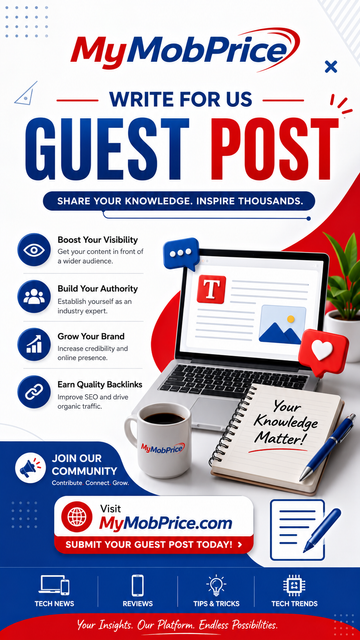
    Write for MyMobPrice - Guest Post

    Share your tech knowledge, reviews, tips, and news with thousands of readers.

    Submit your Guest Post today and grow your online presence with quality backlinks.

    Visit - https://mymobprice.com

    #GuestPost #WriteForUs #TechBlog #GuestBlogging #Backlinks #SEO #DigitalMarketing #TechNews #Blogging #ContentWriting #MyMobPrice #FreeBacklinks #Technology #WebsiteTraffic #TechReviews

    Wanted: Nonprofit Writer

    Be the vehicle that inspires readers to help others — and make good money, too Continue reading on The Writing Cooperative »
    https://writingcooperative.com/wanted-nonprofit-writer-f68ad5f7c27

    #copywriting #contentwriting #wisewords #nonprofit #freelancewriting

    Medium

    Medium