 Lobsters [Unofficial]
 Lobsters
OpenZL via @arch https://lobste.rs/s/zxt3em #compsci #performance
https://openzl.org/
📜 A Protocol for Scalable Anonymous Communication [2004]
By: Michael J. Freedman, Matthew K. Reiter
The paper "A Protocol for Scalable Anonymous Communication" by Michael J.
This is the clever bit ( #ImSoSmart )
Mission.md is the grongus prompt.
Enough to boil a lake and brownout a small town.
Decomposer - Splits the grongus mission prompt into smaller chunked WU (Working units), they are classified by difficulty, some need CLI, Some need Worker/Text AI, Some need agentic brains.
Then the router assigns available/appropriate engine to each unit and cycles it until the required output pops out.
Now even though this is *ALL* #Vibecode, there are some keystone ideas of mine there that make it work. From the foundational "Lets get multiple engines to do my work for me" to some nice little nuances and functional fixes there.
Its also creating deterministic code (Python) so the end product can stand alone with only vestigal #AI
I guess its hard to explain it to the "WAAAH VIBECODE" folks, but there is a pivot in development here where you get to focus on function and design and leave the coal shoveling to the machine.
Ive shown it to some of my non-geek colleagues and I got blank looks and nods.
I should probably write it up as a paper. Its certainly would be enough to pass 2nd or maybe even 3rd year term #CompSci assignment.
'' My bright ideas shine "
TLDR: What does this do?
Uses up your compute when you are asleep on a big project. #Compute that would otherwise go to waste.

DON'T BE CRUDE ... NAME THE DUDE
#borland #pascal #computer #errtling #history #bookcafe #according-to-hoyle #programming #tech #science #compsci


📜 Understanding PDF Documents as Data Pipelines [2021]
By: Jane Doe, John Smith
This paper proposes a novel framework for conceptualizing PDF documents as data pipelines to address challenges in data extraction and document analysis.
Spreadsheet paradigm transition.
"people and businesses fail to distinguish between data processing and data analysis and visualization"
"It's too easy to lose data. It's easy for data to be altered."

 Papers We Love
 Wulfy—Speaker to the machines
 Amy C. T. Serrat 🐙
 Amy Serrat
 arcmath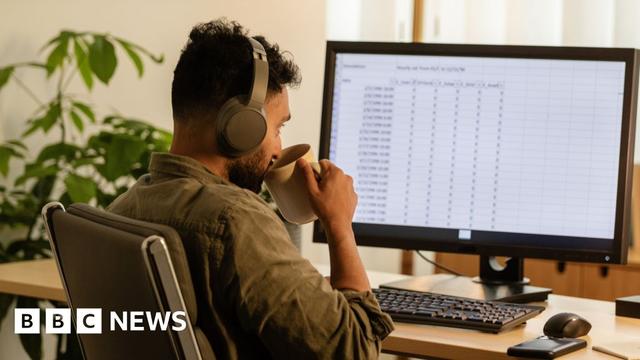
 José A. Alonso
 kipriyanovich