Fact-checking isn’t about cynicism—it’s about building trust.
What’s your top tip for spotting a reliable source (or dodging a clickbait trap)?
#BiasDetection #BloggingTips

Boost Your Credibility by Checking Sources

In an age of abundant information, evaluating sources is crucial for bloggers to maintain credibility and trust. Reliable sources enhance audience loyalty, while spotting bias and checking reliability are essential skills. By using reputable outlets, fact-checking sites, and gaining diverse perspectives, bloggers can foster authenticity and clarity in their work.

https://dreamspacestudio.net/boost-your-credibility-by-checking-sources/

Một nhà sáng lập đã phát triển Neutral News AI, một AI viết lại tin tức để loại bỏ thành kiến chính trị. Hệ thống này đọc từ hàng trăm nguồn, phát hiện thiên vị, cảm xúc và tính nhất quán để tạo ra phiên bản khách quan. Người dùng có thể dùng công cụ Analyzer để kiểm tra độ thiên vị, sắc thái cảm xúc và độ tin cậy của bất kỳ bài báo nào. Mục tiêu là mang lại sự minh bạch và kiểm soát cho độc giả.

#AI #News #BiasDetection #NeutralNews #Transparency #MediaLiteracy #TríTuệNhânTạo #TinTức #PhátHiện

AIensured Secures Funding from STPI and Pontaq to Advance Responsible and Ethical AI Deployment – Tycoon World

New Delhi: AIensured, a company focused on enabling organizations to test, validate, and govern their AI systems responsibly, has secured funding from the

Tycoon World

It is very telling when we will accept news as it is presented and when we expect sources to back up the information.

#CriticalThinking
#ConfirmationBias
#KnowledgeIllusion
#BiasBlindSpot
#biases
#biasDetection

Learn how to detect algorithmic bias in AI systems in 2025 using fairness metrics, transparency audits, and inclusive data practices. Ensure ethical and accountable AI deployment.
#AlgorithmicBias #AIethics #FairAI #BiasDetection #ResponsibleAI
https://www.scientificworldinfo.com/2025/08/how-to-identify-algorithmic-bias-in-ai-systems.html
How Can You Identify Algorithmic Bias in AI Systems in 2025?

AI is smart—but it can also be unfair. Imagine you’re talking to a friend about a new AI tool that can decide who gets a loan, a job, or eve...

Blogger

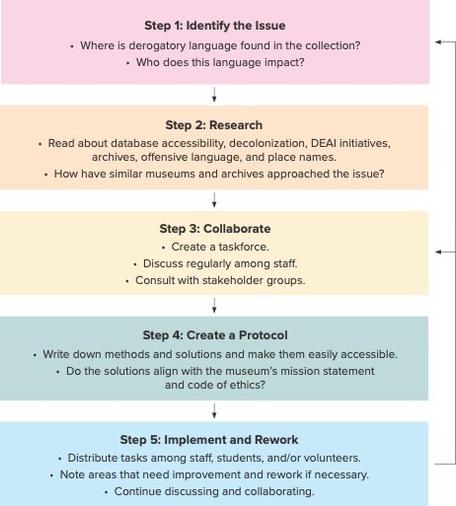
Uncovering AI bias in digital collections

Museums are using data science and NLP to detect and contextualize derogatory language in legacy catalog records. A case study from the Harvard University Herbaria shows how digital stewardship can promote ethical access and institutional transparency.

https://www.aam-us.org/2025/06/29/improving-the-search-uncovering-ai-bias-in-digital-collections/
#DigitalStewardship #MuseumTech #EthicalAI #GLAM #BiasDetection #AIethics #CollectionsManagement #DataScience #NaturalLanguageProcessing #DigitalHumanities #Museums

Grok AI's "improved" model is sparking controversy for criticizing Democrats & Hollywood Jewish execs. 🤔 This raises concerns about bias in AI & data training.

How can we ensure AI is fair & ethical? SoftSasi offers data analysis & bias detection tools. 💻
[https://www.softsasi.com](https://www.softsasi.com)
#AIethics #GrokAI #BiasDetection

Openlayer Creator Raises $4.8M: Advancing Machine Learning Model Testing

https://arxiv.org/abs/1704.08991# #AI : The topological face of #recommendation : #models and application to #BiasDetection
The topological face of recommendation: models and application to bias detection

Recommendation plays a key role in e-commerce and in the entertainment industry. We propose to consider successive recommendations to users under the form of graphs of recommendations. We give models for this representation. Motivated by the growing interest for algorithmic transparency, we then propose a first application for those graphs, that is the potential detection of introduced recommendation bias by the service provider. This application relies on the analysis of the topology of the extracted graph for a given user; we propose a notion of recommendation coherence with regards to the topological proximity of recommended items (under the measure of items' k-closest neighbors, reminding the "small-world" model by Watts & Stroggatz). We finally illustrate this approach on a model and on Youtube crawls, targeting the prediction of "Recommended for you" links (i.e., biased or not by Youtube).