IN YOUR BAG: 1727 – Jens Astrup

IN YOUR BAG: 1727 - Jens Astrup

We have not had a new bag for a while, but Jens Astrup steps up to the plate with an absolute backbreaker of a bag. Check it out.

Introduction

I’m a Copenhagen based Danish photographer. My cameras are my tools. I’ve grew up with film photography and learned my trade from shooting a humongous amount of films for a local daily newspaper. I was lucky that somebody paid my film supply back then.

The world turned digital and the first years with cameras like the 2.7 megapixel Nikon 1D made you appear a lousy photographer - again.
Today Canon digital cameras are my bread-and-butter-maker. The digital cameras are great - for work. They are fast and efficient, but do they spark any joy? No!

The Bag

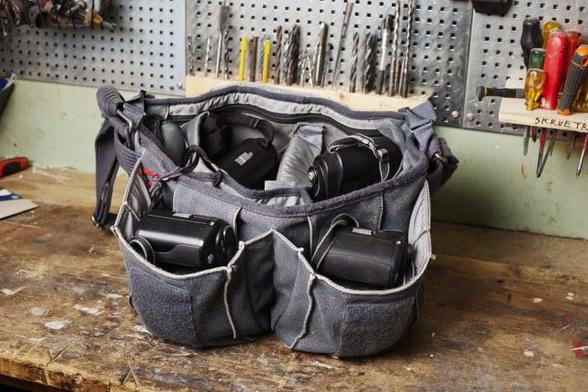
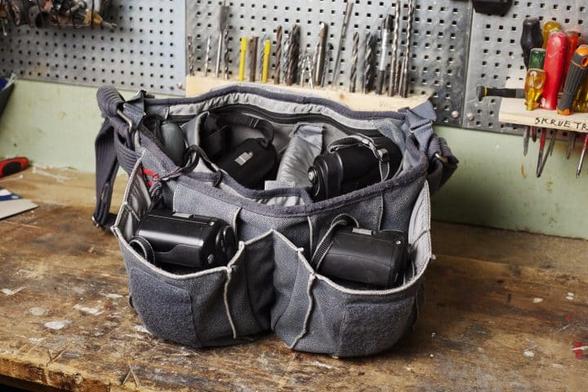
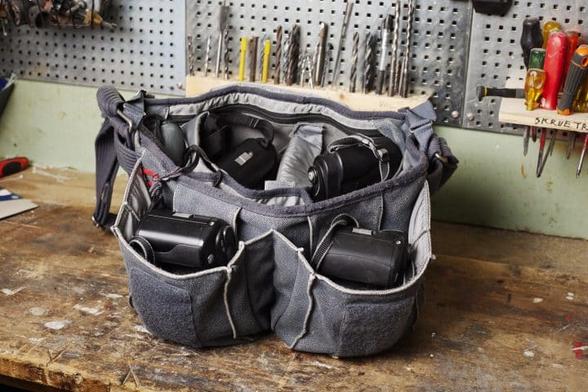
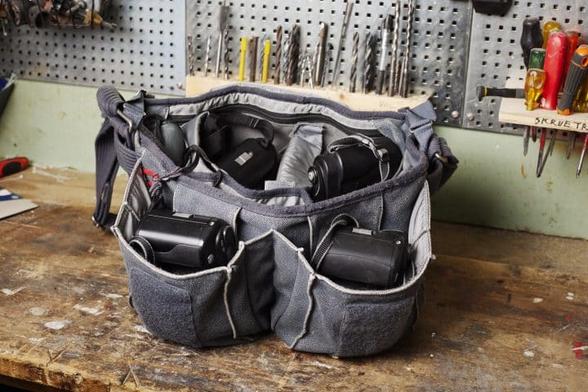
When I want to enjoy photography (and burn money) I take this ThinkTank bag with my Fujis out for a spin. I was late to the medium format, but now I take revenge for lost times.
Shooting with these cameras is good for your mental health and it makes me happy.
I love this bag with content and I think it will be the first thing I would rescue in case of a fire - after some harddrives and negatives

The Fuji cameras in these formats have a huge resolution without being crazy sharp. To get the full potential of this resolution, it is a good idea to use a monopod (Not in the picture).

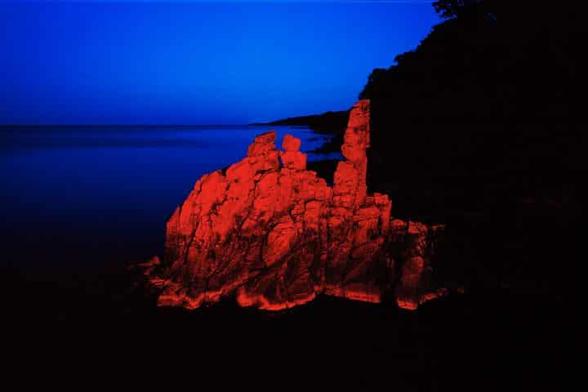
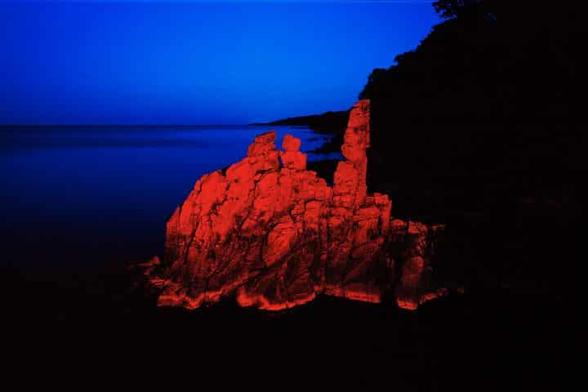
I know it does not help my reach, but generally I do not post my analogue pictures on the web. It does simply not give meaning to post a 1500 pixel picture when the original is a 1.5 meter C-print from a 6 by 9 negative.

You can find some of my other work here:

www.jensastrup.com

<http://instagram.com/jens_astrup>

I do not care too much about gear in the sense, that It is not what is interesting. Gear is tools for a job. I cry a little inside whenever I se great cameras on the shelfs at collectors.

What is interesting is what you can do with the gear, not someone sitting on it. Great cameras obligate, they are made for shooting great pictures. Go out and have fun shooting. Even cheap cameras can be great cameras. You can do great work with point and shoot cameras, if that is the look you wan’t to express.

For me, it is important that your gear does not get between you and your talent and these Fuji cameras are so simple to use that you forget them.

I carry a flashmeter in the bag as well. This one is perfect for mixing strobes with ambient light, but often I don’t use the light meter at all. Experience tells me the exposure, or because I do light-paint with studio strobes and there is no way to know, what the result will be anyway.

The strobe in this bag is a Metz 30 BCT 4. It is great because it sits just above the lens witch result in a shadowless point’n’shoot look, but in the high resolution these cameras provides.

The Gear

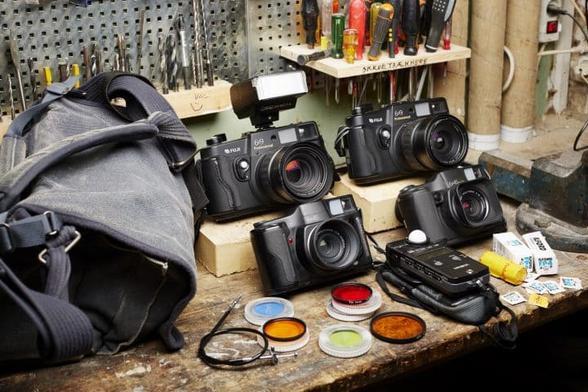
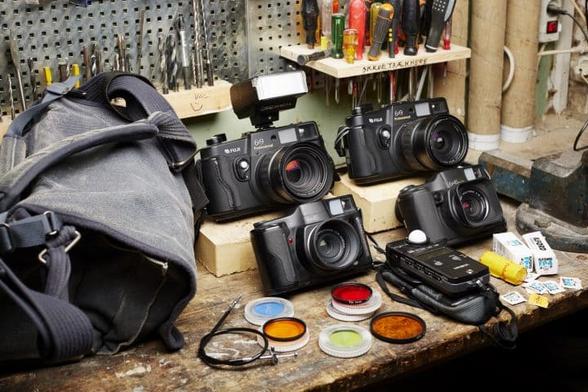
This bag is a ThinkTank Retrospective 30 and I had it for ten years now. Amazingly it holds all four cameras:

Fujifilm GSW690 III - 65mm

Fujifilm GW690 III - 90mm

Fujifilm GA645W i - 45mm

Fujifilm GA645 - 60mm

Minolta Flash Meter IV

Metz 30 BCT 4

Some filters for B&W

Cable release

Jens Astrup

Keep them coming folks, we need more submissions, so get your bag onJapancamerahunter.com

**Send me a high resolution image of the bag. Optimum size is 1500px across. Please ensure there is a bag in the shot, unless you don’t use one. The more you can write about yourself the better, make it appealing and tell us a story. Snapshots of your gear with a camera phone and no words will not be featured.
Oh and don’t forget your contact details (twitter, flickr, tumbler et al). Send the bag shots here. Not all make the cut, so make sure yours is funny/interesting/quirky. And please make sure the shot is of good quality, you are a photographer after all. **

Cheers
JCH

The post IN YOUR BAG: 1727 - Jens Astrup appeared first on Japan Camera Hunter.

#inyourbag #bellamycamera #camerageek #cameraporn #camerabag #classiccamera #cooljapanesecameras #gearporn #insidethebag #japanclassiccamera #japancamera #japancamerahunter #jensastrup #limitedcamerabag

IN YOUR BAG: 1727 - Jens Astrup - Japan Camera Hunter

IN YOUR BAG: 1727 - Jens Astrup We have not had a new bag for a while, but Jens Astrup steps up to the plate with an absolute backbreaker of a bag. Check

Japan Camera Hunter

IN YOUR BAG: 1727 – Jens Astrup

IN YOUR BAG: 1727 - Jens Astrup

We have not had a new bag for a while, but Jens Astrup steps up to the plate with an absolute backbreaker of a bag. Check it out.

Introduction

I’m a Copenhagen based Danish photographer. My cameras are my tools. I’ve grew up with film photography and learned my trade from shooting a humongous amount of films for a local daily newspaper. I was lucky that somebody paid my film supply back then.

The world turned digital and the first years with cameras like the 2.7 megapixel Nikon 1D made you appear a lousy photographer - again.
Today Canon digital cameras are my bread-and-butter-maker. The digital cameras are great - for work. They are fast and efficient, but do they spark any joy? No!

The Bag

When I want to enjoy photography (and burn money) I take this ThinkTank bag with my Fujis out for a spin. I was late to the medium format, but now I take revenge for lost times.
Shooting with these cameras is good for your mental health and it makes me happy.
I love this bag with content and I think it will be the first thing I would rescue in case of a fire - after some harddrives and negatives

The Fuji cameras in these formats have a huge resolution without being crazy sharp. To get the full potential of this resolution, it is a good idea to use a monopod (Not in the picture).

I know it does not help my reach, but generally I do not post my analogue pictures on the web. It does simply not give meaning to post a 1500 pixel picture when the original is a 1.5 meter C-print from a 6 by 9 negative.

You can find some of my other work here:

www.jensastrup.com

<http://instagram.com/jens_astrup>

I do not care too much about gear in the sense, that It is not what is interesting. Gear is tools for a job. I cry a little inside whenever I se great cameras on the shelfs at collectors.

What is interesting is what you can do with the gear, not someone sitting on it. Great cameras obligate, they are made for shooting great pictures. Go out and have fun shooting. Even cheap cameras can be great cameras. You can do great work with point and shoot cameras, if that is the look you wan’t to express.

For me, it is important that your gear does not get between you and your talent and these Fuji cameras are so simple to use that you forget them.

I carry a flashmeter in the bag as well. This one is perfect for mixing strobes with ambient light, but often I don’t use the light meter at all. Experience tells me the exposure, or because I do light-paint with studio strobes and there is no way to know, what the result will be anyway.

The strobe in this bag is a Metz 30 BCT 4. It is great because it sits just above the lens witch result in a shadowless point’n’shoot look, but in the high resolution these cameras provides.

The Gear

This bag is a ThinkTank Retrospective 30 and I had it for ten years now. Amazingly it holds all four cameras:

Fujifilm GSW690 III - 65mm

Fujifilm GW690 III - 90mm

Fujifilm GA645W i - 45mm

Fujifilm GA645 - 60mm

Minolta Flash Meter IV

Metz 30 BCT 4

Some filters for B&W

Cable release

Jens Astrup

Keep them coming folks, we need more submissions, so get your bag onJapancamerahunter.com

**Send me a high resolution image of the bag. Optimum size is 1500px across. Please ensure there is a bag in the shot, unless you don’t use one. The more you can write about yourself the better, make it appealing and tell us a story. Snapshots of your gear with a camera phone and no words will not be featured.
Oh and don’t forget your contact details (twitter, flickr, tumbler et al). Send the bag shots here. Not all make the cut, so make sure yours is funny/interesting/quirky. And please make sure the shot is of good quality, you are a photographer after all. **

Cheers
JCH

The post IN YOUR BAG: 1727 - Jens Astrup appeared first on Japan Camera Hunter.

#inyourbag #bellamycamera #camerageek #cameraporn #camerabag #classiccamera #cooljapanesecameras #gearporn #insidethebag #japanclassiccamera #japancamera #japancamerahunter #jensastrup #limitedcamerabag

Camera Geekery: Fujifilm GA645Zi

Camera Geekery: Fujifilm GA645Zi

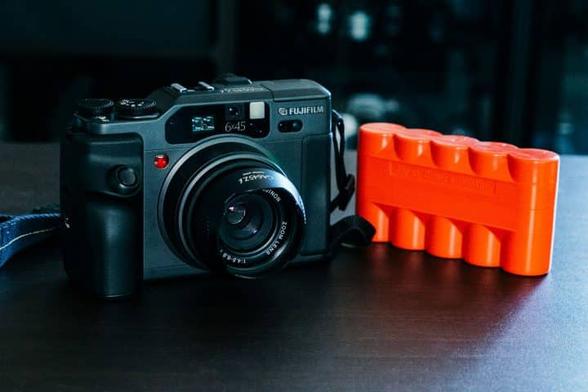
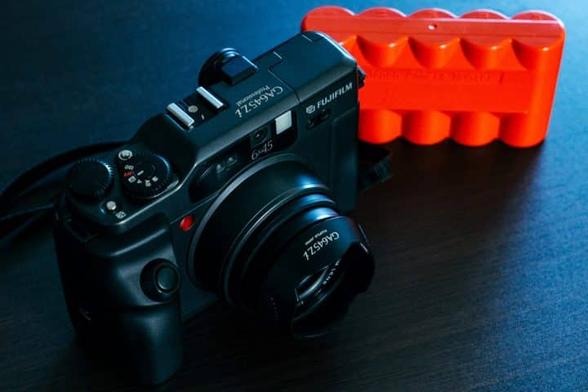
Ah the 1990's; the decade known for pogs, Pokemon, and premium point and shoot film cameras such as the Fujifilm GA645Zi. The Fujifilm GA645Zi "Professional" was the final and most sophisticated model from Fuji’s GA medium format line and introduced a few tricks up its sleeve other than that zoom lens. It also boasted an adjustable viewfinder diopter, a lens cap warning signal, a more ergonomic placement of the shutter button, a revamped top plate, and a quieter (relatively) focusing motor. It's been hailed the ultimate point and shoot in some circles, which raises an eyebrow from yours truly. Outside of a Holga or Diana, it and its cousins are the lightest medium format cameras on Earth. Now that we've had our slippery fingers on one for a weekend, let's dive into the hype.

Background History

The Fuji GA645 series is an entire family of fixed-lens autofocus cameras that's an extension of the previous GS folding-lens manual-focus cameras. It takes #not120mm roll film and the "6 x 4.5" negative is actually about 56mm by 41mm, making it small by medium format standards but still two-and-a-half times the surface area of a 35mm negative. That's definitely enough to show a quality improvement over 135 film, and makes the negatives easier to scan and more forgiving to deal with. Used properly, the 645 format gives just as much usable image as a cropped 6×6 frame, with the advantage of having a few extra exposures per roll.

Fujifilm released the GA645Zi in 1998 in champagne and the more uncommon black version like this example was released one year later. The Fujifilm GA645Zi is the final iteration of the GA series starting with the original GA645 in 1995 and incorporates a zoom lens. The lens is a ten element in ten group design with a 1.6x zoom range of 55-90mm, F/4.5-6.9, equivalent in 135 format to approximately 34-56mm. However, there is a caveat, you only get four zoom steps or positions to choose from; 55mm, 65mm, 75mm and 90mm.

Fujifilm GA645Zi Tech Specs

  • Manufactured by: Fuji Photo Film Co., LTD., Tokyo, Japan.
  • Made in: Japan.
  • Date of manufacture: 1998
  • Price: around $1849 USD in 1999
  • Weight: 880g (no batteries)
  • Dimensions: 165mm x 111mm x 75mm power off and no hood; depth with power on: 91mm, zoomed out to 90mm: 111mm
  • Focal length: 55-90mm. 65°-42° diagonal angle of view.
  • Aperture: F/4.5-F/6.9 maximum, and F/22-38 minimum. Auto or manually set in half stop increments.
  • ISO: 25-1600 manually set in 1/3 stop increments.
  • Focusing distance: 1.0m to infinity
  • Viewfinder: ‘portrait’ orientation illuminating window type bright frame finder with automatic parallax correction. Manual states 88% coverage at infinity, 90% at 3 meters, with a magnification of 0.4-0.58x.
  • Light meter: TTF, (through the finder) center weighted light metering SPD photocell.
  • Lens: Fujinon Super-EBC (electron beam coating) 10 elements in 10 groups design with a 1.6x zoom range of 55-90mm, F/4.5-6.9. Uses 52mm filters
  • Shutter and speed: 2 seconds up to 1/700*, plus bulb mode.
  • Film: standard 120 or 220 roll, with a picture area of 56mm x 41.5mm, automatic 120/220 switchover
  • Film Loading: Auto-loading with film sensing
  • Exposure compensation: +/- 2 E
  • Flash: built-in pop-up type, guide number of 12 at ISO 100, not user adjustable in power but it sounds like is has a crude distance integration system in ‘P’ mode. Fill flash only in aperture priority and manual modes. The owner’s manual suggests slow sync is available in ‘As’ mode
  • Power: two CR123a 3V lithium batteries. Fuji claims the batteries will last for 3000 shots with no flash use.

Fujifilm GA645Zi Features and Ergonomics

Viewfinder

A quirky thing you will notice once you take a look through the viewfinder is the vertical orientation. This clearly plays into the strength of the camera as a portrait machine. The viewfinder itself is nice; bright, not too contrasty and parallax corrected. Vital camera settings are clearly visible on the sides when the shutter release is half-pressed, with number and font sizes just right. My only gripe is that if exposure compensation is used, only the icon appears under the shutter speed on the left side. To see how many increments you've set you'll have to stray your eyes away from the finder and check with the back LCD.

Main Control Dial

The main control dial is operated by pressing down the lock button and rotating, to select ISO , OFF , P , A , AS , and M. The mode dial is meant to embody simplicity but there is a bit of complexity to deal with. The mode dial has "A" and "AS" positions to choose from. Both are aperture-priority, and the difference only matters when using the flash. The "AS" will use the metered exposure and add the flash for fill, which is how most cameras work in aperture priority modes, while the "A" mode will force the camera to a 1/45 shutter speed. Being a leaf-shutter camera, the flash will sync all the way up to the camera's 1/400 maximum, making the little pop-up useful for catchlights and fill.

Zoom Lever

Love it or hate it, zooming is controlled by a thumb lever on the back of the camera. Design-wise, I like its size and location and it complements the grooved lines on the thumb rest nicely. I do understand people's concern with the awkwardness, but in practice I find it not to be any real issue. As mentioned before, there's only four zoom settings so precise movement is not very necessary.

Shutter Release Button

The shutter release button is often cited as a star feature of the GA645Zi and once you wrap your hands around the camera grip you will see why. It is 60mm from the back of the camera and perfectly raised 70mm from the base, which is roughly at 3/4ths the height of the camera. Combined with the 50 degree slant, it can't really feel better in the hand. Well as good as plastic can feel.

Built-in Viewfinder Diopter

Another cool feature is the built-in diopter, a very much welcomed feature for us four eyes. There are no clear markings to indicate the degrees, but if you are far-sighted, turn the dial clockwise or if you are near-sighted, turn it counterclockwise. The diopter has an adjustable range of -3 to +1D.

Semi-Automatic Film Advance

A feature aimed to simplify the loading process is the automatic film winder. One turn of the thumb dial advances the film spool in quarter-turn increments. While the feature itself works fine, I wish there was a smooth continuous spin rather than increments. More on that later.

Pop-up Flash

I pop-up flash is always handy to have and is a must for a point and shoot in my book. You never know when you'll need a fill flash to counteract some rough backlight. The flash has to be manually popped up, it won’t do it automatically even in P mode. The guide number is 12 at ISO 100.

Rear LCD Display

I always appreciate little details like a film reminder slot. The film back is wrapped in leatherette and has a film reminder memo holder for film box tops. Yes, SP400 is better at 200.

A nifty gimmick touted by the GA645Zi is the data imprint feature but if you are expecting the information to be on the image a la 35mm point and shoots like the Ricoh GRs, you'll be disappointed. Exposure and date time information can only be imprinted on the film outside the photo area.

Film Spool Release

A staple of Fuji cameras that I always love is the push out pegs for film spool loading. It's elegant and works like a charm making film loading quick and secure.

Fujifilm GA645Zi Size and Weight

The following is a comparison between the Fuji GA645Zi with a couple other portable medium format legends on hand, the Plaubel Makina and Fuji GF670. Neither of which has a zoom lens or flash.

Fujifilm GA645Zi weight: 920g (w/batteries)

Plaubel Makina 67 weight: 1.27kg (w/batteries)

Fujifilm GA645Zi weight: 920g (w/batteries)

Fujifilm GF670 weight: 1.02kg (w/batteries)

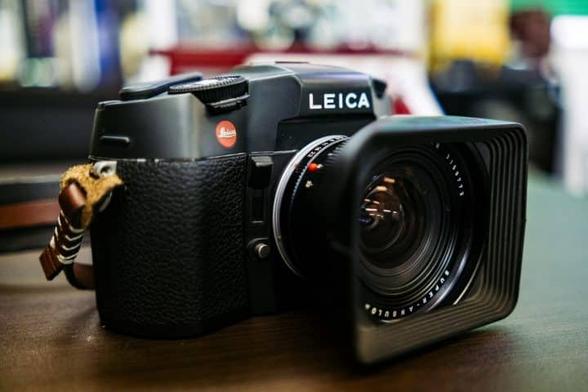
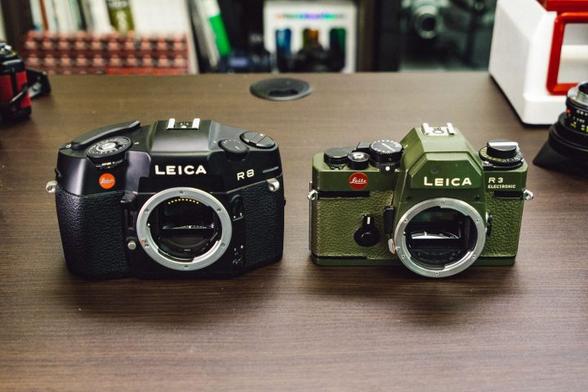
The Fujifilm GA645Zi side by side with the Leica R8. It's even lighter than an R8 which is 1.2kg

Fujifilm GA645Zi Issues

LCD ribbon

A common issue with the GA645Zi is this ribbon imbedded in the backdoor hinge. It is in quite the vulnerable position so be sure to slowly and carefully open the back door and don't let it swing out and stretch too much. As the result of this poor design, the rear LCD is liable to failure. Unfortunately this is a common occurrence as few examples of a perfectly working LCD still exist. The sample I reviewed has a finicky one, normally OK but fades when the temperature drops. Kind of annoying not be able to see how many shots you have left.

Film Alignment

Back to the incremental film advance. The quarter-turn increments can make it difficult to get the "Start line" aligned correctly. This is important because the GA645Zi is rather picky with this to be able to load the film correctly. I had it about this much off and the camera was unable to load properly so you're gonna have to take the spool off, roll it back a bit and start over.

In another roll I shot, the start line was again off a bit but it was able to load. However upon finishing and opening the back, the dreaded "fat roll" made its presence. So the tech meant to make your life easier can actually make it more of a pain if you are not careful. Thus I reckon a continuous rolling or smaller increments would have prevented these issues.

Fujifilm GA645Zi Sample Images

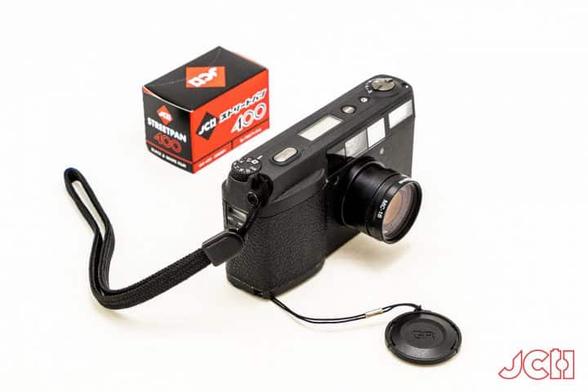
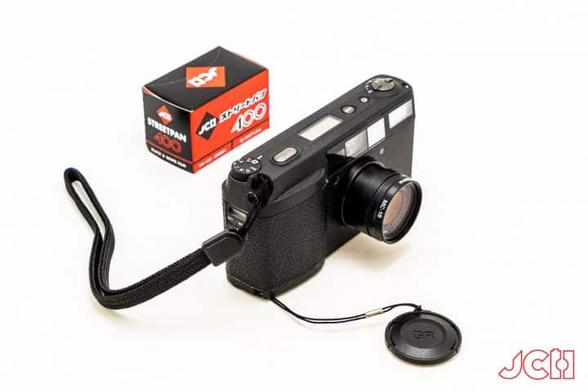
The following examples were shot on Fujifilm Pro 400H and JCH Streetpan 400. Self-developed with Cinestill CS41 and Df96, respectively.

Conclusion

I find it interesting that you can only set the year up to 2025. Therefore, does that mean that in 3 years all Fuji GA645s will discreetly implode like a Mission Impossible message? The loud whirrs of the motors and 90's sounding clunky focusing doesn't inspire confidence.

The real feature of the camera is its portability and versatility in focal lengths. The flat profile of the vertically-carried GA645 means that it's less bulky than an SLR when it's slung on a shoulder strap, and the plastic body is sturdy enough to handle minor scrapes and bumps. The absence of a mirror means that there’s no mirror vibration. So your slowest hand-holdable shutter speed could be down to 1/15th or even 1/8th of a second.

*Multiple sources list the GA645Zi having a max shutter speed of 1/700th but I only see a max of 1/400th in my sample. I hope other users can help clarify this. If it is indeed just 1/400th, you will be frustrated as I was with using it for street photography. That in addition to the less than reliable AF, it is not an ideal setup for action on the streets.

Final Thoughts

The target audience for the Fujifilm GA 645Zi remains the same in 2022 as it did in 1998. It is for those who want to travel light, not think too much and have deep pockets. If you got the dough, this camera is a great way to make the transition to medium format with and greatly eases the intimidation factor. The Fujifilm GA645Zi can be a fantastic travel and on-the-go, always-on camera.

However, expect to lose some frames with the 90's era AF tech. It struggles especially with close focusing around 1m. The lens itself though is versatile and nice, displaying thin lines with nice contrast, however the lack in speed can be limiting in low light and the shallow depth of field of that "medium format look". I wouldn't confuse it with an exhibition making tool. It is what it is; a light, simple, pretty damn pricey way for the average enthusiast to capture most travel situations on a format larger than 35mm.

MN

The post Camera Geekery: Fujifilm GA645Zi appeared first on Japan Camera Hunter.

#camerageekery #120 #bellamycamera #camerageek #filmcamerareview #fujifilm #ga645zi #japanclassiccamera #japanclassiccamerablog #japancamera #japancamerahunter #mediumformat #professional
Camera Geekery: Fujifilm GA645Zi - Japan Camera Hunter

Camera Geekery: Fujifilm GA645Zi Ah the 1990's; the decade known for pogs, Pokemon, and premium point and shoot film cameras such as the Fujifilm GA645Zi.

Japan Camera Hunter

Camera Geekery: Leica R8

Camera Geekery: Leica R8

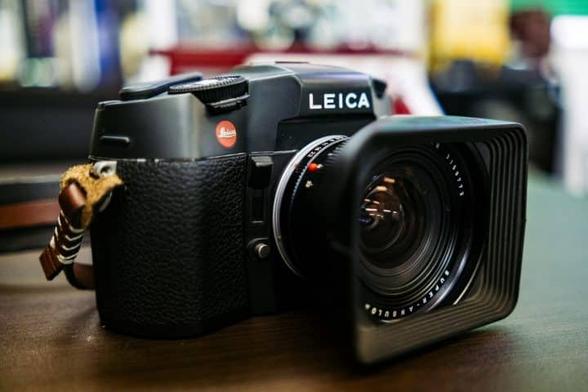
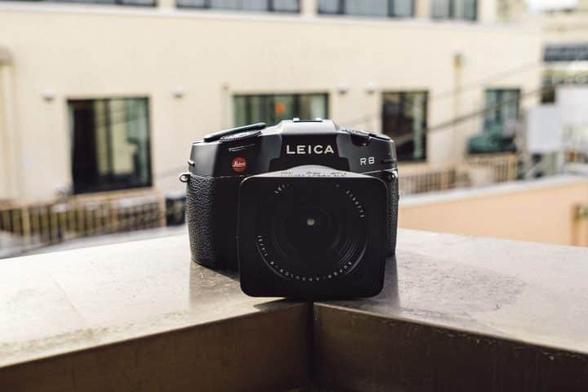
Ah the Leica R8, it can be considered the M5 of the R series for its controversial aesthetic decisions and polarized much of the Red Dot's loyal base. Red Dot folk aren't exactly renown for embracing drastic shifts. The Leica R8 represented a major break in R-series camera design and was met with so much consternation, much like the Leica M5, that it was dubbed the not so flattering moniker " The Hunchback of Solms". But my mother taught me to not judge a book by its cover. So how does Leica's first independent SLR effort since the Leicaflex compare to the stalwarts of the day from the land of the rising sun? Only one way to find out.

Leica R8 Background History

The Leica R8 was officially launched at Photokina in 1996 and it looked significantly different from the Minolta-collaborated R3 through R7. The R8 was the first R-series camera that was entirely developed and styled by Leica and had no association with Minolta. It was highly anticipated and intended to herald a new era for Leica Reflex Cameras. The R8 was available in either Silver chrome or Black chrome finishes until it was replaced by the Leica R9 in 2002. According to the wiki at L-Camera-Forum.com, there were 36551 R8s produced.

Compared with its predecessor the Leica R7, the R8 has a few noteworthy upgrades. The mirror lock-up can be activated without any optional accessories, and the self-timer offers two options for exposure delay: 2s and 12s. Also, the R8 has an automated film loading mechanism so you don't have to fiddle around with attaching the end of the film strip to a film transport spindle.

However, one significant non-upgrade is the lack of autofocus, a staple of the other flagship SLRs of its time such as the Nikon F5 and Canon EOS 1n.

Early versions of the R8 were apparently rampant with electronics issues, in particular faulty micro-switches and poor contacts that resulted in the camera locking up when used with the optional motor-drive. In addition, some of the first R8 cameras were reported to leave scratch marks on your film, which Leica addressed in later production runs. Leica replaced the backdoors of affected cameras and repaired these issues under its five-year warranty. Cameras with a serial number of 247xxxx or newer appear free of the aforementioned problems, as is the sample that I am testing.

ROM-lenses (1996-09)

The R8 featured electronics that could take advantage of lens-specific information to correct for lens vignetting (in connection with the Leica Digita-Modul-R), to adjust the zoom reflector on flash guns according to lens focal length, or to correctly display aperture information if accessories like tele-extenders, were attached to the lens. This lens-specific information was stored in a Read-Only Memory (ROM) chip that was added in the form of a strip of electrical contacts between the mount and the rear element of R-lenses. The ROM chip came with all newly sold lenses at the time, but could also be retrofitted by Leica technicians to older lenses. ROM-lenses have the R-cam and can also be mounted on R3-R7 cameras, where they support all the functions that these cameras offer.

We unfortunately don't have any access to a ROM lens at the moment to test out the full features. Most lenses with an R-bayonet can be used on any R-system camera body, but not all camera functions might be supported, as five different types of R-system lenses exist.

This aperture information transmission between lens and body is achieved through a cam that is linked to the movement of the aperture control ring. Here you can see an example of a twin and triple cam. Apotelyt has a great article detailing which lens are what here.

Leica R8 Tech Specs

  • Lens mount: Leica R bayonet with additional electrical contacts ("ROM contacts")
  • Shutter: Copal vertically running metal-leaf unit
  • Speeds: 32-1/8000, stepless in automatic modes, or to 16 seconds in half-stop steps in manual mode, as well as Bulb. The flash X-sync speed is 1/250
  • Shutter release: on the shutter-speed dial, w/cable release socket
  • The optional Motor-Drive gives additional front and vertical-grip releases
  • Operating modes: Manual, Aperture priority, Shutter priority, Program, and Flash
  • Metering methods: Selective (7mm central area), 6-element matrix, center-weighted, and flash TTL center-weighted
  • Exposure lock: Half-press on shutter release (must be in Selective metering mode)
  • Exposure compensation: Plus or minus three stops in half-stop increments, using lever on left side of the eyepiece
  • Film speed range: Automatic DX coding ISO 25 through 5000; manual ISO 6 through 12,800
  • Metering range: 0.007–125,000 cd/m³ (EV −4 through EV 20)
  • Flash sync: Hotshoe center contact or external synch socket; first or second curtain sync, as well as strobe (multiple flashes) view
  • Flash X-sync 1/250 second or slower
  • TTL flash metering compatibility: Leica dedicated SF 24D flash unit and Metz units with Metz SCA 3501 adapter
  • Viewfinder coverage: 93%, magnification 0.75× with 50 mm lens
  • Self timer: 2 sec or 12 sec
  • Mirror pre-release: Selectable via switch; first shutter release press activates mirror, second activates shutter
  • Frame counter: In viewfinder and on rear cover LCD
  • Multiple exposures: Unlimited, with multiple exposure switch on body
  • Body: Cast zinc top plate, aluminum frame, synthetic base, rubber bottom; Weight 890g
  • Battery: 6v, 2× CR2 lithium battery

Leica R8 Features and Ergonomics

Shutter release / Metering modes

Love it or hate it, the shutter release button is in the middle of the shutter speed dial. M6TTL and M7 users will feel right at home with the size and rotation of the dial. It is big and rubberized for a nice grip and feels great in use, barely needing a touch to operate. I don't mind the shutter release location, in fact it feels good and increases speed to have your index finger on the shutter release while the middle finger works the shutter speeds.

Underneath that you will find the metering options, which is handy especially when using non-forgiving slide film where perfect exposure is a must. It is in a handy location, allowing you to easily operate it without taking your eye off the viewfinder.

Exposure compensation

One location I am not a fan of is the exposure compensation switch. Yeah, it's moot if you just shoot manually. But if do want to shoot in for example A mode, I find it to be in an awkward position. I admit that perhaps I am just hardwired and used to them being a dial on the top plate. But while looking through the viewfinder, sticking your thumb in there to use the switch gets real close to your left eye and doesn't feel comfortable.

Multiple exposures

Another interesting feature is the multiple exposure switch to the right of the film advance lever. I personally don't do much double exposure, but plenty of photographers do and when done well it can be pretty awesome. An elegant solution for those who have the skills. Take your first exposure, set the multiple exposure switch to the multiple exposure position, re-cock the shutter and take your second exposure. You can keep shooting on top of that same frame indefinitely. Turn the multiple exposure switch back to the single exposure position, now re-cock the shutter and advance the film with the film advance lever to return back to normal.

Film loading

While I think smoothly loading into a film spindle is a fine skill honed by countless practicing, I do also appreciate a well-made, reliable easy load system. The only problem is that you don't get those once-in-a-while awesome first of the roll pictures.

Back panel

On the back side under the LCD screen that shows the amount of exposures made and the battery level, there lies a little panel that flips out and that is where you will find the film ISO setting and and self-timer modes. I think it's a nice touch to keep these minor features easily accessible yet tucked away enough to not get in the way or be an eye sore.

If you manually select an ISO value different from the DX code of the film cassette, it will show "±" inside a small triangle warning you that you are over or underexposing the film. Handy!

Viewfinder

As you would expect from a Leica, the viewfinder is absolutely gorgeous. Clear, contrasty and sharp, the vital information you need is minimally yet legibly displayed on the bottom. Here is a look at the R8 finder versus the M6. The Leica R8 finder is a tad cooler with more blues and greens kind of giving it Fujifilm vibes.

Body size

The body is chonky with a capital "C". Here you can see the R8 compared to Nikon's also manual focus only F3. The body is supposedly girthy to accommodate tele lenses, but I don't know why you would be hand holding a big tele lenses anyways, on top of that also needing to manual focus.

I can imagine Jimmi Hendrix appreciating the big grip but for us with smaller mitts it could shave off a couple millimeters to be ideal. That being said, the location of vital functions such as the shutter speed dial, release and depth of field preview is perfect. It is intuitive and efficient to have your index finger on the shutter release, middle finger rotating the shutter speed dial, and ring finger activating the depth of field preview.

Leica R8 Sample Images

The following images were taken with the 21mm Super-Angulon-R and 50mm Summicron-R on Kodak Gold 200, self-developed with Cinestill CS41 and scanned on a Plustek Opticfilm 8200i.

Conclusion

The Leica R8 was the Red Dot's valiant attempt to shed the notion that they had become a has-been resting on their laurels. They wanted to prove they can still successfully innovate and they really swung for the fences. The "Hunchback of Solms" is a rather harsh nickname to me as I think it looks cool, but then again I also liked the M5. While the chunkiness and density of the body does indeed feel great and sturdy in the hands, I would prefer it to be smaller, especially for an exclusively manual focus/film advance camera. For that size I just feel like it should have AF or some kind of motorization. The fancy metering modes are cool I guess, especially if you use slide film and flash.

An apparent glaring miss would be the lack of AE lock. However it does exist, albeit only when in spot metering mode; half pressing the shutter locks the exposure so you can recompose.

Aside from the exposure compensation, everything is perfectly located and does what it does elegantly and intuitively. I really do love the design of the shutter speed dial; it is a much more satisfying and luxurious feeling compared to the thin finger dials of say the Nikon F5. And of course the star of the series is the lenses. There's a reason why cine guys have caught on and inflated the prices in recent years.

Final Thoughts

The fact that many photographers and DPs I know who have R lenses don't use them on R bodies is a telling sign. The lenses are incredible, yet the accompanying bodies seems to fall just short of winning over the majority. While I thoroughly enjoyed using the Leica R8, the gripes I have with size to features ratio leave something to be desired. If I still have to manually focus and advance my film, I don't see why I need a body of this size. The R8's top speed of 1/8000th is an upgrade over the 1/4000th of say the Nikon Fm3a if you like shooting hummingbirds, but you need batteries and packs on over 300 grams.

I appreciate Leica's final crack at the SLR market and there are things to love about the R8 but yeah overall as a tool, I think it misses the boat for me. The innovative features such as multiple exposures and flash curtain syncs don't really apply to me, I'd much rather swap those for a smaller body that's repairable and exposure compensation that won't take my eye out. I will be selling a kidney to get some Summicron R lenses adapted to my Minolta X700 ;)

MN

In case you missed it, there is also a video of Bellamy's thoughts on the Leica R8 over on here.

The post Camera Geekery: Leica R8 appeared first on Japan Camera Hunter.

#camerageekery #bellamycamera #camerageek #filmcamerareview #japanclassiccamerablog #japancamerahunter #leica #leicar8 #r8

Camera Geekery: Leica R8 - Japan Camera Hunter

Camera Geekery: Leica R8 Ah the Leica R8, it can be considered the M5 of the R series for its controversial aesthetic decisions and polarized much of the

Japan Camera Hunter

10 Years of JCH: 10 Favorite Cameraporn Shots

10 Years of JCH: 10 Favorite Cameraporn Shots

Anniversaries are always a good opportunity for reflection so for 10 years of JCH, why not travel back in time and pull together our 10 favorite cameraporn shots. Over the last 10 years there have been some really special cameras come through the doors of JCH and it is remarkable to see how we have developed (badum tish) over the years. So many in fact that putting together a list of our 10 favorite cameraporn shots has ended up being quite the challenge. But we persevered and found what we think are our favorites. So, in no particular order, here they are.
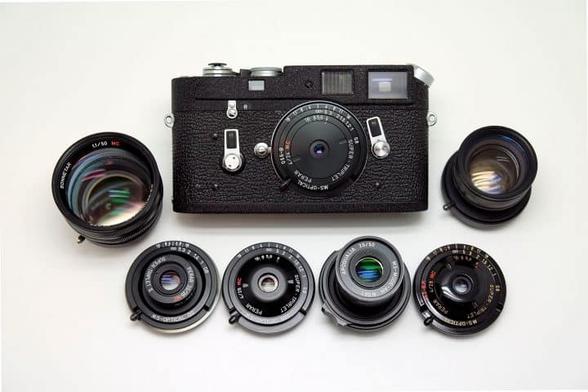
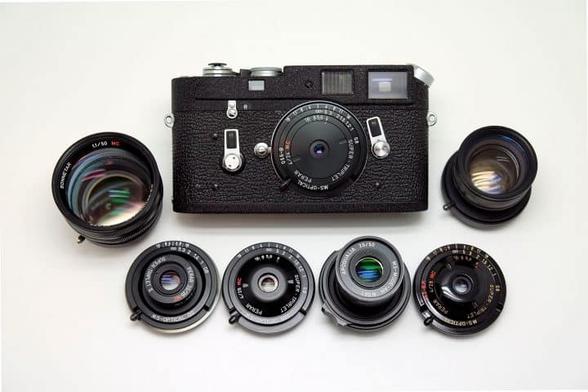
Leica Takahashi M4 MS Optical Collection

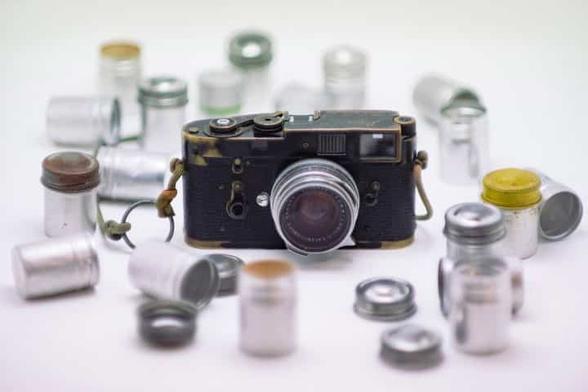
This camera was really special. It was painted in a special style by famed Japanese painter Takahashi, it is surrounded by a collection of MS Optical lenses, of which I only have a couple of now as I pared down my collection. This camera went to a very happy home. You can read more about the camera here.

A pair of 'Dream Lenses'

This pair of Canon 50mm 0.95 'dream' lenses were converted by Miyazaki san many years ago. The black Leica is my MP-6 and the greenish one is the JCH 'Patina' M4, a custom piece that you can read more about here.

The Hasselblad 503CX CF ‘Golden Blue’ 50th Anniversary Camera

This camera came as a set of 3 very special blue and gold cameras. And the requirement was that the set not be broken up, so we sold them together, but not before we got some very tasty pictures of this incredible camera. You can see the full set here.

The Mamiya 645 Color Edition Stormtrooper

This camera was part of a set of special color edition Mamiya cameras that were released by Mamiya. We managed to get most of the collection, but not all. You can see more images of the others here.

The Sean Flynn Leica M2

Probably one of the most special cameras I ever found. This one had a lot of meaning for me and I was really disappointed to find that the camera was sold on auction, against the wishes of the family. You can read more about this camera here.

The Mamiya 645 Color Edition Mellow Yellow

This one another of the cameras in the Mamiya color edition series. All of these cameras were made by Mamiya, they were not custom cameras and were available individually, with 9 cameras to collect. You can see more images of the others here.

The Canon QL17 Pyramid

When we made this image we had a bunch of QL17's. I had been collecting them for a while and it got the point that things were getting out of hand. I had way too many to be keeping them all. So I had them all CLA'd and sold them off. But before they went we simply had to get this image, it would be rude not to.

The Nikkor 13mm f/5.6 Ai-s Fisheye

This was a real score for me. Back when I was just starting JCH I was able to find this, the holy grail of Nikon lenses for many. The incredible 13mm f/5.6 Ai-s Nikkor. You can read more about this lens here.

My Rangefinder Collection

This image is from a long time ago. Back when I was just starting JCH, and all of these cameras were actually mine. When I was still searching fro the camera that I eventually ended up with, I cycled through a lot of RF cameras. Once day I had them all out of the dest and thought to myself that I really needed to get a shot of them. And here it is. I only have one of these cameras now, can you guess which one?

The Fujinon 5cm 1.2 S mount

This one was very interesting. I found an S mount Fujinon 5cm 1.2! Which was never released for sale. Almost all of them were LTM, but this one was an S mount. It turned out to be a prototype made by Fujinon of which only 8-12 lenses are known to exist. Seriously cool.

So those are our favorite 10 Cameraporn shots from the last 10 years. You can see more images over on Instagram or Flickr.

Which one is your favourite?

JCH

The post 10 Years of JCH: 10 Favorite Cameraporn Shots appeared first on Japan Camera Hunter.

#camerageekery #10favoritecameras #bellamycamera #camerageek #cameraporn #classiccamera #cooljapanesecameras #japancamera #japancamerahunter #jchcameraporn #jchfavoritecameras #jchfavouritecameras

10 Years of JCH: 10 Favorite Cameraporn Shots - Japan Camera Hunter

10 Years of JCH: 10 Favorite Cameraporn Shots Anniversaries are always a good opportunity for reflection so for 10 years of JCH, why not travel back in

Japan Camera Hunter

IN YOUR BAG: 1724 – Stuart Hill

IN YOUR BAG: 1724 - Stuart Hill

My name is Stuart Hill. My home is in Scotland, my work is in Switzerland - my soul is in London.

A few years ago, I embarked on the journey to be either a photographer or an architect by signing up for a Foundation Course in Fine Art, ultimately deciding to pursue the latter: the logic being that if I pursued my ‘hobby’ professionally, it would ruin it for me. Well, I managed to avoid that – and so I am still fiddling around with all things photographic - many years later.

Monorail

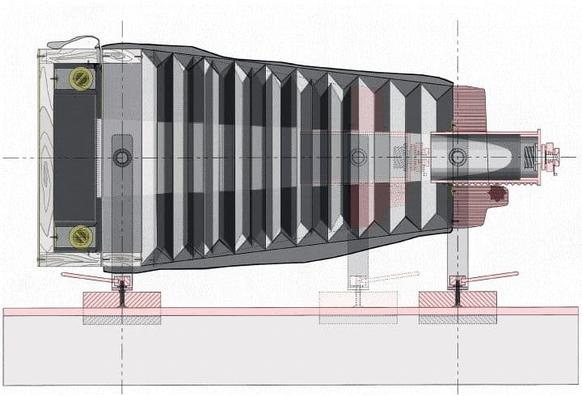
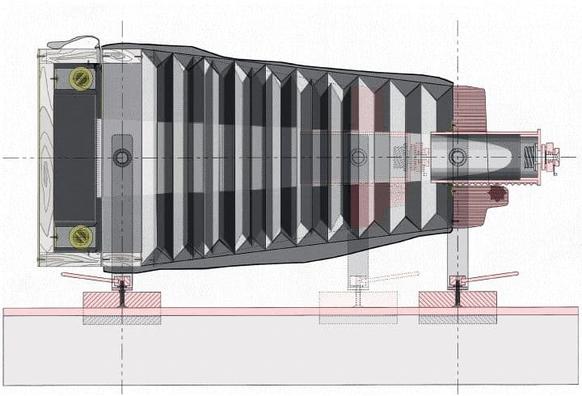
Prior to Art School, I enrolled on an evening class at the local college, where I had access to a fully equipped darkroom and a collection of Zenith TTLs. At this stage, I owned an Olympus Trip – which was a beautiful birthday-present camera, but not adjustable in any way. After a long time of paper rounds and saving up, I upgraded to a Canon AE1, which globetrotted alongside me for the next two decades. I also embarked on designing and building my own monorail camera, using the school metalwork room at lunchtimes. One of my original design drawings is below:

I also advanced to setting up my own darkroom, with a Russian Zenith enlarger – the collapsible ‘espionage’ model, which was bizarrely - although rather conveniently - contained in an attaché case: a perfect sign of the times in what was middle of the 1980’s cold war – alongside a collection of used ice cream tubs as chemical trays and a huge demijohn full of water (there was no running water in the freezing roof space). This modest set-up had the advantage of honing my darkroom skills while enabling me to puff away on underaged, illicit cigarettes, well out of sight - and reach - of my parents.

I then got distracted by other life events, and having a darkroom was no longer practical – the Zenith was packed away in its espionage case for another day. That day never came, and eventually the introduction of digital scanners meant it was no longer required. I discovered ways of developing films using a changing bag and laptop, which no longer required hours in solitude away from the family – albeit the smoking secret did come out of the closet.

London

Eventually, in 2003, my eye caught an advertisement for a London camera dealer who was offering interest free credit on new cameras. After an amazingly quick trip into central London on the tube, I became a bit poorer - albeit the owner of a Leica M7/ 50mm Summicron. Once again, I had photographic wind in my sails! Rarely a week would go past when I was not developing at least one HP5, entertaining the family by lap-fumbling with the changing bag on the sofa, while reminiscing on the true joy of solitude in a dark place.

Fast forward another fifteen years and - in a moment of madness - I part exchanged the M7 body for a used M9. It didn’t take many high-decibel shutter-winds for me to realise the error of my ways. For months I perused the dealer’s websites, in a vain attempt to identify my M7 and buy it back - the one which had been around my neck for some amazing adventures. I could identify it easily, as it had some bright orange Kenyan sand in the viewfinder, which had reduced its trade-in value. Alas, I never found it. Of course, eventually I got used to the M9, and now that it has the patina of a much-handled old friend, I adore it too.

Paradoxically, buying the M9 did change my approach to cameras for the positive – perhaps bizarrely, I had never bought a used camera before. The M9 had surprised me with its reliability, and so I started to keep my eye on other second-hand gadgetry. A slippery slope ensued, resulting first in a Leica M4-P. When not wearing its half-leather case, this is a wizened old man of a camera – a true Hemingway -with numerous war wounds and unknown stories to tell: it seems to smell of oil and leather, possibly whisky. But it is nothing but a joy to handle, scrupulously simple and reliable - as silent as a maus.

The M5 was a Christmas treat when I should have known better – bought out of sheer curiosity about how a re-design project could apparently go so drastically wrong for an experienced camera manufacturer. This is the least used of all my toys, primarily because the side hung strap is a complete nuisance, clearly a case of ‘change for change’s sake’ - but an incredibly irritating one when the strap obstructs the viewfinder, often enabling one’s street photography victim to shuffle out of shot.

The R8 was the final addition to the bag-shot family. It was ordered in June 2020 and the package was not opened for fourteen months due to covid travel restrictions – a very long story of neediness. So, I am just getting used to this object of utter beauty, the overall handling quality of which came as a revelation. For this is what many - allegedly - believe to be the ugly duckling of the Leica pond. It is the only bag shot camera which has a functioning light meter, which is taking some time – and mental arguments - to get used to.

Not shown in the picture is a Hasselblad 500EL/M which completes my quartet of gorgeousness. Regrettably, on the return trip from Scotland to Switzerland it lost a coin-flip with my clothes (…best of three, of course). This stunning piece of clockwork engineering has just been hauled around the north east coast of Scotland and - after some tear-jerking episodes of utter frustration - has produced some stunning - and huge - images, all traditionally developed and printed in a reconstituted Highland darkroom: alas, without the Zenith espionage enlarger - the sponge attaché case packing having deconstructed into what appears to be a (possibly) toxic post-soviet honeycomb. Best to keep the lid on that.

As for the bag itself – this was bought from ‘Fossil’ in London in the January sales - around 2011, I believe – and it has sufficient pockets for most things to get lost – although, I confess, the bag shot is fake news - all of cameras would rarely be in that bag together, as the strap would inevitably break.

So, that is that: recent images - mainly but not exclusively analogue - can be seen at:

<https://www.calderhill.photography/>

Stuart Hill

Keep them coming folks, we need more submissions, so get your bag onJapancamerahunter.com

**Send me a high resolution image of the bag. Optimum size is 1500px across. Please ensure there is a bag in the shot, unless you don’t use one. The more you can write about yourself the better, make it appealing and tell us a story. Snapshots of your gear with a camera phone and no words will not be featured.
Oh and don’t forget your contact details (twitter, flickr, tumbler et al). Send the bag shots here. Not all make the cut, so make sure yours is funny/interesting/quirky. And please make sure the shot is of good quality, you are a photographer after all. **

Cheers
JCH

The post IN YOUR BAG: 1724 - Stuart Hill appeared first on Japan Camera Hunter.

#inyourbag #bagshot #bellamycamera #camerageek #cameraporn #camerabag #classiccamera #cooljapanesecameras #gearporn #insidethebag #japancamera #japancamerahunter #limitedcamerabag #specialcamerabag #whatsinthebag

IN YOUR BAG: 1724 - Stuart Hill - Japan Camera Hunter

IN YOUR BAG: 1724 - Stuart Hill My name is Stuart Hill. My home is in Scotland, my work is in Switzerland - my soul is in London. A few years ago, I

Japan Camera Hunter

IN YOUR BAG: 1723 – Andy M

IN YOUR BAG: 1723 - Andy M

I am Andy M. and live in Vicksburg, Mississippi, USA. I am a retired geologist and have been taking pictures since the late 1960s. I still use film almost 80 or 90 percent of the time because I like the traditional hardware and prefer the look of genuine black and white film. I have always preferred the most compact version of cameras for their specific format. That means Leica thread mount or M for 35mm, Rolleiflex or Hasselblad V for 120, and a Tachihara wood camera for 4×5″ sheets.

Being retired, I have time to wander around rural Mississippi, Louisiana, and adjoining states to look for urban or rural decay. Unfortunately, there is plenty of this subject matter in the US South.

Camera bag

Leica IIIC travel kit

During a recent trip to North Carolina and New England, I packed very light, with just my little Leica IIIC. This camera has been in the family since 1949, when my father bought it and the Summitar lens in Guam. It has traveled all through Asia, Europe, and North America and recorded family pictures during the 1950s and '60s. I took the IIIC to Nepal in 2017, where people were amazed that a 70-year-old camera still worked so well. I had to explain that there was no LED screen for them to look at the pictures. Don Goldberg (DAG camera) recently gave it a complete overhaul

This was my North Carolina travel kit:

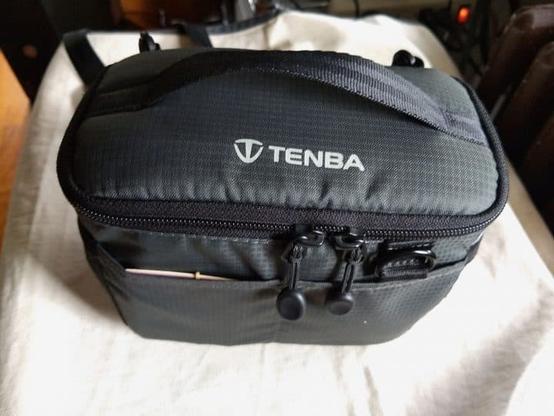
Tenba BYOB 7 bag

Leica IIIC body

5cm ƒ/2 Summitar lens

50mm ƒ/2 Jupiter-8 lens

Series VI filters and adapters for the Summitar and Jupiter-8

Yellow and dark yellow direct fit Summitar filters

Gossen Luna-Pro Digital light meter

Misc. cleaning cloths, business cards, cable release

Note pad and pen

A Leica table tripod went into my luggage as well as a spare Luna-Pro meter. Kodak BW400CN and Portra 160 film went in a clear zip-lock bag, which the airport security people could manually inspect (no X-Ray).

Tenba BYOB camera pouch

When I travel by car, I usually pack a tripod and the Hasselblad or 4×5″ camera, but I often tuck the IIIC (or my M2) into the corner of a camera bag.

Thank you for reading. If you want to see some of my urban decay work, please visit:

worldofdecay.blogspot.com

Keep them coming folks, we need more submissions, so get your bag onJapancamerahunter.com

**Send me a high resolution image of the bag. Optimum size is 1500px across. Please ensure there is a bag in the shot, unless you don’t use one. The more you can write about yourself the better, make it appealing and tell us a story. Snapshots of your gear with a camera phone and no words will not be featured.
Oh and don’t forget your contact details (twitter, flickr, tumbler et al). Send the bag shots here. Not all make the cut, so make sure yours is funny/interesting/quirky. And please make sure the shot is of good quality, you are a photographer after all. **

Cheers
JCH

The post IN YOUR BAG: 1723 - Andy M appeared first on Japan Camera Hunter.

#inyourbag #bagshot #bellamycamera #camerageek #camerabag #insidethebag #japancamerablog #japanclassiccamera #japanclassiccamerablog #japancamera #japancamerahunter #limitedcamerabag #specialcamerabag

IN YOUR BAG: 1723 - Andy M - Japan Camera Hunter

IN YOUR BAG: 1723 - Andy M I am Andy M. and live in Vicksburg, Mississippi, USA. I am a retired geologist and have been taking pictures since the late

Japan Camera Hunter

IN YOUR BAG: 1722 – Crystal Joy Merrick

IN YOUR BAG: 1722 - Crystal Joy Merrick

I've been shooting film a long time, mostly in a document-your-life way. I also have an interest in old stuff/old places, and those things combined make up most of my photography practice today. I live in rural Pennsylvania, and I love exploring the towns and cities around me.

The Bag

My bag was given to me by a friend a long time ago. Sticking out of the bag is a beanbag I made—I use it instead of carrying a tripod all the time. Obviously that doesn't work in every situation, but for what I do it works enough. I have a short cable release to use with it.

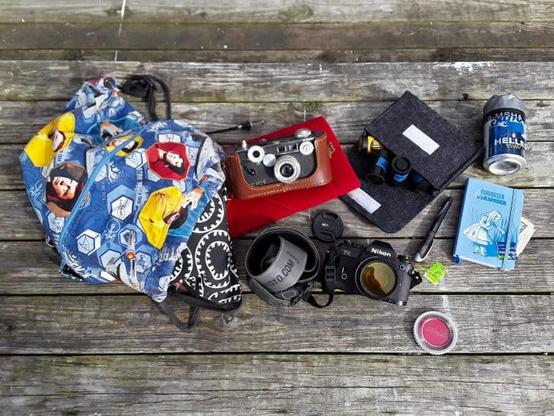
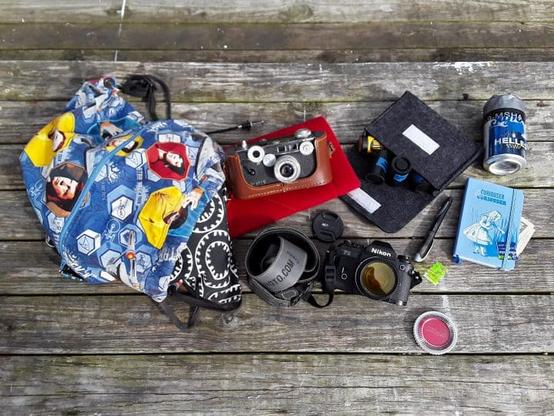
Usually I have two cameras with me: an SLR (my Nikon FG here was my first and is still my favorite) and one of my cameras from the 1950's (right now it's my Argus C3 rangefinder, a recent barn find). My go-to lens on the Nikon is my 50mm. Not having a structured camera bag, I recently got some Domke equipment wraps for my antique cameras, and I love them, they work great. The strap on the Nikon was a gift from my boss at a local photo studio (where I work a few hours a month as a graphic designer).

I shoot mostly black & white and I pretty much always have a yellow filter on my SLR, but I usually have my red filter with me too, just in case. I usually remember to carry extra film—most of what's in the bag right now is hand-rolled from bulk by me, which is why the pots have tape labels.
I pretty much never actually use my hot shoe level, but I carry it around with me as a reminder to consciously level my shots because I am really bad at that. I have a little notebook and pen to write down my camera/lens/filter/film combinations and whatnot.
And some cash because who knows when you'll find the perfect dive bar or taco truck that only takes cash! Last but not least, I often carry one or two beer can pinhole cameras, loaded with (usually expired multigrade) paper.

Keep shooting film, kids!
Find me on IG: @bluekid
Join me in the Facebook Caffenol group
Crystal Joy Merrick

The post IN YOUR BAG: 1722 - Crystal Joy Merrick appeared first on Japan Camera Hunter.

#inyourbag #bagshot #bellamycamera #camerageek #camerabag #classiccamera #cooljapanesecameras #insidethebag #japancamera #japancamerahunter #specialcamerabag

IN YOUR BAG: 1722 - Crystal Joy Merrick - Japan Camera Hunter

IN YOUR BAG: 1722 - Crystal Joy Merrick I've been shooting film a long time, mostly in a document-your-life way. I also have an interest in old stuff/old

Japan Camera Hunter

Camera Geekery: Ricoh GR21

Camera Geekery: Ricoh GR21

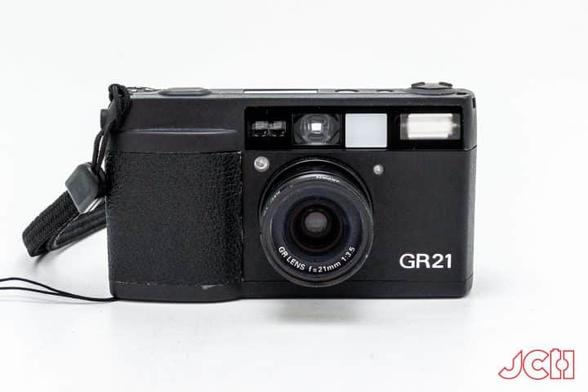
Another end of the line masterpiece, the Ricoh GR21 rocked the world in the year 2k1 when it was the first compact camera to have a 21mm wide angle lens. The Ricoh GR21 won the hearts of many street photographers and compact fans as the weapon of choice for prime Daido Moriyama and earned the Technical Image Press Association's (TIPA) Best Prestige Camera Award in 2001. It has been touted as the ultimate compact for many pundits but its rarity has kept it out of the hands of many drooling fans. Naturally I was stoked to have a go on one, especially wanting to compare it against extensive experience with a Contax T2 and Yashica T4 Super.

Ricoh GR21 Background History

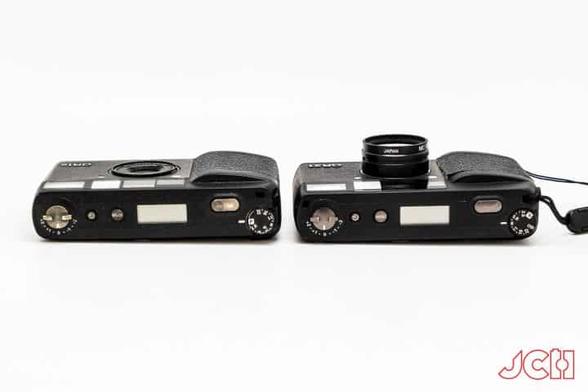
All of the features that were developed on the previous models of Ricoh GRs were included in this model. From a glance they look identical except the GR21 lens protrudes due to not being fully retractable. Speaking of the lens, it is an aspherical 21mm f3.5 multicoated piece of perfection, so good that they made it a Leica L39/LTM version. We've reviewed the 28mm version before here.

Ricoh GR1 vs. Ricoh GR21 in off mode

Supposedly only 4000 or so of these cameras ever made it into production, and they are decently hard to find in good working order these days. Like the Contax Aria or the Nikon F6, the Ricoh GR21 is among the great Japanese swan songs for 35mm film models.

Ricoh GR21 Tech Specs

  • Type: 35 mm autofocus Lens shutter camera
  • Lens: GR Lens 21 mm F3.5 (9 elements, 6 groups) multi-coating aspherical glass lens elements
  • Focusing: Passive-type multi-autofocus with focus lock and 3-point indication, automatic auxiliary AF light under low lighting
  • Shutter: Programmed AE - approx. 2 - 1/500 sec.; Aperture Priority AE - approx. 2 - 1/250 sec. Time Exposure Mode
  • Exposure Control: Aperture Priority Mode
  • Viewfinder: Reverse Galilean type with LCD bright frame, in-viewfinder illumination under low light
  • Field of View Factor: 83%
  • Viewfinder Magnification: 0.33
  • Diopter: -1dpt.
  • Film Speeds: ISO 25 - 3200, compatible with DX code system. Non-DX films are set to ISO 100. Manual ISO setting possible (1/3 EV steps)
  • Film Loading: Ricoh auto-load pre-wind system. Film pre-winds to the last frame number when the back cover is closed. Mid-roll rewind is possible.
  • Film Counter: Electronic, counts down the number of exposures left
  • Built-in Flash: Electronic flash that automatically adjusts light amount to ambient light conditions. Automatic flash for dim light and backlight conditions. Automatic soft flash for a subject at close range.
  • Flash Modes: Auto, Flash-on, Flash-off, Slow Synchro, Red-eye Reduction
  • Range of flash: ISO 100 reversal film - 0.3 - 1.6 m (1 - 5.4 ft.); ISO 400 reversal film - 0.3 - 3.3 m (1 - 10.7 ft.); ISO 100 negative film - 0.3 - 2.3 m (1 - 7.5 ft.); ISO 400 negative film - 0.3 - 4.6 m (1 - 15. 1 ft.)
  • Flash Recycle Time: About 5 sec.
  • Self-Timer: Built-in 10-seconds digital timer, the operation indicated by LED
  • Auto Power Off: Approx. 5 mins. after operation
  • Power Source: 1 x 3V lithium battery (CR2 or equivalent)
  • Other Features: Cable release socket, Synchro terminal, Date imprinting, 30.5 mm filter attachable
  • Dimensions (W x H x D): 117 x 64 x 26.5 mm (4.6 x 2.5 x 1 in.) (not including lens barrel); 117 x 64 x 38.5 mm (4.6 x 2.5 x 1.5 in.) (including lens barrel)
  • Weight: 200g (240g with film and battery)
  • Optional Accessories: 30.5 mm filters (PL, MC - Y2, MC - 1B, 6x - Cross, MC-ND4). Electrical cable release

Features and Ergonomics

The Ricoh GR21 is the only 21mm ultra-wide pocketable film camera ever made, so the lens of course is the star feature. But the complementary characteristic is that lens housed in a small and lightweight package. Weighing in at 240g with a roll of film loaded, here's how it compares with other some other svelte beauties on hand.

Minox 35AL : 210g

Ricoh G1s : 214g

Minolta TC-1: 225g

Yashica T4 Super: 228g

Ricoh GR21: 240g

Weighing a mere 30g more than a Minox yet is made of aluminum and magnesium alloy and packed with manual features, weight is not an issue for carrying around the Ricoh GR21 all day. The only issue is that the lens cannot fully retract, making it less than ideal as a pocketable camera and provides a source of sensitivity in terms of robustness. Be careful if you're gonna have it in your jacket pocket!

Another relic tech of the past that I actually enjoy is date imprinting. While I wouldn't necessarily want it on an exhibition print, I think it is a handy option to have for snaps and travel documentation. Ricoh managed to sneak the function into a tiny window on the right hand grip of the camera.

Another cool function snuck into a minuscule body that could come in handy is the flash socket (no shoe) and electrical remote release socket. Having the ability to use a handheld off camera strobe is a nice detail aimed at pros, however the exterior flash is not taken into account by the metering system, so watch out for overexposure!

Mid-roll rewind is also possible with the discreet little button tucked away to the left of the flash socket. The Ricoh GR21 also implements an auto-load pre-wind system. When you load a roll, the film pre-winds to the last frame number once the back cover is closed. Bear in the mind the pre-wind system takes some time. It spools at roughly a frame a second, so be prepared to wait a good 40 seconds or so from loading to being able to fire your first shot.

The GR series ergonomics are the stuff of legend and for good reason. It feels great in the hands and all necessary buttons are where they need to be. The leatherette is cleverly wrapped around the entire grip, even providing nice thumb support around the film canister window.

To get into incognito street mode, users suggest to set it on snap, put your aperture to f8 and go burn through some film. With a 21 focal you get a huge depth of field so focusing isn't really an issue. Snap mode locks the focus to 2m, so at f8 anything from 2m to infinity you should be golden.

Ricoh GR21 Sample Images (B&W)

The following were shot on JCH Streetpan 400 at ISO400 and then pushed 1 stop in development with Cinestill Df96. Scans are courtesy of a Plustek Opticfilm 8200i.

Ricoh GR21 Sample Images (Color)

The following were shot on Kodak Gold 200 at box speed and developed with Cinestill CS41. Scans are also courtesy of a Plustek Opticfilm 8200i. Unfortunately, the Cinestill CS41 might be on its last legs, getting some weird spotting but nevertheless can see what the lens is capable of.

Conclusions

The top LCD is a bit renown for its unreliability. As is the case with the sample I used the numbers can fade in and out especially going from extreme temperatures. You can switch on the camera and leave it on at room temperature and should come back in a few minutes. It is annoying in the field not being able to see how many frames you have left sometimes or what mode the camera is in.

Aside from that, the engineering is outstanding and the Ricoh GR21 is a joy to use. 21mm is too wide of a cup of tea for me but it was still fun to carry around and explore the city. It fits nicely in the back of a cycling jersey so it's perfect for cycling around and taking quick snaps of interesting wide scenes.

The prices are a pretty crazy for a p&s, that's the age we live in now; premium compacts will pretty much run north of $1000 now. The lens is incredible for its size and very competent in color rendering and contrast. It's just too wide for my purposes and IMHO lacks that magic of the Contax T2's Sonnar or the Yashica T4 Super's Tessar. I dunno, maybe I'm just a Zeiss snob.

I am generally not a fan of retracting lenses, especially ones that don't even go all the way. The tiny motors that move these lenses are pretty much unrepairable these days, one of the reasons I sold off my T2. The GR21 lens extends 3cm from the body and when retracted still sticks out 1.7cm. So it isn't a technically pocketable camera the way the GR1s, TC1s and 28Tis are.

Final Thoughts

If you absolutely need a wide 21mm compact then well, you really don't have another option. Like the MJ documentary, this is it. After finally getting the opportunity to shoot one, I can understand the hoopla around the Ricoh GR21 and wish it fits my needs more. Nevertheless, it really is a marvel of engineering and appropriately has a seat at the table of the Mt. Olympus of compact film cameras.

For me, it wouldn't be my jack-of-all-trades compact but would make an ideal companion to a Leica M in the streets. Instead of changing lenses to something wider when needed, the Ricoh GR21 would be an ideal wide, silent, sneaky "B cam". Indeed, what a luxury. Hope y'all keeping safe out there, let us know your thoughts and experience with the legendary wide boi.

MN

The post Camera Geekery: Ricoh GR21 appeared first on Japan Camera Hunter.

#camerageekery #reviews #bellamycamera #camerageek #cooljapanesecameras #filmcamerareview #gr21 #japanclassiccamera #japanclassiccamerablog #japancamera #japancamerahunter #ricoh #ricohgrcameras #ricohgr21

Camera Geekery: Ricoh GR21 - Japan Camera Hunter

Camera Geekery: Ricoh GR21 Another end of the line masterpiece, the Ricoh GR21 rocked the world in the year 2k1 when it was the first compact camera to

Japan Camera Hunter

IN YOUR BAG: 1721 – Timothy Johnson

IN YOUR BAG: 1721 - Timothy Johnson

My name is Timothy Johnson, I’m an avid film shooter and recent transplant to Los Angeles by way of Providence RI. For the past five years my day jobs have been in museum security, particularly at art museums, which have given me a lot of time outside of work to pursue my own passions in photography and to learn as much about the medium in the art world on the clock.

I started shooting film in 2015, as a way to document the underground culture outside my bedroom. I was living in a spooky house out in the country that hosted a never ending series of punk, hardcore and noise shows- so many that they really started to run together. Photographing these shows became my way of keeping everything straight when memory failed.

I had studied journalism in college prior, and had access to the most sophisticated digital cameras available at the time. The first shows I ever photographed were on these DSLR’s, but I hated feeling like such a magnet for attention with a big camera body hanging around my neck, and I feared getting close to the action being liable for such an expensive object. My interest in film really started because the cameras were so cheap (losing a yashica FX3 to a spinkick is not a financial disaster) and so small (I could stuff this first SLR with a pancake lens into my hoodie!)
What I came to love about shooting, and later processing, these shows on film, is how raw and dirty you could make everything look, a feeling that I felt more accurately captured the mood of these events. As I moved away from shooting concerts, it’s that feeling that I’ve tried to push further and further in my work.

Cameras

Here are some of the cameras I’ve used the most in my work:

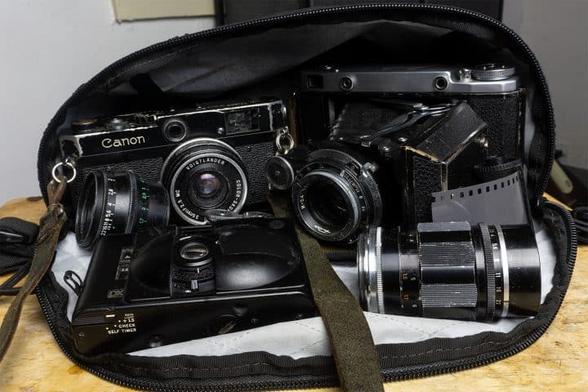
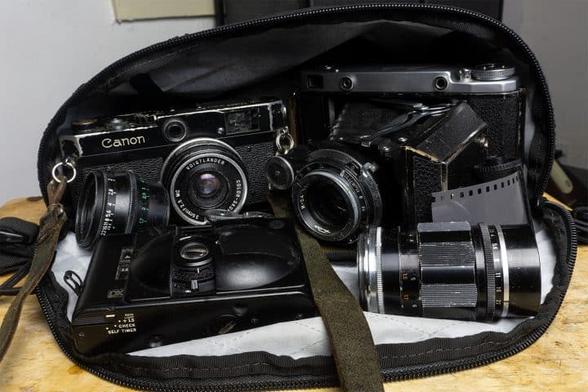
Canon P: This is the camera I’ve used for most of my shots for the past four years. Prior to it, I had owned a Voigtlander Bessa L, which had me obsessed with not only the fine Voigtlander lens lines but also the cheap, quirky and interesting vintage LTM lenses. But I missed having a proper viewfinder with a matched rangefinder, and while on a very beautiful hike in Alaska I had some shutter malfunctions happen with the Bessa.
I landed on the Canon for the lens compatibility, the price point, the modern and inconspicuous design and its reliability. In the time I’ve owned it, I’ve put it through the wringer and only needed to bring it in for an adjustment once. It has everything I need, nothing I don’t and I love the weight in the hand. The giant 1:1 viewfinder is a joy to compose and shoot through. The strap for this camera came off a busted horseman 4×5 SLR, which I shortened for where I like my camera to sit.

For lenses, I mostly use the very excellent and extremely compact Voigtlander color skopar 35mm. To fill the other available framelines on this camera, I have the brand accurate canon 100mm serenar, and a jupiter-8 50mm. I would have preferred to keep the canon 50mm, but my one vanity in this world is black barrelled lenses.

Olympus XA3: The XA series is my desert island camera. I’ve owned 4 of them, and every model except for the XA4. This is the camera I bring everywhere with me in my pants pocket, and has allowed me to capture so many moments I wouldn’t have otherwise. I started with the original XA, but found that for most purposes I was pretty much always using the hyperfocal settings, so when the winding gear broke I landed on an XA2 and so on. I bought this XA3 for a hundred dollars, completely CLA’d from zacks camera repair in Providence, and it’s lasted me much longer than previous ones. I’d pay serious amounts of money for Olympus to reboot this incredible line of design and deliver me an indestructible all metal XA5.

Moskva 5: I have this bad relationship with medium format cameras where, when I move or times get tough they’re the first thing to go. I’ve previously owned a bronica, and four different yashica TLR’s that have all gone straight back to craigslist months into ownership when a car repair came due or a big bill landed on my doorstep. The other thing that never left me attached to those cameras was just the bulk and the handling. I picked up this moskva specifically to make contact prints from the big 6×9 negatives, but I’ve enjoyed it so far because it handles more or less like a normal camera and when collapsed doesn’t take up much more room than my Canon does.

For film, I try to use a different stock in each camera. I bulk load foma 400 in the XA3 and Tri-X in the canon P, in the moskva I’ve settled on Ilford Delta 100. The bag I carry it all in is a 1733 side pack, an expensive purchase for me, but a bag I use everyday. It’s light and comfortable, has a wonderful design, quite weatherproof and can fit a shocking amount of crap within it. An excellent companion for both carrying my lunch to work as well as every camera and lens I own.

Tim

<https://www.instagram.com/horribleflesheater/?hl=en>

Keep them coming folks, we need more submissions, so get your bag onJapancamerahunter.com

**Send me a high resolution image of the bag. Optimum size is 1500px across. Please ensure there is a bag in the shot, unless you don’t use one. The more you can write about yourself the better, make it appealing and tell us a story. Snapshots of your gear with a camera phone and no words will not be featured.
Oh and don’t forget your contact details (twitter, flickr, tumbler et al). Send the bag shots here. Not all make the cut, so make sure yours is funny/interesting/quirky. And please make sure the shot is of good quality, you are a photographer after all. **

Cheers
JCH

The post IN YOUR BAG: 1721 - Timothy Johnson appeared first on Japan Camera Hunter.

#inyourbag #bellamycamera #camerageek #cameraporn #camerabag #classiccamera #cooljapanesecameras #documentaryphotography #insidethebag #japancamerahunter #limitedcamerabag #whatsinthebag

IN YOUR BAG: 1721 - Timothy Johnson - Japan Camera Hunter

IN YOUR BAG: 1721 - Timothy Johnson My name is Timothy Johnson, I’m an avid film shooter and recent transplant to Los Angeles by way of Providence RI. For

Japan Camera Hunter