 Daniel Bellingradt
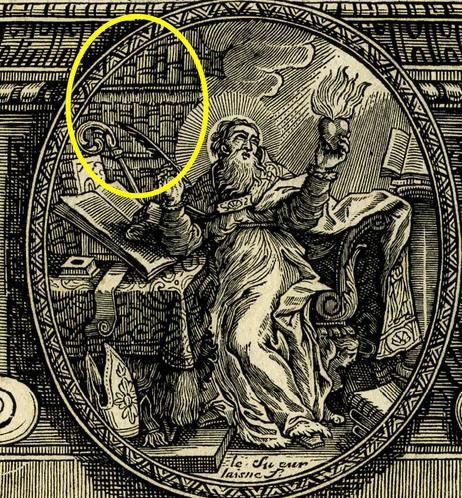
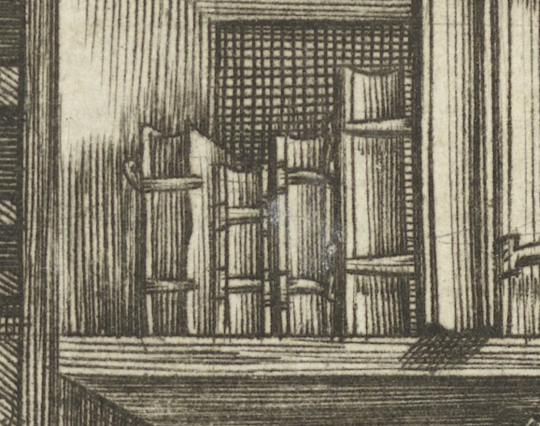
A private library full of #backwardsbooks. You see St Augustine in his study, lifting a burning heart up towards a heavenly light, and his books are all nicely shelved fore-edge outwards. #bookhistory #booksky
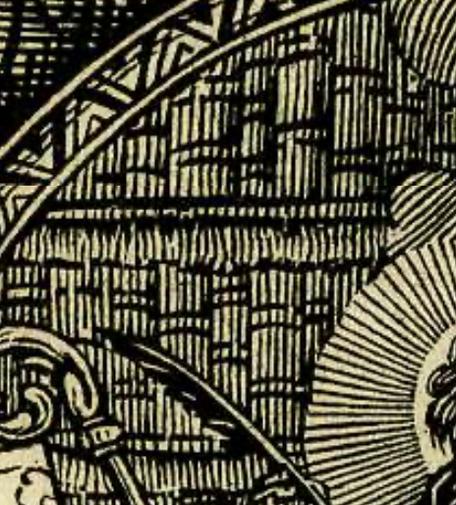
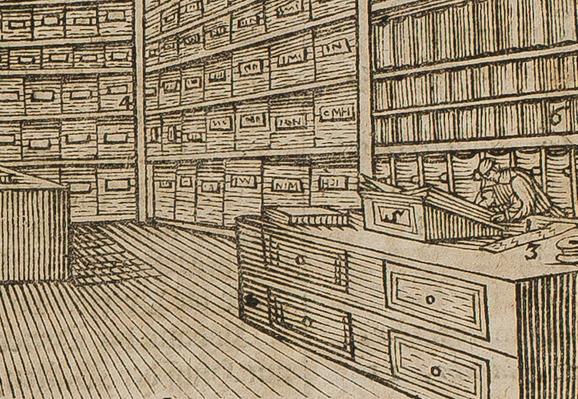
While copying the original image from edition to edition (i.e. practically preparing a new copperplate for the own print run), the page with the bookseller's shop got unwanted slight differences. This is due to the engraver's attention. In this version of 1682 printed in #Riga the wall with the original #backwardsbooks became a wall of unlimited papers stored next to each other. The engraver was clearly not interested in the details of book units. #bookhistory
10/14
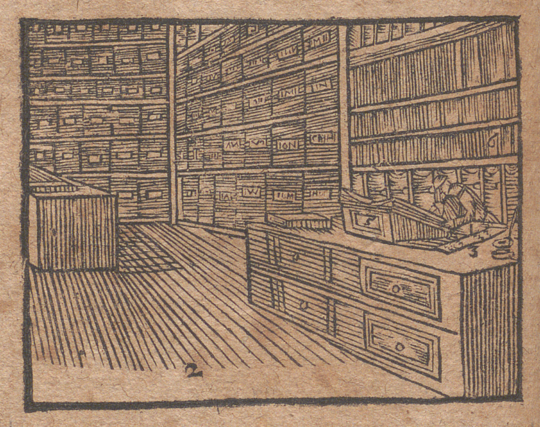
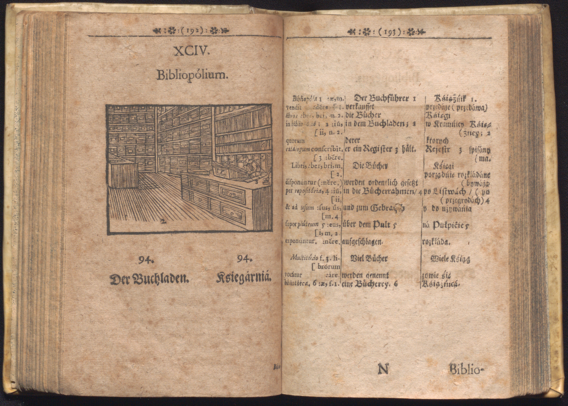
Here is an example of 1675 (printed in Kronstadt, nowadays #Brasov in Romania): the image stays the same but is mirror-inverted. So children in #Transylvania in these days still saw the small bookseller, a room full of boxes and papers, and a wall full of #backwardsbooks in their bilingual edition. #bookhistory
9/14
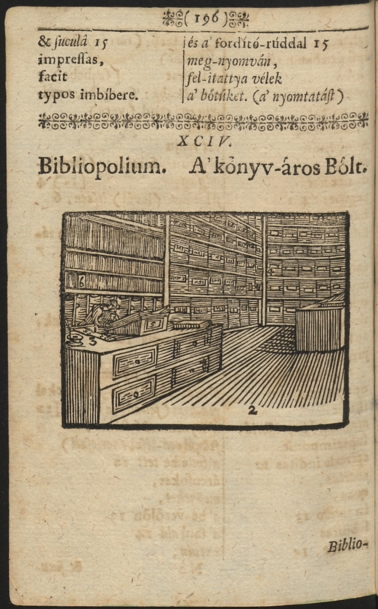
A trilingual edition (Danish/German/Latin) from 1672 used a completely new image for the page about bookseller's shops: https://digital.slub-dresden.de/werkansicht/dlf/65575/291
Now we see a crowded room (only men), tables with bound books, and various single-sheet items (#broadsides), a wall full of #backwardsbooks (waiting for a bookbinder), another wall full of boxes or stacked unfolded sheets, and in the middle: various prints, a map, and two globes. #maphistory
7/14
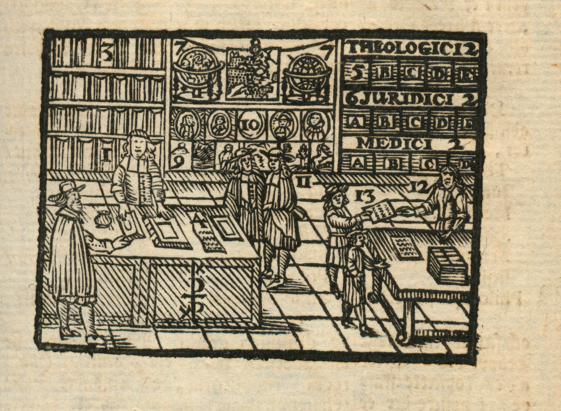
Let's start with the obvious: this book shop is well organized, and does not invite to browse the offered titles. Why?
Because #backwardsbooks! You might remember that books in #libraries and #bookshops were shelved fore-edge outwards way into the eighteenth century. It was a bookish world in which authors and titles were often written in ink onto the fore-edges.
So as a buyer in 1658 you might choose to look at boxes or fore-edges, or talk to the bookseller at the desk.
4/14
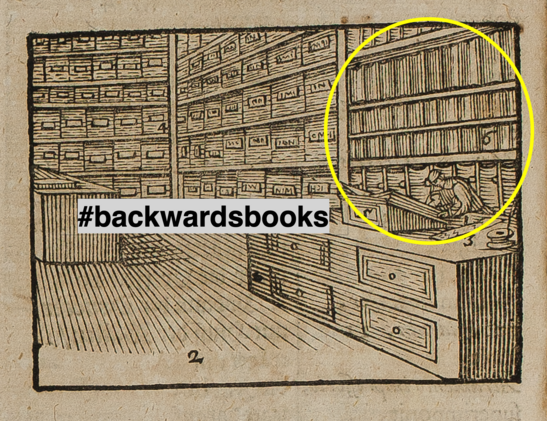
Do you remember the Twitter uproar on #backwardsbooks? This is the history part of this story. Big bound books were stored like this, because of many reasons, but the main reason was to avoid damage of the spine. Books in #libraries and #bookshops were shelved fore-edge outwards way into the eighteenth century. It was a bookish world in which authors and titles were often written in ink onto the fore-edges. #bookhistory
Another example: https://mastodon.social/@dbellingradt/109880860107901100
5/7
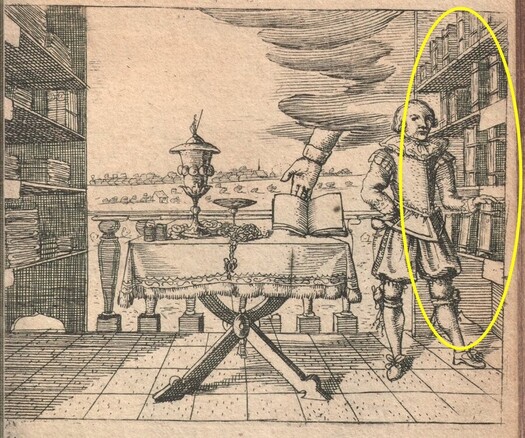
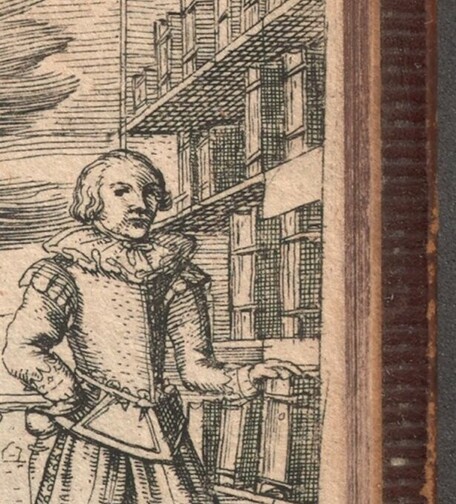
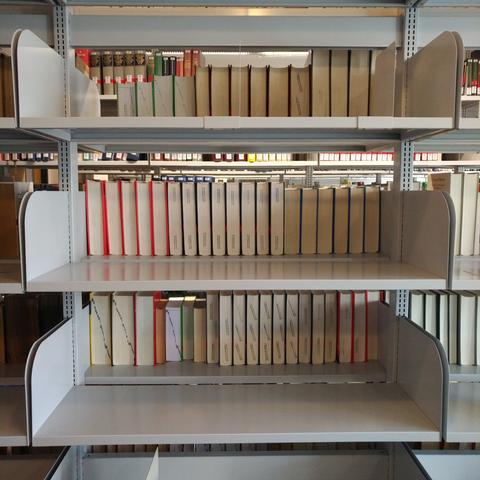
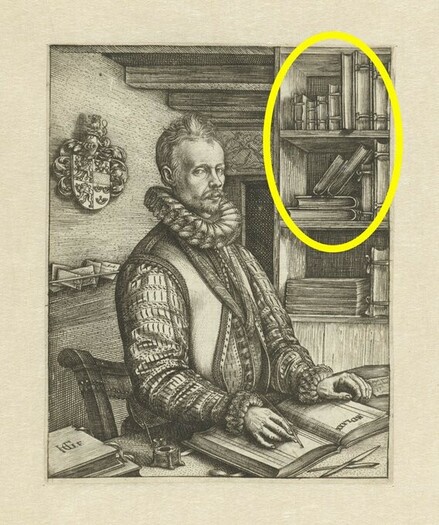
In the European past, storing bound books was often done backwards, as experts of early modern #bookhistory know. The difference to nowadays trends like #backwardsbooks is that early modern users of books had many reasons to do this beyond fashion: mostly when books were shelved fore-edge outwards the owner tried to avoid damage of the spine. And because spine titles are yet uncommon in 1580 (in fact until the 18th century), this was the common way to store your paper book.
5/5
 ULB Münster › FachInfos
 Daniel Bellingradt
 Mark Saltveit